
What Evidence to Collect After a Truck Crash: A Critical Checklist
Knowing what evidence to collect after a truck crash is vital for protecting your rights. Call (833) 227-7919 for a free case evaluation with a specialist.

By Alaric Stone
A collision with a commercial truck is a life-altering event, and the evidence gathered in the immediate aftermath is the bedrock of any successful legal claim. Unlike a standard car accident, truck crash investigations involve complex layers of federal regulations, corporate liability, and sophisticated data systems. The evidence you collect, or fail to collect, can dramatically impact your ability to recover full compensation for your injuries and losses. This guide provides a comprehensive, actionable framework for securing the critical evidence needed to protect your rights and build a powerful case.
Immediate Actions at the Scene: Safety and Documentation
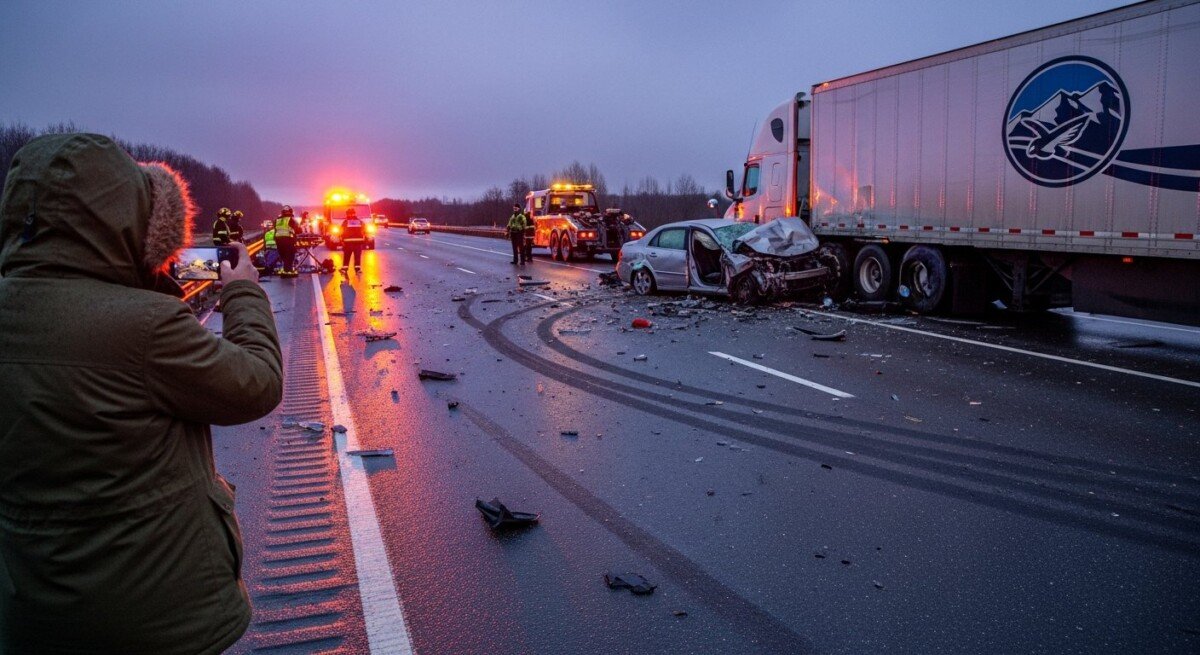
Your first priority is always safety. If you are able, move to a safe location away from traffic and call 911. Once emergency services are notified and you are in a secure spot, you can begin the crucial process of evidence collection. Time is of the essence, as memories fade, vehicles are moved, and critical data can be lost. The scene itself is a temporary repository of vital information. Start by using your smartphone’s camera or video function. Document everything from multiple angles, capturing the overall crash scene, positions of all vehicles, final resting places, and any environmental factors like road conditions, weather, or obscured signage. This visual record is irreplaceable.
If it is safe to do so, and you are not seriously injured, you can also gather preliminary information. Exchange details with the truck driver, but limit conversation about fault. Speak with any witnesses and note their contact information. The responding police officer will create an accident report, which is a key piece of evidence. Ensure you get the officer’s name, badge number, and the eventual report number. Remember, your actions here set the stage for everything that follows. For a deeper look at initial steps, our resource on how to get car crash legal advice provides a broader framework that applies to truck incidents.
The Core Evidence Checklist for a Truck Accident
Truck accident claims require a specific set of evidence that goes far beyond a typical fender-bender. This evidence falls into several interconnected categories, each telling a part of the story of how and why the crash occurred. Collecting this information empowers your attorney to reconstruct the event and identify all potentially liable parties, which can include the driver, the trucking company, the cargo loader, or the manufacturer.
Before diving into the specifics, here is a foundational checklist of evidence to pursue. This list should guide your efforts and conversations with your legal team.
- The Official Police Report: Request a copy as soon as it is available. It contains the officer’s initial observations, witness statements, and possibly a preliminary fault assessment.
- Driver and Company Information: Get the driver’s commercial license number, DOT number displayed on the truck, and the exact legal name of the trucking company.
- Electronic Logging Device (ELD) Data: This federally mandated device records driving hours, speed, braking, and engine operation. It is crucial for proving driver fatigue or violations of Hours-of-Service rules.
- Vehicle Maintenance Records: These records can show if the trucking company failed to properly inspect and repair brakes, tires, or other critical systems.
- Black Box (ECM) Data: The truck’s Engine Control Module records pre-crash data like speed, brake application, and steering input in the seconds before impact.
- Cargo and Loading Documentation: Bills of lading and load manifests can reveal if overweight, unbalanced, or improperly secured cargo contributed to the crash.
- Witness Contact Information: Independent accounts from other motorists, passengers, or pedestrians are invaluable.
- Your Own Medical Records: Document all injuries and treatments from the first emergency room visit through ongoing therapy.
Expanding the Investigation: Evidence Beyond the Scene
While scene evidence is critical, the most powerful proof in a truck crash case often comes from the corporate and regulatory records of the trucking company. An experienced attorney will know how to subpoena and analyze these documents. This phase of evidence collection is where complex liability is proven. Key targets include the driver’s qualification file, which contains their employment history, training records, medical certificates, and any prior violations. The trucking company’s safety management records are also paramount. These documents can reveal a culture of negligence, showing prior preventable accidents, failed safety audits, or known violations of federal regulations.
Furthermore, the preservation of physical evidence is vital. The truck itself, its damaged components, and even the cargo may need to be inspected by experts. Your attorney will often send a spoliation letter to the trucking company and its insurer, demanding they preserve all vehicles, electronic data, and relevant records. This legal step prevents the destruction of evidence. Understanding this intensive process highlights why having skilled representation is essential. A top rated car crash attorney handling truck cases has the resources and knowledge to execute this deep investigation.
Organizing and Presenting Your Evidence Effectively
Collecting evidence is only half the battle, organizing it into a compelling narrative is the other. Start by creating a dedicated file, both physical and digital, for all crash-related documents. Chronologically organize medical bills, repair estimates, correspondence with insurance companies, and a personal journal detailing your pain, recovery progress, and how the injuries affect your daily life and work. This journal provides powerful context for your economic damages.
The presentation of evidence is what convinces an insurance adjuster to offer a fair settlement or a jury to rule in your favor. Your legal team will synthesize the data, the records, the photos, and your testimony into a clear story of liability and damages. They will work with accident reconstructionists, medical experts, and economists to translate the raw evidence into a demonstration of what you have endured and what you are owed. Bringing a well-organized collection of evidence to your initial consultation significantly strengthens your position. For guidance on what to prepare, review our article on essential evidence for a legal case review.
Frequently Asked Questions
What is the single most important piece of evidence in a truck crash case?
While all evidence is important, the data from the truck’s Electronic Control Module (ECM or “black box”) and Electronic Logging Device (ELD) is often the most definitive. It provides an objective, digital record of the truck’s speed, braking, and driver hours in the moments leading to the crash, which can be impossible to dispute.
Can I get the truck’s black box data myself?
It is highly unlikely. This data is owned by the trucking company, and they have a legal obligation to preserve it after a crash. An attorney can immediately send a preservation letter and later use the legal discovery process to subpoena this data before it is potentially lost or altered.
The trucking company’s insurer called me for a statement. What should I do?
Politely decline to give a statement. Their goal is to obtain information they can use to minimize your claim. Direct all communication to your attorney. You are not legally obligated to provide a recorded statement to the opposing insurance company.
What if the trucking company denies their driver was at fault?
This is a common tactic. A robust evidence collection strategy is designed to overcome denial. Physical evidence, witness testimony, and electronic data can establish fault even without driver admission. For a detailed exploration of this scenario, see our analysis of what happens when a trucking company denies fault.
How long do I have to collect this evidence?
Act immediately. Critical scene evidence disappears within hours or days. Other evidence, like electronic data, can be overwritten or deleted. Furthermore, every state has a statute of limitations, a strict deadline to file a lawsuit. Consulting an attorney quickly ensures all evidence is preserved and your legal rights are protected within the required timeframes.
The aftermath of a truck crash is overwhelming, but a methodical approach to evidence collection is your most powerful tool. By securing the evidence outlined here and partnering with a legal team experienced in trucking litigation, you take control of the process. This evidence forms the foundation for holding the responsible parties accountable and securing the compensation necessary for your recovery and future stability.