
Can You Sue a Truck Owner and Driver After an Accident?
Understand your rights to sue a truck owner and driver after a serious accident. Call (833) 227-7919 for a free case evaluation to explore your legal options.

By Bryony Wells
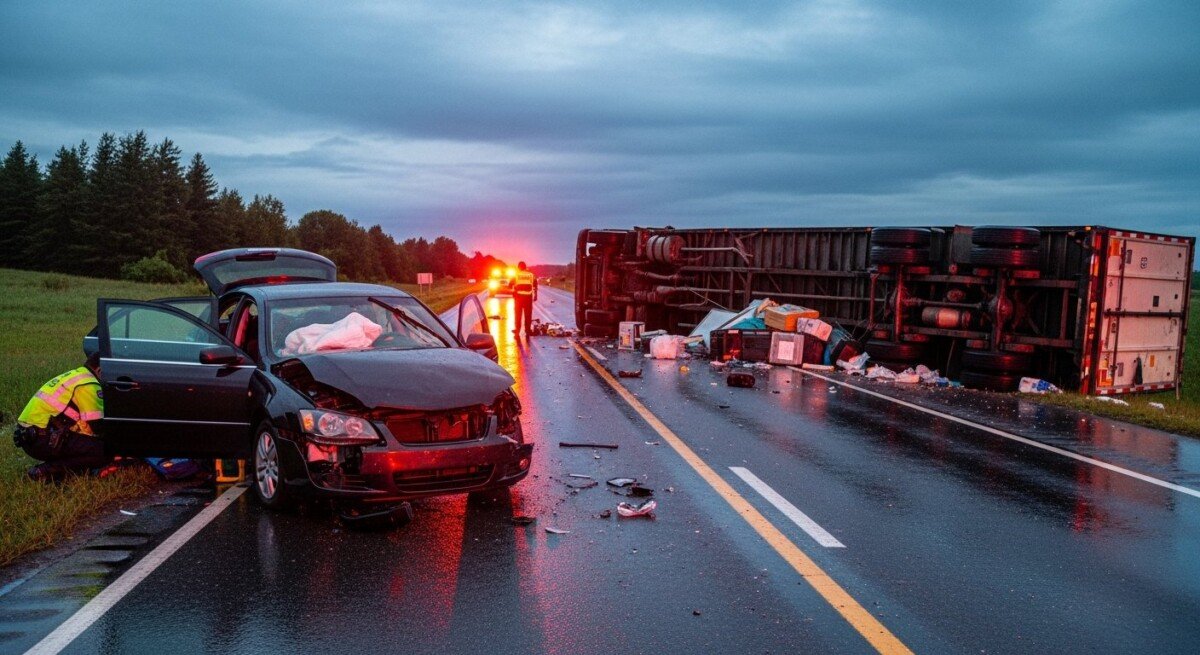
Being involved in a collision with a commercial truck is a terrifying and life-altering event. The immediate aftermath is often filled with pain, confusion, and mounting financial pressure from medical bills and lost wages. In the search for answers and accountability, a central question emerges for victims: can I sue the truck owner and driver? The short answer is yes, but the legal path is complex and involves navigating a web of state and federal regulations, multiple potentially liable parties, and aggressive insurance companies. Understanding who you can sue, and under what legal theories, is the critical first step toward securing the compensation needed for recovery.
Understanding Liability in Truck Accident Cases
Unlike typical car accidents, truck crashes often involve multiple layers of liability. This is because commercial trucks operate under a unique set of rules. The driver, the trucking company that owns or leases the vehicle, the cargo loader, and even the manufacturer of truck parts can share responsibility. To establish a successful claim, you must prove negligence. This means demonstrating that one or more parties failed to act with reasonable care, and that failure directly caused your injuries. For the driver, negligence could be speeding, fatigue, or distracted driving. For the truck owner or carrier, negligence often involves systemic failures like improper maintenance, hiring unqualified drivers, or violating federal hours-of-service rules that govern how long a driver can be on the road.
The legal principle of respondeat superior, Latin for “let the master answer,” is frequently pivotal. This doctrine holds an employer (the trucking company) liable for the negligent acts of an employee (the driver) performed within the scope of their employment. Therefore, even if the driver was directly at fault, the company that employed them is typically financially responsible. This is crucial because a company’s insurance policy limits are almost always substantially higher than an individual driver’s. However, companies may try to argue the driver was an independent contractor, not an employee, to avoid liability. An experienced attorney will investigate the true nature of the relationship to counter such claims.
Key Parties You Can Sue After a Truck Crash
Identifying all potentially liable parties maximizes your chance of full recovery. A thorough investigation is essential to uncover every link in the chain of responsibility.
- The Truck Driver: The most direct target, the driver can be sued for personal negligence behind the wheel. Their personal auto insurance may provide some coverage, but it is often insufficient for serious truck accident injuries.
- The Trucking Company or Carrier: This is usually the primary defendant. Liability stems from the driver’s actions under respondeat superior and from the company’s own direct negligence in areas like hiring, training, supervision, and vehicle maintenance.
- The Truck Owner: If the trucking company leases the vehicle from an owner, that owner may be liable, especially if they failed to properly maintain the truck. Federal regulations place specific maintenance obligations on owners.
- Cargo Loaders and Shippers: Improperly loaded or secured cargo can shift and cause a rollover or loss of control. If an investigation reveals faulty loading, the company responsible for loading the trailer can be held liable.
- Parts Manufacturers: If a mechanical failure like defective brakes, tires, or a steering component caused the crash, the manufacturer of that part may be sued under a product liability theory.
This multi-defendant approach is a key reason why truck accident litigation differs from standard car accident claims. Each party will have its own insurance carrier and legal team aiming to minimize or deny liability. For more on navigating claims with multiple parties, our resource on your legal rights after a car accident provides foundational insights that apply in these complex scenarios.
Critical Evidence in Truck Accident Lawsuits
Building a strong case against a truck owner and driver requires immediate and meticulous evidence collection. Trucking companies and their insurers begin building their defense almost immediately. You must do the same. Essential evidence includes the police report, photos of the scene and vehicles, witness statements, and your own medical records. However, the most critical pieces of evidence in trucking cases are often those unique to the industry.
The truck’s Electronic Logging Device (ELD) is a digital record of the driver’s hours of service, capturing driving time, breaks, and periods of rest. Violations of hours-of-service rules are a common indicator of driver fatigue. The truck’s Event Data Recorder (EDR), or “black box,” records vehicle speed, brake application, steering input, and engine RPM in the moments before a crash. This data can prove speeding or erratic driving. Maintenance logs are required by federal law and can show if the company ignored necessary repairs. Finally, the driver’s qualification file, which includes employment history, training records, and driving violations, can reveal negligent hiring if the company knew or should have known the driver was unfit.
Preserving this evidence is time-sensitive. Companies are legally required to maintain certain records, but they may only be required for a limited period. A legal demand for preservation, known as a spoliation letter, is often one of the first steps an attorney takes to prevent the destruction of this vital data. The process of gathering this technical evidence is complex, similar to the detailed investigation needed in other serious collisions, such as those detailed in our guide on suing a hit and run driver.
Damages You Can Recover in a Truck Accident Claim
Successfully suing a truck owner and driver allows you to seek compensation for all losses stemming from the accident. These damages are categorized as economic and non-economic. Economic damages have a clear monetary value and include past and future medical expenses, lost wages, loss of future earning capacity, and property damage. Non-economic damages compensate for intangible losses like pain and suffering, emotional distress, loss of enjoyment of life, and disfigurement.
In cases involving egregious negligence, such as a driver with a known history of violations being allowed on the road, plaintiffs may also pursue punitive damages. Unlike compensatory damages meant to “make whole,” punitive damages are intended to punish the defendant and deter similar conduct in the future. They are not available in every case and are subject to state-specific caps and standards of proof. The total value of your claim depends on the severity of your injuries, the clarity of liability, and the skill of your legal representation in presenting the full impact of the crash on your life.
Navigating Insurance and Legal Deadlines
Dealing with insurance companies after a truck accident is a challenging process. The trucking company’s insurer has a team of adjusters and lawyers whose goal is to settle your claim for as little as possible, often quickly before you understand the full extent of your injuries. They may try to get a recorded statement from you to use against you later. It is imperative not to provide any statement or sign any settlement offer without consulting an attorney. Initial settlements are frequently far lower than what is truly warranted, especially for injuries like whiplash that can have long-term effects, a topic explored in suing for whiplash injury.
You must also be acutely aware of the statute of limitations. This is the legal deadline for filing a lawsuit in court. It varies by state, typically ranging from one to three years from the date of the accident. If you miss this deadline, you will almost certainly be barred from ever pursuing your claim, regardless of its merits. Furthermore, if the trucking company is a government entity or if a wrongful death is involved, even shorter notice periods may apply. An attorney will ensure all deadlines are met and proper notices are filed.
Frequently Asked Questions
What if the truck driver was not at fault?
Even if the truck driver was not the primary cause, the trucking company may still share liability if its actions contributed. Furthermore, you may have a claim against other drivers involved. Comparative negligence laws in most states allow you to recover damages even if you are partially at fault, though your compensation may be reduced.
How long does a truck accident lawsuit take?
These cases can take from several months to a few years to resolve. The timeline depends on the complexity of the case, the severity of injuries, the number of defendants, and whether a settlement is reached or a trial is necessary. Thorough investigation and negotiation take time.
Do I need a lawyer to sue a trucking company?
While not legally required, it is highly advisable. The disparity in resources and legal knowledge between an individual and a large trucking company and its insurer is vast. An experienced attorney levels the playing field, handles the complex investigation, negotiates with insurers, and advocates for your full recovery in court if needed.
What if the truck was from another state?
Interstate trucking is regulated by federal law, which provides a consistent framework. Your lawsuit will typically be filed in the state where the accident occurred. An attorney can determine the best jurisdiction for your case and navigate any multi-state legal issues.
For insights into how liability is assessed in other complex accident scenarios, you can review our article on legal options after a parking lot accident.
If you or a loved one has been injured in a truck accident, taking decisive action is critical. The question of whether you can sue the truck owner and driver has a clear answer, but the process of doing so successfully requires strategic legal expertise. By understanding the layers of liability, the importance of evidence, and the true value of your claim, you can make informed decisions. Consulting with a legal professional who specializes in truck accident cases is the most effective step to protect your rights and secure the compensation necessary for your long-term recovery and financial stability.