
Understanding Your Rights After a Rollover Accident: Free Case Review
Get a free case review for your rollover accident to understand your legal options. Call (833) 227-7919 to speak with an expert today.

By Corin Ashford
Surviving a vehicle rollover is a traumatic event that leaves victims with not only physical injuries but also a cascade of legal and financial questions. The aftermath is often overwhelming, with mounting medical bills, lost income, and complex insurance negotiations. In these critical moments, understanding your legal rights and the true value of your claim is paramount. Many reputable personal injury law firms offer a free case review for rollover accident victims, a no-obligation consultation that serves as a crucial first step toward recovery and justice. This process provides clarity on liability, potential compensation, and the legal pathway forward, all without any upfront cost to you.
The Unique Dangers of Rollover Accidents
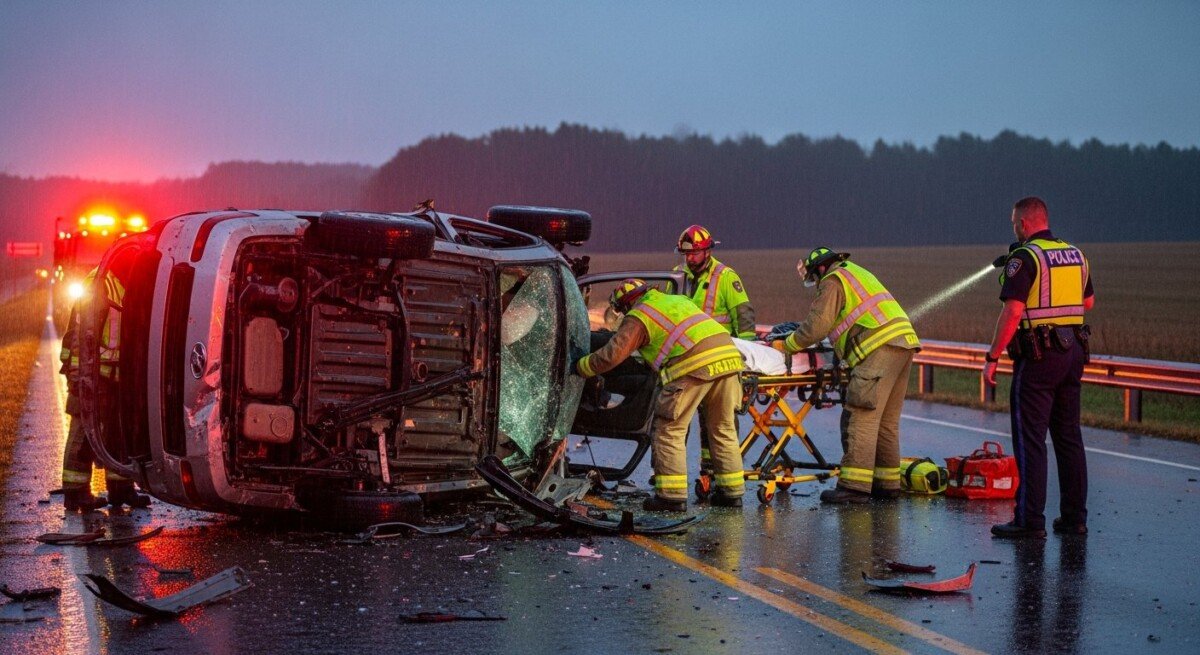
Rollover accidents are among the most violent and dangerous types of motor vehicle collisions. Unlike a standard fender-bender, a rollover involves the vehicle tipping onto its side or roof, often resulting in multiple impacts. This dynamic significantly increases the risk of catastrophic injuries, including traumatic brain injury (TBI), spinal cord damage, severe fractures, and internal organ damage. The physics of a rollover also means that occupants can be violently thrown around the cabin, even while wearing seatbelts, leading to complex injury patterns. Furthermore, these accidents frequently involve issues of vehicle design or manufacturing defects, such as a high center of gravity in SUVs or faulty roof strength, which can turn a survivable crash into a deadly one. Understanding these unique dangers is essential for building a strong legal claim that accurately reflects the severity of your experience.
What a Free Case Review Actually Involves
A free case review is a confidential, no-pressure meeting with a legal professional to evaluate the merits of your potential claim. It is not a sales pitch, but a diagnostic session for your case. During this review, an attorney or a qualified case manager will listen carefully to your account of the accident, review any initial documentation you have, and assess key factors like liability, the extent of your injuries, and the available insurance coverage. The goal is to provide you with an honest, preliminary assessment of your legal options. This is an opportunity for you to ask questions about the legal process, understand how attorney fees work (typically on a contingency basis, meaning no fee unless you win), and gauge your comfort level with the firm. To make the most of this meeting, it is helpful to gather relevant information beforehand. For a comprehensive list of what to prepare, you can reference our detailed guide on what to bring to a free case review.
Key Benefits of Starting With a Free Consultation
Initiating your legal journey with a free case review offers several concrete advantages that protect you and empower your decision-making. First and foremost, it eliminates financial risk. You can explore your legal rights and the strength of your claim without any obligation or out-of-pocket expense. Second, it provides early case assessment. An experienced attorney can identify critical issues you may have overlooked, such as the need for an immediate accident reconstruction, preservation of evidence from the vehicle, or identifying all potentially liable parties. Third, it helps you avoid common pitfalls. Insurance companies often move quickly to secure a low-ball settlement before you understand the full scope of your injuries. A lawyer can advise you on communicating with insurers and avoiding statements that could harm your claim. Finally, it establishes a relationship with a professional who can guide you through a complex system, allowing you to focus on your physical recovery while they handle the legal burdens.
The specific steps and insights you gain from this initial meeting are vital. To better understand the structure and value of this process, consider reading about what to expect from a free case review with an injury attorney.
Critical Evidence in a Rollover Accident Claim
Building a successful rollover accident claim hinges on compelling evidence that establishes both fault and the severe nature of the damages. Unlike simpler collisions, rollovers often require a multi-faceted investigation. Essential evidence includes the police accident report, which contains the responding officer’s initial observations and may note traffic violations. Photographs and videos from the scene, including skid marks, road conditions, vehicle final position, and damage, are invaluable. Medical records are the cornerstone for documenting your injuries and linking them directly to the accident. Witness statements can provide independent accounts of how the rollover occurred. Perhaps most critically, data from the vehicle’s Event Data Recorder (EDR), or “black box,” can provide precise information on speed, braking, and steering inputs in the seconds before the crash. Furthermore, in cases where a vehicle defect is suspected, expert analysis from an automotive engineer may be necessary. Your attorney will spearhead the collection and analysis of this evidence to construct a powerful narrative for settlement negotiations or at trial.
Determining Liability and Potential Compensation
Liability in a rollover accident is rarely straightforward. Multiple parties may share responsibility. A common cause is driver error, such as speeding, aggressive steering, or distracted driving. However, liability can also extend to other entities. Government agencies may be liable for dangerous road design, like improperly banked curves or lack of guardrails. Vehicle manufacturers can be held responsible under product liability law if a defect, like unstable design or a faulty tire, contributed to the rollover. In commercial trucking accidents, the trucking company’s policies and maintenance records may be scrutinized. An attorney’s investigation aims to identify all negligent parties to maximize the potential sources of compensation.
The compensation sought in a serious rollover case is designed to make the victim whole, covering both economic and non-economic damages. Recoverable damages typically include:
- All past and future medical expenses related to the accident
- Lost wages and loss of future earning capacity
- Property damage, including the total loss of your vehicle
- Physical pain and suffering
- Emotional distress, mental anguish, and loss of enjoyment of life
- In cases of extreme negligence or intentional harm, punitive damages may also be pursued.
Calculating these amounts, especially future needs and intangible losses like pain and suffering, requires legal experience and often the testimony of medical and financial experts.
Navigating Insurance After a Severe Rollover
Dealing with insurance companies after a catastrophic rollover accident is a challenging process. Adjusters for the at-fault party’s insurer are trained to minimize payouts. They may quickly offer a settlement that seems attractive but often falls far short of covering long-term needs. It is crucial to remember that you are not obligated to accept the first offer, and you should never provide a recorded statement or sign a medical release without consulting an attorney. Your own insurance policy may also come into play, particularly through underinsured/uninsured motorist coverage or Personal Injury Protection (PIP), depending on your state. A lawyer can handle all communications with insurers, interpret complex policy language, and fight against bad faith tactics to protect your interests and work toward a full and fair recovery.
Frequently Asked Questions
How much does it cost to get a free case review for my rollover accident?
It costs nothing. A genuine free case review involves no fees, retainers, or hidden charges. Reputable personal injury firms work on a contingency fee basis, meaning their fee is a percentage of the recovery they secure for you, and only if they win your case.
What if I was partially at fault for the rollover?
Many states follow comparative negligence rules. This means you can still recover damages even if you were partially to blame, but your compensation will be reduced by your percentage of fault. An attorney can assess how your state’s laws apply to your specific situation.
How long do I have to file a lawsuit after a rollover accident?
Every state has a statute of limitations, a strict deadline to file a lawsuit. This period is typically two to three years from the date of the accident, but it can vary. Missing this deadline usually results in losing your right to sue forever, making timely consultation critical.
What if my rollover was caused by a vehicle defect like a faulty roof?
This becomes a product liability claim in addition to a standard personal injury case. These claims are highly complex and require investigation by engineering experts. They often involve large automotive manufacturers and their insurers, necessitating an attorney with specific experience in this area. A thorough free case review with an injury attorney will identify such factors early on.
What should I do immediately after a rollover accident, before calling a lawyer?
Seek medical attention immediately, even if you feel okay, as some injuries have delayed symptoms. Call the police to file a report. If you are able, document the scene with photos and collect contact information from witnesses. Avoid discussing fault or giving detailed statements to other drivers’ insurers. Then, contact a personal injury attorney for a free case review to discuss the next steps, which should include following all medical advice. Proper documentation from the start is key, and you can learn more about organizing this in our checklist for what to bring to a free case review.
The journey to recovery after a devastating rollover accident is long and fraught with challenges. While you concentrate on healing, a skilled legal advocate can shoulder the burden of proving liability, navigating insurance complexities, and fighting for the compensation you need to rebuild your life. Taking the first step with a free, no-obligation case review empowers you with knowledge and outlines a clear path forward, ensuring your rights are protected from the very beginning.