Restaurant Denies Responsibility for Injury: Your Next Steps
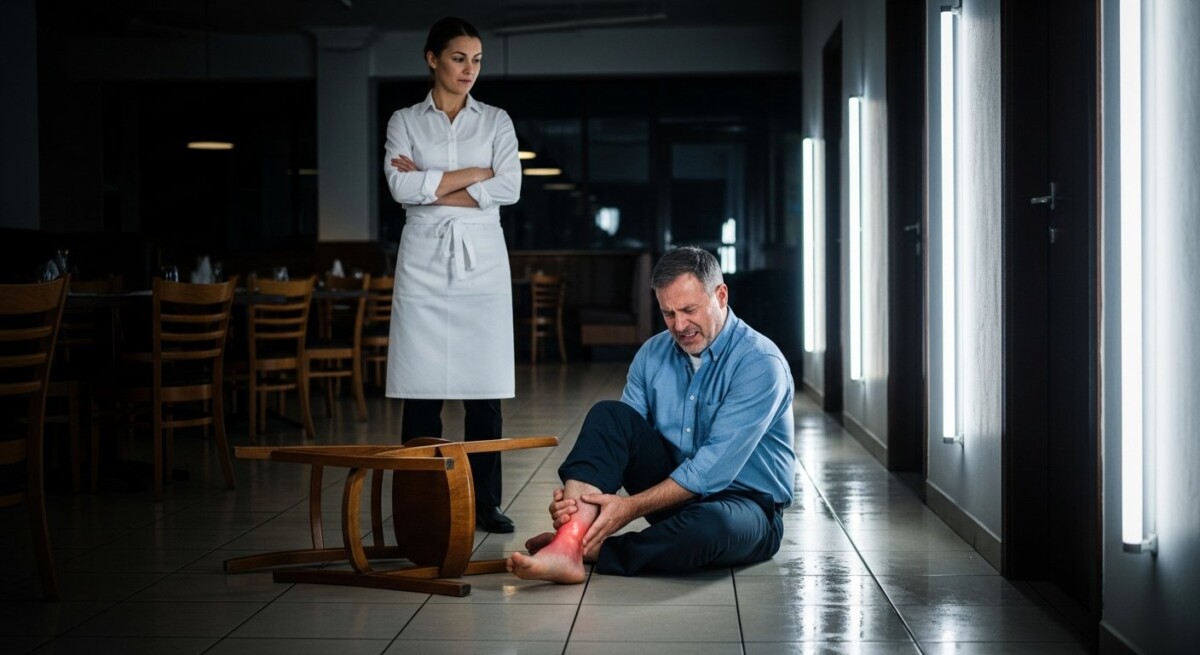
You are finishing a meal at a busy restaurant when you slip on a wet floor near the restroom. Your ankle twists, and the pain is immediate. You ask to speak with the manager, but the manager shrugs and says the restaurant is not liable because you should have watched where you were walking. This scenario plays out more often than diners expect. When a restaurant denies responsibility, many victims feel powerless and unsure of their legal rights. Yet the law in most states holds commercial property owners to a high standard of care. Understanding what to do after a restaurant denies responsibility can mean the difference between paying thousands in medical bills out of pocket and recovering fair compensation for your injury.
Restaurant owners and their insurance companies frequently use denial as a first line of defense. They hope you will walk away without filing a claim. But you do not have to accept that outcome. By gathering evidence, understanding liability rules, and working with a qualified attorney, you can push back against a restaurant that refuses to accept responsibility. This article walks through the specific steps to take when a restaurant blames you for your own injury and explains how to protect your right to compensation.
Why Restaurants Often Deny Responsibility
A denial of responsibility is rarely an admission that the restaurant did nothing wrong. Instead, it is a strategic move designed to discourage you from pursuing a claim. Restaurant owners and their insurers know that many injured patrons give up after hearing the word "no." They also understand that proving negligence requires evidence, and if you do not collect that evidence immediately, the case weakens quickly.
Common reasons a restaurant denies responsibility include the following. The restaurant may claim you were not paying attention or that you were behaving recklessly. They might argue that the spill or hazard was created by another customer, not an employee, and therefore the restaurant had no time to clean it. Some restaurants assert that you signed a waiver or accepted a disclaimer when you entered the premises, though such waivers rarely hold up in court for slip and fall injuries. Others simply deny that the hazard existed at all, hoping that without witnesses or photos, you will have no way to prove your version of events.
In our guide on what happens when a store denies responsibility for your injury, we explain how commercial property owners use similar tactics to avoid liability. The pattern is consistent across retail and dining establishments: deny first, ask questions later. The key is to anticipate this response and prepare your case before you even leave the restaurant.
Immediate Steps to Take After the Denial
The moment a restaurant manager or owner denies responsibility, your focus should shift to preserving evidence. Memory fades quickly, and physical evidence can be cleaned up or removed within minutes. Take these actions while you are still on the premises or as soon as possible after the incident.
First, document the scene with your smartphone. Take clear photos of the hazard that caused your fall, whether it is a wet floor, torn carpet, broken tile, or spilled food. Capture wide shots that show the area in context, and take close ups of the specific defect or substance. Photograph your shoes, any damage to your clothing, and the condition of the floor around you. If there are warning signs, photograph their position or lack thereof. Second, ask any witnesses for their contact information. Other diners who saw the incident can provide independent accounts that contradict the restaurant's version of events. Third, request a copy of the incident report if the restaurant filled one out. Many chains have a formal process for documenting injuries, and that report may contain admissions or details that help your case.
If the restaurant refuses to provide a report or asks you to sign something, do not sign any document without reading it carefully. Some restaurants present a waiver or release form disguised as a simple accident report. Signing such a document could forfeit your right to sue. Instead, politely decline and state that you will have your attorney review any paperwork.
Understanding Premises Liability in Restaurants
Restaurants are considered commercial premises, and the law imposes a duty of reasonable care on the owner or operator. This means the restaurant must regularly inspect the property, address hazards promptly, and warn customers of dangers that cannot be fixed immediately. If the restaurant fails in any of these duties and a customer is injured, the restaurant may be liable for negligence.
To establish liability after a restaurant denies responsibility, you must prove four elements: duty, breach, causation, and damages. The duty is the legal obligation the restaurant owes to you as an invitee. A breach occurs when the restaurant fails to act reasonably, such as leaving a spill unattended for thirty minutes. Causation means the breach directly caused your injury. Damages are the actual losses you suffered, including medical bills, lost wages, and pain and suffering.
Restaurants often try to defeat causation by arguing that you would have fallen anyway or that the hazard was open and obvious. An open and obvious defense claims that you should have seen the wet floor or broken step and avoided it. However, courts in many states have ruled that even open and obvious hazards can still be the restaurant's responsibility if the restaurant had time to fix them or if the hazard was in an area where customers were distracted, such as near a serving station or restroom entrance.
How to Respond When the Restaurant Blames You
When a restaurant denies responsibility, the most common counterargument is comparative negligence. Comparative negligence means the restaurant claims you were partially or fully at fault for your own injury. For example, the restaurant might say you were looking at your phone instead of watching where you walked, or that you were wearing shoes with poor traction.
In our guide on dog owner denies responsibility: your legal options, we discuss a similar dynamic where the property owner shifts blame to the victim. The legal strategy for overcoming this defense involves showing that the restaurant's negligence was the primary cause of the injury, not your own actions. If the restaurant failed to place a wet floor sign after mopping, for instance, that failure is a breach of duty regardless of whether you were looking down at your phone.
To counter a comparative negligence claim, gather evidence that demonstrates the restaurant's direct role. Security camera footage is often the strongest proof. Request that the restaurant preserve all video from the time and location of the incident. If the restaurant refuses or claims the footage is unavailable, your attorney can issue a spoliation letter that warns the restaurant not to destroy evidence. If footage is later destroyed, the court may instruct the jury to assume the footage would have been favorable to your case.
Building a Strong Claim After Denial
Once you have left the restaurant and received initial medical treatment, the next step is to build a formal claim. This process involves several key components that strengthen your position when the restaurant continues to deny responsibility.
- Medical documentation: Visit a doctor or emergency room as soon as possible. A medical record that links your injury to the fall creates a clear chain of causation. Follow all treatment recommendations, including physical therapy or specialist referrals, to show that your injury is serious and ongoing.
- Expense tracking: Keep every receipt, bill, and statement related to your injury. This includes ambulance fees, emergency room costs, prescription medications, diagnostic imaging, and lost income from missed work. Insurance adjusters evaluate claims based on documented losses, so thorough records increase your settlement value.
- Communication log: Write down every conversation you have with the restaurant, its insurance company, or its legal representatives. Note the date, time, name of the person you spoke with, and a summary of what was said. If the restaurant denies responsibility verbally, having a written record prevents them from later claiming they offered to help.
Each of these elements works together to create a paper trail that contradicts the restaurant's denial. Without documentation, the restaurant's insurer will likely side with the restaurant and offer nothing or a very low settlement. With strong evidence, the insurer may reconsider its position and negotiate in good faith.
When to Involve an Attorney
Many injured diners wonder whether they need an attorney for a restaurant slip and fall case. The answer depends on the severity of the injury and the restaurant's response. If the restaurant denies responsibility and your medical bills exceed a few thousand dollars, hiring an attorney is almost always worthwhile. A lawyer can handle communications with the insurance company, gather evidence that you might not have access to, and file a lawsuit if necessary.
Attorneys who handle premises liability cases work on a contingency fee basis, which means they only get paid if you recover compensation. This arrangement allows you to pursue your claim without upfront legal fees. When you contact a legal referral service like FreeLegalCaseReview.com, you can receive a free case evaluation that helps you understand the strength of your claim and whether an attorney is likely to take your case.
If your injury is minor, such as a small bruise or a sprain that heals in a few days, you may be able to handle the claim yourself by sending a demand letter to the restaurant's insurance company. However, even in minor cases, a restaurant that denies responsibility will often refuse to pay anything unless you have evidence and a clear legal argument. An attorney can draft a demand letter that cites relevant case law and puts pressure on the insurer to settle.
How Insurance Companies Handle Restaurant Denials
When a restaurant denies responsibility, the claim is typically handed over to the restaurant's liability insurance carrier. The insurance adjuster's job is to minimize the payout, and they have several tools at their disposal. The adjuster will often repeat the restaurant's denial and ask you to provide proof. They may request a recorded statement, which you should never give without an attorney present. Recorded statements are designed to catch inconsistencies that the adjuster can use to deny the claim entirely.
Insurance adjusters also use delay tactics. They may tell you they are investigating the claim and need more time, hoping that you will grow frustrated and drop the matter. In some cases, they offer a lowball settlement that covers only a fraction of your medical bills, contingent on you signing a release that waives all future claims. Accepting such an offer before you know the full extent of your injuries is a common mistake. Once you sign the release, you cannot go back and ask for more money, even if your condition worsens.
To protect yourself, never accept a settlement offer until you have reached maximum medical improvement, which is the point where your doctor says your condition is stable and unlikely to change. An attorney can advise you on the appropriate time to negotiate and can reject low offers on your behalf.
Legal Options When the Restaurant Refuses to Pay
If the restaurant continues to deny responsibility and the insurance company refuses to offer a fair settlement, you have the option to file a lawsuit. Lawsuits for premises liability are filed in civil court, and the process involves filing a complaint, exchanging evidence through discovery, and potentially going to trial. Most cases settle before trial, but the threat of a lawsuit can motivate the restaurant to take your claim seriously.
Before filing a lawsuit, consider the statute of limitations in your state. Each state sets a deadline for filing personal injury claims, typically between one and three years from the date of the injury. Missing this deadline means you lose your right to sue forever. If the restaurant denies responsibility and you are approaching the statute of limitations, your attorney can file a complaint to preserve your rights while continuing to negotiate.
Another legal option is to file a complaint with your local health department or consumer protection agency. While these agencies do not award compensation, they can investigate the restaurant and issue citations for safety violations. A citation from the health department can be used as evidence in your civil case to show that the restaurant had a history of unsafe conditions.
Frequently Asked Questions
Can a restaurant deny responsibility if I signed a waiver at the entrance?
Most waivers posted at restaurant entrances are not enforceable for slip and fall injuries. Waivers must be specific, clear, and signed voluntarily to be valid. A small sign near the door that says "enter at your own risk" is usually not enough to waive the restaurant's duty to maintain safe premises. Courts generally disallow waivers that attempt to excuse gross negligence or willful misconduct.
What should I do if the restaurant refuses to give me their insurance information?
If the restaurant denies responsibility and refuses to provide insurance details, you can obtain the information by filing a claim with the state's insurance department or by having your attorney send a formal demand letter. In many states, businesses are required to disclose their liability insurance information upon request after an injury. If they continue to refuse, your attorney can subpoena the information during the litigation process.
How long do I have to file a lawsuit after a restaurant injury?
The statute of limitations for premises liability claims varies by state. In most states, you have two years from the date of the injury to file a lawsuit. Some states allow one year, while others allow up to three. Check with a local attorney to confirm the deadline in your jurisdiction. If the restaurant denies responsibility, do not wait until the last minute to take legal action, as gathering evidence takes time.
Can I still recover compensation if I was partially at fault?
Yes, in many states. Under comparative negligence laws, you can still recover compensation even if you were partially at fault, though your award will be reduced by your percentage of fault. For example, if the court finds you 20 percent at fault and your damages total $10,000, you would receive $8,000. However, if you are found to be 50 percent or more at fault in some states, you may be barred from recovering anything.
Final Thoughts on Restaurant Liability Denials
When a restaurant denies responsibility, the natural reaction is frustration and uncertainty. But denial is not the end of the road. It is simply the beginning of a legal process that requires patience, evidence, and the right guidance. By documenting the scene, seeking medical care, and consulting with a legal professional, you can hold the restaurant accountable even when they refuse to admit fault. Restaurants have a legal duty to keep their premises safe, and when they fail, injured patrons have the right to seek compensation for their losses. If you are dealing with a restaurant that denies responsibility, do not let their refusal discourage you. Take the steps outlined here and reach out to a qualified attorney who can evaluate your case and fight for the recovery you deserve.