Can I Claim Injury From Construction Debris? Legal Rights
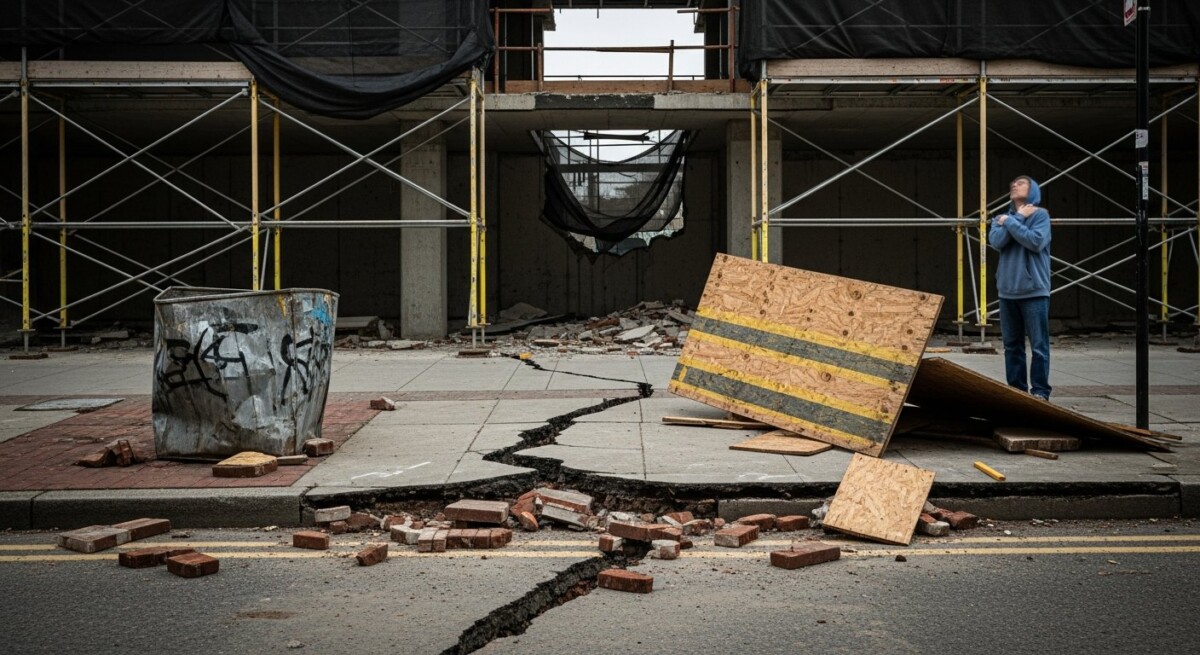
Imagine walking down a city sidewalk and suddenly a piece of plywood or a loose brick falls from a nearby construction site, striking you on the shoulder or head. Or perhaps you are driving past a roadwork zone when a chunk of asphalt flies up and cracks your windshield, causing you to swerve and hit a guardrail. These scenarios happen more often than most people realize, and they raise an urgent question: can I claim injury from construction debris? The short answer is yes, you typically can, but the process involves several legal layers that determine who pays for your medical bills, lost wages, and pain and suffering. Construction sites are inherently dangerous environments, and when debris escapes the work zone and injures a passerby, the law often holds the responsible parties accountable. This article walks you through the key legal principles, the types of compensation available, and the steps you should take immediately after such an incident.
Understanding Liability for Construction Debris Injuries
When debris from a construction site injures you, liability usually falls on one or more parties who had a duty to keep the area safe. The core legal concept here is negligence. To succeed in a claim, you must show that someone owed you a duty of care, they breached that duty, and the breach directly caused your injury. Construction companies, property owners, general contractors, and subcontractors all have a legal obligation to secure their worksites so that debris does not harm people or property outside the perimeter. This includes properly fencing the area, using netting or scaffolding covers, and regularly inspecting for loose materials.
However, liability is not always straightforward. For example, if a subcontractor negligently stacked materials on a high floor and a gust of wind blew them off, the subcontractor may bear primary responsibility. But the general contractor who failed to oversee the safety protocols could also be partially liable. In some cases, the property owner who hired the construction company might be on the hook if they knew about unsafe conditions and did nothing. This is why legal professionals often investigate multiple potential defendants to maximize your recovery. In our guide on can I claim injury after a boating accident, we discuss similar principles of duty and breach that apply across many personal injury contexts.
Types of Construction Debris That Commonly Cause Injuries
Not all debris is created equal in the eyes of the law, but most falling or flying objects from a construction site can form the basis of a valid claim. Common examples include:
- Tools dropped from scaffolding, such as hammers, wrenches, or power drills.
- Building materials like bricks, tiles, lumber, or drywall sheets that fall from upper floors.
- Loose gravel, asphalt chunks, or concrete fragments kicked up by heavy machinery near roadways.
- Nails, screws, or metal scraps that become projectiles from cutting or grinding equipment.
- Debris carried by wind, such as tarps, insulation, or plastic sheeting, that strikes pedestrians or vehicles.
Each type of debris presents different evidentiary challenges. For instance, a falling brick may leave clear witness accounts and physical evidence, while windblown debris might be harder to trace to a specific source. Regardless, documenting the scene, gathering witness statements, and preserving the debris itself can significantly strengthen your case. Remember, the key is to connect the debris directly to the construction activity and show that the responsible parties failed to take reasonable precautions.
Proving Negligence in a Construction Debris Claim
To win compensation, you need to establish four elements: duty, breach, causation, and damages. Let us break each down in the context of construction debris. First, the duty: contractors and property owners owe a duty to protect people who are lawfully near the site. This duty extends to pedestrians on public sidewalks, drivers on adjacent roads, and even occupants of neighboring buildings. Second, breach occurs when they fail to follow industry safety standards, building codes, or OSHA regulations. For example, if no debris netting was installed on a high-rise project despite code requirements, that is a clear breach.
Causation is often the most contested element. You must prove that the specific debris that hit you came from the construction site and that the lack of safety measures directly caused your injury. This can require expert testimony from engineers or safety professionals who can reconstruct the incident. Finally, damages refer to the actual losses you suffered: medical expenses, lost income, property damage, and pain and suffering. Without documented damages, even a strong liability case may yield little compensation. In our article on can I claim injury after a minor crash, we emphasize how crucial medical documentation is for proving the severity of injuries, and the same holds true here.
Potential Defendants in a Construction Debris Case
Identifying all responsible parties can be complex, but it is essential for securing full compensation. The following entities may be named as defendants:
- The general contractor: They oversee the entire project and are ultimately responsible for site safety.
- Subcontractors: If a specific trade (e.g., roofing, demolition) caused the debris, that subcontractor may be liable.
- The property owner: Owners can be held liable if they knew about unsafe conditions or failed to hire a competent contractor.
- Architects or engineers: If a design flaw contributed to debris hazards, design professionals might share liability.
- Equipment manufacturers: In rare cases, a defective crane or hoist that dropped debris could lead to a product liability claim.
Each defendant may have different insurance policies that could cover your claim. For instance, the general contractor likely carries commercial general liability insurance, while subcontractors may have their own policies. An experienced attorney can help you navigate this web of potential coverage sources. If you are unsure about how liability waivers might affect your rights, our guide on can I claim injury despite signing a liability waiver provides valuable insights into when such waivers are enforceable.
What to Do Immediately After a Construction Debris Injury
Your actions in the minutes and hours following the incident can make or break your claim. Follow these steps to protect your legal rights:
- Seek medical attention: Even if you feel fine, some injuries like concussions or internal bleeding may not show symptoms immediately. A medical record creates a direct link between the incident and your injuries.
- Report the incident: Notify the site foreman, property owner, or local police. Ask for a written incident report and keep a copy for your records.
- Document everything: Take photos or videos of the debris, your injuries, the surrounding area, and any safety violations you observe. Collect names and contact information of witnesses.
- Preserve the debris: If possible and safe, keep the actual debris as evidence. Do not clean up or discard anything until your attorney has reviewed it.
- Do not give recorded statements: Insurance adjusters may contact you quickly, often offering a quick settlement. Do not accept or sign anything without legal advice. Their goal is to minimize payout, not to help you.
These steps help create a clear narrative of what happened and who was at fault. Without prompt documentation, the construction site may be altered, debris removed, and witnesses lost. Time is of the essence. Additionally, your medical records will serve as the foundation for calculating your damages, so follow all treatment recommendations and keep a pain journal to track your recovery.
Compensation Available for Construction Debris Injuries
Victims of construction debris accidents can seek several types of compensation, often referred to as damages. These fall into two main categories: economic and non-economic. Economic damages include quantifiable losses such as hospital bills, surgery costs, physical therapy, prescription medications, lost wages, reduced earning capacity, and property repair or replacement. For example, if a falling beam crushes your car, the repair bill is a clear economic loss. Similarly, if you miss six weeks of work due to a broken leg, your lost income is recoverable.
Non-economic damages compensate for intangible harms like pain and suffering, emotional distress, loss of enjoyment of life, and permanent disfigurement or disability. These are harder to calculate but can represent a significant portion of a settlement or verdict. In cases of extreme negligence, punitive damages may also be awarded to punish the defendant and deter future misconduct. However, punitive damages are rare and typically require proof of reckless or intentional behavior. The total value of your claim depends on the severity of your injuries, the clarity of liability, and the insurance limits available.
Statute of Limitations and Time Limits
Every state imposes a deadline, called the statute of limitations, for filing personal injury lawsuits. For construction debris injuries, this deadline typically ranges from one to six years, depending on where the incident occurred. For example, California allows two years from the date of injury, while New York gives three years. If you miss the deadline, you lose your right to sue entirely, no matter how strong your case. There are exceptions for cases involving government entities (such as debris from a public road project) where you may need to file a notice of claim within six months or less.
Because these deadlines vary and can be complex, it is critical to consult an attorney as soon as possible. Waiting too long can also cause evidence to degrade or witnesses to become unavailable. An attorney can determine which deadline applies to your situation and ensure all paperwork is filed on time. In some cases, the clock may start ticking from the date you discovered the injury rather than the date of the incident, but this is not guaranteed.
How an Attorney Can Help With Your Claim
Navigating a construction debris claim without legal representation is risky. Insurance companies have teams of adjusters and lawyers working to minimize payouts. An experienced personal injury attorney levels the playing field. They will investigate the accident, gather evidence, identify all liable parties, calculate the full value of your damages, and negotiate with insurers on your behalf. If a fair settlement cannot be reached, they can file a lawsuit and take your case to trial.
Most personal injury attorneys work on a contingency fee basis, meaning you pay nothing upfront and only owe a fee if they win your case. This arrangement makes legal help accessible even if you are facing mounting medical bills. Additionally, attorneys often have access to expert witnesses, such as engineers or safety consultants, who can strengthen your case. They also understand the nuances of local building codes and OSHA regulations, which can be crucial for proving negligence. For those injured in public transit scenarios, our article on can I claim injury after a public transport accident illustrates how similar legal strategies apply when multiple parties are involved.
Frequently Asked Questions
Can I claim injury from construction debris if I was trespassing?
Generally, trespassers have limited rights. However, property owners still owe a duty to avoid willful or wanton harm. If the construction crew knew trespassers were common and failed to secure the site, you might still have a claim. Consult an attorney to evaluate your specific circumstances.
What if the construction debris fell from a government project?
Claims against government entities involve special rules, including shorter notice periods and caps on damages. You must typically file a notice of claim within a few months. An attorney experienced in municipal liability can guide you through this process.
How long do I have to file a construction debris injury claim?
It depends on your state’s statute of limitations, usually one to six years. For government projects, the notice period can be as short as 30 to 90 days. Contact a lawyer promptly to avoid missing critical deadlines.
Do I need to prove the construction company was negligent?
Yes, you must show that the company failed to exercise reasonable care. However, in some cases, the doctrine of res ipsa loquitur (the thing speaks for itself) may apply if debris would not normally fall without negligence. This can shift the burden of proof to the defendant.
Can I settle my claim without a lawyer?
Technically yes, but it is not recommended. Insurance companies often offer lowball settlements to unrepresented claimants. An attorney can negotiate for a fair amount that covers all your current and future medical costs, lost wages, and pain and suffering.
If you have been injured by construction debris, do not wait to seek legal advice. The team at FreeLegalCaseReview.com can connect you with experienced personal injury attorneys who will evaluate your case for free. Call us at (833) 227-7919 to discuss your options and take the first step toward recovering the compensation you deserve.