
Essential Steps After a Truck Accident: Protect Your Rights
Knowing what to do after a truck accident protects your health and legal rights. For immediate guidance, call (833) 227-7919.

By Lucian Northwood
A collision with a commercial truck is a uniquely terrifying event. The sheer force involved often leads to catastrophic injuries, overwhelming medical bills, and a complex web of insurance and liability issues that can leave victims feeling powerless. In the immediate chaos and confusion, knowing the precise actions to take is not just about gathering evidence, it is about protecting your health, your legal rights, and your financial future. The steps you take in the minutes, hours, and days following a truck accident will profoundly impact your ability to recover physically and secure the compensation you deserve. This guide provides a clear, actionable framework to navigate this difficult situation.
Immediate Actions at the Accident Scene
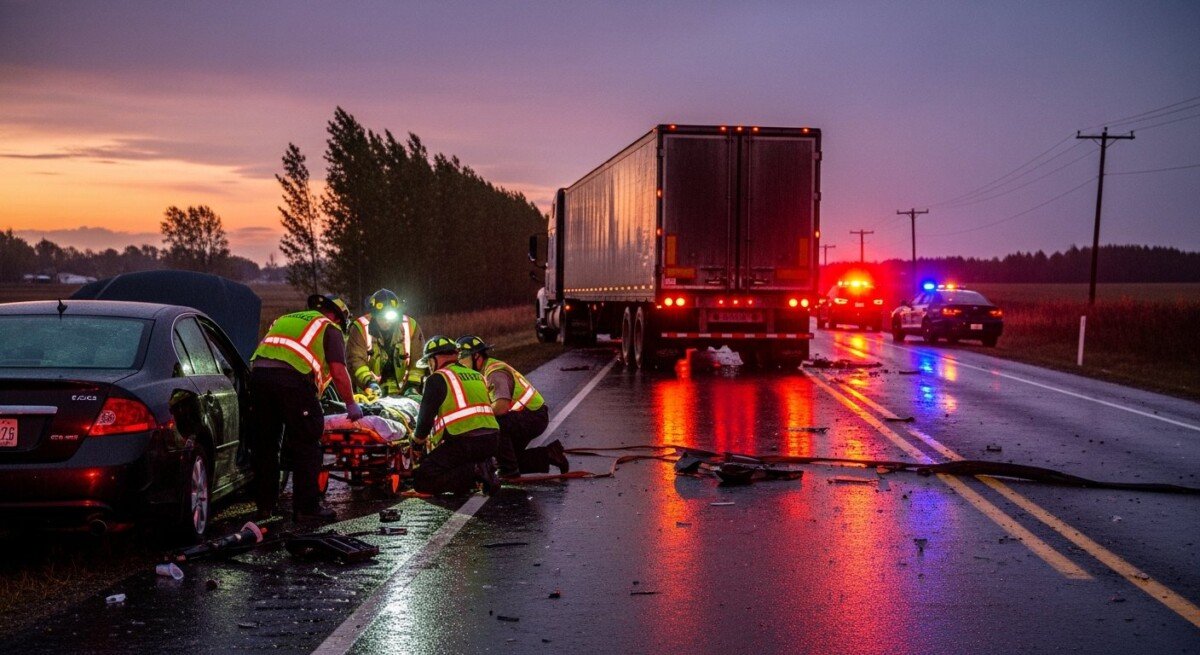
Your priority immediately after impact is safety and securing medical attention. If you are able, check on your passengers and call 911. Even if you feel fine, the adrenaline from the crash can mask serious injuries like whiplash, internal bleeding, or concussions. Insist that paramedics evaluate you at the scene and accept transport to the hospital if recommended. From a legal standpoint, this medical documentation creates a critical link between the accident and your injuries. While waiting for authorities, if it is safe to do so, begin gathering information. Use your phone to take comprehensive photos and videos from multiple angles, capturing vehicle positions, damage, skid marks, road conditions, and any visible injuries. If there are witnesses, politely ask for their names and contact details.
When speaking with the truck driver and law enforcement, be cautious with your words. Stick to the factual details of what happened without speculating, admitting fault, or making definitive statements about your condition. Remember, anything you say can be recorded and potentially used against you later. The police report generated at the scene will be a foundational document for any insurance claim or legal action. The commercial driver is required to carry a specific set of documents, including a commercial driver’s license (CDL), medical certificate, and hours-of-service logs. While you may not be able to secure these yourself, note the trucking company name, USDOT number on the side of the cab, and the truck’s license plate. This information is vital for identifying all potentially liable parties.
The Critical First Days: Documentation and Legal Protection
Once you have left the scene, the process of protecting your claim begins in earnest. Your health must remain the absolute priority. Follow all medical advice, attend follow-up appointments, and keep a detailed journal of your symptoms, pain levels, and how the injuries affect your daily life and work. This personal account can be powerfully persuasive. Simultaneously, start a dedicated file for all accident-related documents. This should include the police report number, all medical records and bills, correspondence with insurance companies, repair estimates for your vehicle, and proof of any lost wages.
One of the most critical decisions you will make is how to communicate with insurance adjusters. You will likely hear from multiple companies: your own auto insurer, the truck driver’s auto insurer, and the trucking company’s commercial liability insurer. It is crucial to understand that these adjusters work for their company’s financial interests, not yours. They may contact you quickly with a settlement offer that seems attractive but is almost certainly far below the true value of your claim, especially before the full extent of your injuries is known. You are not obligated to provide a recorded statement without consulting an attorney, and you should never sign any releases or accept any payment until you have a complete understanding of your long-term prognosis and legal options. The complexities of truck accident claims, which often involve federal regulations, multiple insurance policies, and corporate defendants, make early legal consultation essential. For a deeper understanding of this process, our resource on the truck accident case timeline outlines what to expect.
Understanding Liability and Building Your Case
Truck accidents are rarely simple. Liability can extend far beyond the driver to include the trucking company, the cargo loader, the vehicle manufacturer, or even government entities responsible for road maintenance. Determining fault requires a thorough investigation into factors like driver fatigue, improper maintenance, violating federal safety regulations, or inadequate training. This is where an experienced attorney becomes indispensable. They have the resources and knowledge to subpoena evidence that you cannot access on your own. Key pieces of evidence in a truck accident case often include:
- The Electronic Logging Device (ELD) data, which records driving hours to check for violations of hours-of-service rules.
- The truck’s event data recorder (“black box”), which can capture speed, braking, and steering inputs seconds before the crash.
- Maintenance records for the tractor and trailer.
- The driver’s personnel file and training history.
- Cell phone records to check for distracted driving.
An attorney will methodically gather this evidence to build a compelling narrative of negligence. They will also identify all applicable insurance policies. A commercial trucking company may have a primary liability policy of $1 million or more, and there may be additional umbrella coverage. Furthermore, if the driver was acting outside the scope of employment or the company’s insurance is insufficient, your attorney might pursue your own underinsured motorist coverage. The goal is to ensure every potential source of compensation is identified and leveraged to secure a recovery that covers all your damages, both current and future.
Navigating the Legal Process and Settlement Negotiations
With a strong evidence file compiled, your legal team will enter negotiations with the insurance companies. This phase is a strategic back-and-forth, not a simple request. Your attorney will calculate a demand that includes economic damages (medical expenses, lost income, property damage) and non-economic damages (pain and suffering, emotional distress, loss of enjoyment of life). In cases of egregious negligence, such as a driver under the influence, they may also seek punitive damages. The insurance company will typically respond with a counteroffer, and several rounds of negotiation may follow. A skilled attorney knows how to present the evidence and argue the value of your case persuasively.
If a fair settlement cannot be reached, filing a lawsuit becomes necessary. This formal legal action initiates the discovery process, where both sides exchange information and take depositions. It is important to understand that most personal injury cases, even those that enter litigation, are settled before reaching a trial. However, the credible threat of a trial is often what motivates an insurer to offer a reasonable settlement. Throughout this entire process, from the initial investigation to a potential trial, having dedicated representation levels the playing field against well-funded corporate defendants and their insurers. The right legal partner manages the complex paperwork, deadlines, and legal strategy, allowing you to focus on your recovery. Choosing this partner is a pivotal step, and guidance on selecting a qualified truck accident attorney can help you make an informed decision.
Frequently Asked Questions
How long do I have to file a truck accident lawsuit?
This is governed by a law called the statute of limitations, which varies by state. It typically ranges from one to three years from the date of the accident. Missing this deadline will almost certainly bar you from ever recovering compensation, making immediate consultation with a lawyer imperative.
What if I was partially at fault for the accident?
Many states follow comparative negligence rules. This means your compensation may be reduced by your percentage of fault. For example, if you are found 20% at fault and your damages are $100,000, you could recover $80,000. An attorney can help argue to minimize your assigned fault.
What kind of compensation can I recover?
You may be entitled to compensation for past and future medical bills, lost wages, loss of earning capacity, property damage, physical pain, mental anguish, and loss of enjoyment of life. In cases of extreme misconduct, punitive damages may also be available.
How much does it cost to hire a truck accident lawyer?
Most reputable personal injury attorneys work on a contingency fee basis. This means you pay no upfront fees. The attorney’s fee is a percentage of the recovery they secure for you, only collected if they win your case. This aligns their interests with yours.
What makes a truck accident case different from a regular car accident case?
The key differences are the scale of damages, the complexity of federal and state trucking regulations, the involvement of multiple corporate entities, and the significantly higher insurance limits. These factors demand specialized legal knowledge and investigative resources, topics explored in our article on building a strong truck accident claim.
The aftermath of a truck accident is a challenging journey, but you do not have to navigate it alone. By taking informed steps to protect your health and your rights, and by seeking experienced legal counsel, you can assert your position from a place of knowledge and strength. The path to recovery and fair compensation is built on a foundation of prompt action, thorough documentation, and strategic legal advocacy.