
Can You Refuse a Breathalyzer Test? What Happens Next
Facing a DUI refusal? Understand implied consent penalties and your rights. Call (833)-248-4565 for a free case evaluation and protect your license.

By Hestia Bloom
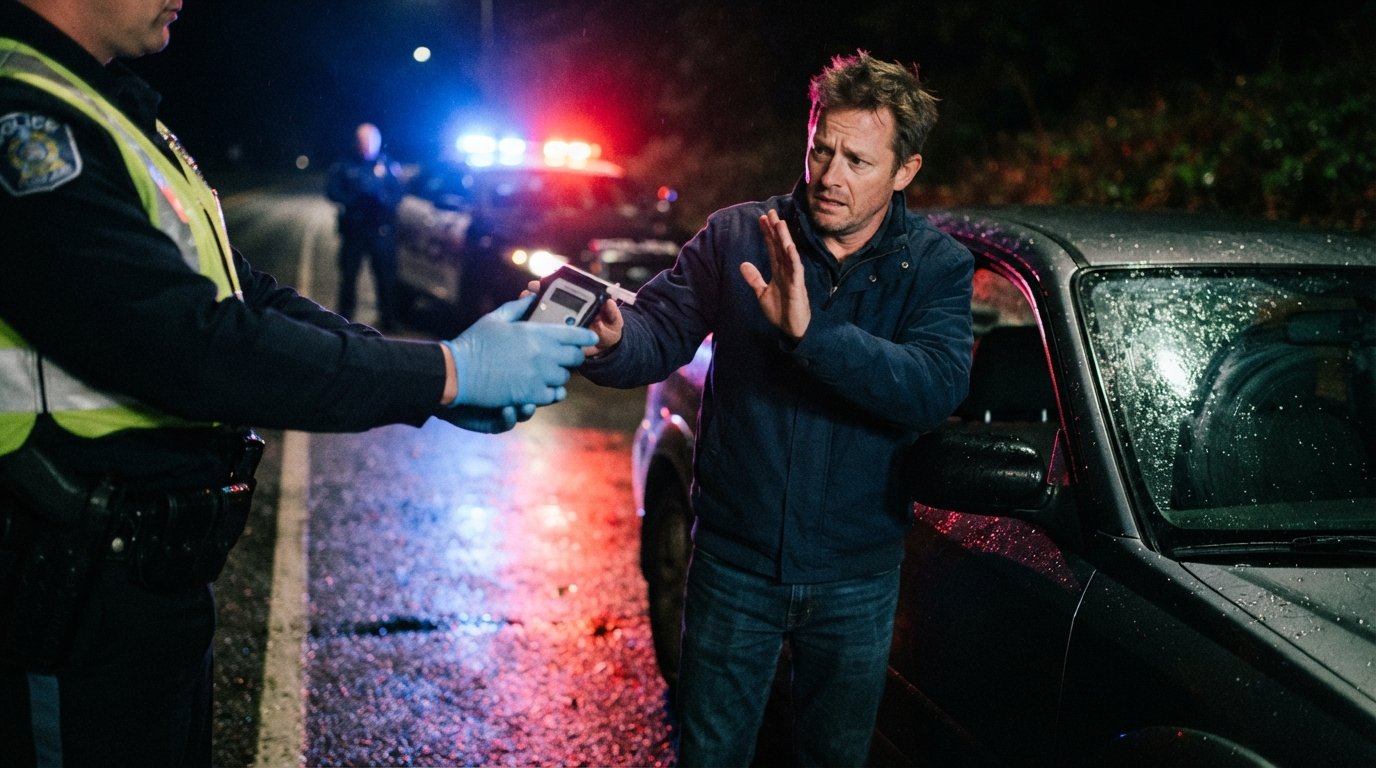
You see the flashing lights in your rearview mirror, and your heart sinks. After pulling over, an officer asks you to take a breathalyzer test. In that moment, a dozen questions race through your mind, but the most pressing one is often: can you refuse a breathalyzer test and what happens next? The answer is not a simple yes or no. Every state in the U.S. has an implied consent law, which means that by simply obtaining a driver's license, you have already agreed to submit to chemical testing when lawfully arrested for suspicion of driving under the influence (DUI). Refusing the test is your legal right in most situations, but that choice carries serious and immediate consequences that can be far worse than a DUI charge itself. Understanding the difference between a legal right and a practical risk is essential before you make a split-second decision at the roadside.
What Implied Consent Means for Your Driver's License
Implied consent laws exist in all 50 states. When you sign your driver's license application, you consent to chemical testing of your breath, blood, or urine if an officer has probable cause to believe you are driving under the influence. This consent is not absolute; you retain the right to refuse. However, the penalty for refusal is often automatic and separate from any criminal DUI case. The officer will typically confiscate your license on the spot, and you will receive a temporary permit or notice of suspension. You then have a short window, often 7 to 14 days, to request an administrative hearing to challenge the suspension. If you miss that deadline, your license will be suspended for a set period, regardless of whether you are ultimately convicted of DUI.
The length of the administrative suspension varies dramatically by state. In California, a first refusal triggers a one-year suspension, doubled to two years if you have a prior DUI within ten years. In Virginia, a first refusal carries a one-year suspension for a first offense, and a second or subsequent refusal within ten years can result in a three-year suspension and a felony charge. Some states, like Florida, impose a one-year suspension for a first refusal, but the suspension can be reduced to 90 days if you agree to a rehabilitation program. These administrative penalties are imposed by the DMV or equivalent agency, not the criminal court, and they apply even if you are never convicted of DUI. This is why many attorneys advise that refusing the test is rarely a winning strategy for avoiding a license suspension.
Beyond the suspension, you may face additional fees to reinstate your license, and you may be required to install an ignition interlock device (IID) on your vehicle. In some states, a refusal is considered a separate civil violation that carries its own fines and court costs. The administrative process moves quickly, and the burden is on you to request a hearing within the strict deadline. If you are unsure about your state's specific rules, a free case evaluation with a local DUI attorney can clarify your options. For those in California, resources like a free injury case review in Oxnard can connect you with legal professionals who understand the nuances of implied consent hearings and can help you navigate the process.
Refusal as Evidence in a Criminal DUI Case
While you have the right to refuse a breathalyzer, that refusal is not without evidentiary consequences. In many jurisdictions, the prosecution can use your refusal as evidence of consciousness of guilt. The logic is that an innocent person would have no reason to refuse a test that could clear their name. This inference is powerful in front of a jury. In some states, the prosecutor may even comment on your refusal during closing arguments, and the judge may instruct the jury that they can consider the refusal as evidence of guilt. This does not violate your Fifth Amendment right against self-incrimination because the Supreme Court has held that the physical act of refusing a breath test is not testimonial in nature, even though it may be used against you.
However, the law is more nuanced when it comes to blood tests. In Birchfield v. North Dakota (2016), the U.S. Supreme Court ruled that while the Fourth Amendment permits warrantless breath tests incident to a DUI arrest, it does not permit warrantless blood tests. This means that if you refuse a blood test, the officer must obtain a warrant, and your refusal cannot be used as evidence against you in the same way. In practice, many officers will simply apply for a warrant on the spot, and the blood draw will be performed regardless of your refusal. The refusal may still trigger administrative penalties under implied consent laws, but the evidentiary inference is limited. This distinction between breath and blood tests is critical and varies by state, so consulting with an attorney who knows local case law is essential.
It is also important to understand that the refusal itself is not a criminal charge in most states, but it can be charged as an aggravating factor or a separate offense. For example, in some states, a first refusal is a civil infraction, but a second refusal within a certain period can be a misdemeanor or even a felony. The consequences escalate quickly, and the stakes are high. If you are facing a DUI charge and have already refused a test, an experienced attorney can review the circumstances of your stop and the legality of the request to determine whether your refusal can be challenged or mitigated.
Breath, Blood, and Urine Tests: Different Rules Apply
Not all chemical tests are treated equally under the law. The type of test requested by the officer can affect your rights and the consequences of refusal. Breath tests are the most common at the roadside, and they are the least intrusive. Because of their low intrusiveness, the Supreme Court has held that no warrant is required for a breath test incident to a lawful DUI arrest. Refusing a breath test typically triggers the full weight of implied consent penalties, including automatic license suspension and the evidentiary inference of guilt. Blood tests, on the other hand, are more intrusive and require a warrant if you refuse. Urine tests are less common and are usually requested in cases involving drugs other than alcohol, but they also require a warrant in many jurisdictions if you refuse.
The practical implications of these differences are significant. If you refuse a breath test, you will almost certainly face an administrative suspension, and the prosecutor will argue that your refusal shows you had something to hide. If you refuse a blood test, the officer may still obtain a warrant and draw your blood, but your refusal may not be used against you in court. However, the administrative penalties for refusing any test under implied consent laws are often the same. Some states, like Georgia, require that you be offered a breath test first, and if you refuse, the officer cannot then request a blood test without a warrant. Other states allow the officer to choose the test. Knowing your state's specific rules is crucial, and a legal professional can help you understand how those rules apply to your case.
In addition to the type of test, the timing and manner of the request matter. An officer must have probable cause to arrest you before requesting a chemical test. If the stop itself was unlawful or if the officer lacked probable cause, any subsequent test request may be invalid. Challenging the legality of the stop is often the strongest defense in a DUI case, and it is independent of whether you refused the test. A skilled attorney will scrutinize the officer's actions, from the initial traffic stop to the arrest and the test request, to identify any constitutional violations that could lead to suppression of evidence.
Challenging the Stop's Probable Cause
One of the most effective ways to defend against a DUI charge, including one involving a refusal, is to challenge the probable cause for the initial stop. The Fourth Amendment protects you from unreasonable seizures, and a traffic stop is a seizure. The officer must have a reasonable suspicion that you committed a traffic violation or were engaged in criminal activity before pulling you over. If the stop was based on a mistake of law, an unreliable tip, or a pretextual reason, the evidence gathered during the stop may be suppressed. This includes the fact that you refused a breathalyzer test. If the stop is invalidated, the refusal may not be admissible, and the administrative suspension could be challenged as well.
Probable cause challenges require a careful review of the officer's dashcam footage, bodycam footage, and the police report. An attorney will look for inconsistencies in the officer's account, such as whether you actually committed the traffic violation cited, whether the officer had a valid reason to ask you to step out of the vehicle, and whether the field sobriety tests were administered correctly. Field sobriety tests are notoriously unreliable, and their results can often be challenged. Even the preliminary breath test (PBT), which is often used at the roadside to establish probable cause, can be challenged if the device was not properly calibrated or if the officer did not follow the correct procedures. If probable cause is lacking, the entire case may collapse, and the refusal becomes a non-issue.
It is also worth noting that you have the right to remain silent and the right to an attorney, but you do not have the right to consult with an attorney before deciding whether to submit to a chemical test. The Supreme Court has held that the right to counsel does not attach at the moment of the test request because the taking of a blood or breath sample is not a critical stage of the proceedings. This means you cannot delay the test by asking to speak with a lawyer. However, you can still challenge the legality of the stop and the arrest after the fact. If you are unsure whether your stop was lawful, a free case evaluation with a DUI attorney can provide clarity. For those dealing with the broader consequences of a DUI, including potential civil liability, understanding your legal rights is paramount. If you are facing related legal issues, you may also want to explore resources on attorney lawsuit information to understand how legal malpractice or fee disputes can arise in these cases.
Practical Steps and What to Expect After a Refusal
If you have already refused a breathalyzer test, the first thing to do is to request an administrative hearing to challenge the license suspension. This must be done within the strict deadline, which is typically stated on the notice you receive from the officer. Missing the deadline means you lose your right to contest the suspension. At the hearing, you can present evidence and argue that the officer did not have probable cause or that the refusal was not properly documented. An attorney can represent you at this hearing, and their presence can significantly improve your chances of success. In some states, the hearing is your only opportunity to preserve your driving privileges, so it is not a step to take lightly.
Next, you should document everything you remember about the stop. Write down the officer's name and badge number, the time and location of the stop, the questions you were asked, and the exact words you used when refusing the test. If there were witnesses in your car or nearby, get their contact information. This information can be invaluable for your attorney. You should also gather any medical records if you have a condition that affected your ability to take the test, such as a respiratory issue that prevented you from blowing into the breathalyzer. In some cases, a medical condition can be a valid defense to a refusal charge.
Finally, consider the long-term consequences of a refusal. Even if you are not convicted of DUI, the administrative suspension will remain on your driving record and can affect your insurance rates. In some states, a refusal is considered a prior offense for future DUI sentencing enhancements. This means that if you are arrested for DUI again, the prior refusal can be used to increase your penalties. It is a stain that follows you, and it is one of the reasons why many legal experts advise against refusing a breath test unless you have a compelling reason. The decision to refuse is a strategic one that should be made with the advice of counsel, but at the roadside, you rarely have that luxury. If you are facing a DUI charge, seeking legal representation early is the best way to protect your rights and mitigate the consequences.
For those who are unsure about their options, a free, confidential case evaluation can provide a clear path forward. Platforms like FreeLegalCaseReview.com connect individuals with qualified DUI and personal injury attorneys who can assess the specifics of your case without any upfront cost. Whether you are dealing with a refusal, a DUI charge, or a related personal injury claim, understanding your legal rights is the first step toward a resolution. Remember that the information in this article is for educational purposes only and is not legal advice. Every case is unique, and the laws in your state may differ from those described here. Always consult with a licensed attorney in your jurisdiction for advice tailored to your situation.