
What to Do When an Accident Causes Property Damage
Navigate property damage claims with confidence. For expert guidance on your specific situation, call (833) 227-7919.

By Evander Shaw
Your car is wrecked, a fence is destroyed, or your home is damaged. The immediate aftermath of an accident that causes property damage is often filled with confusion and stress. Beyond the initial shock, a critical process begins: determining who is responsible for the repair or replacement costs. This situation triggers a complex interplay of insurance policies, liability laws, and evidence collection. Whether you are the property owner seeking compensation or the driver who may be at fault, understanding the correct steps to take can protect your financial interests and legal rights. Navigating this process incorrectly can lead to denied claims, out-of-pocket expenses, and prolonged disputes.
Immediate Steps to Take at the Scene
Your actions in the minutes and hours following the incident are foundational to any successful property damage claim. Safety is the absolute priority. Ensure everyone involved is okay and move to a safe location if possible. Once safety is addressed, your focus must shift to documentation and information gathering. This is not the time for admissions of guilt or heated debates about fault. Instead, approach the scene methodically as an information-gathering mission. The evidence you collect here will be the bedrock of your insurance claim or legal case.
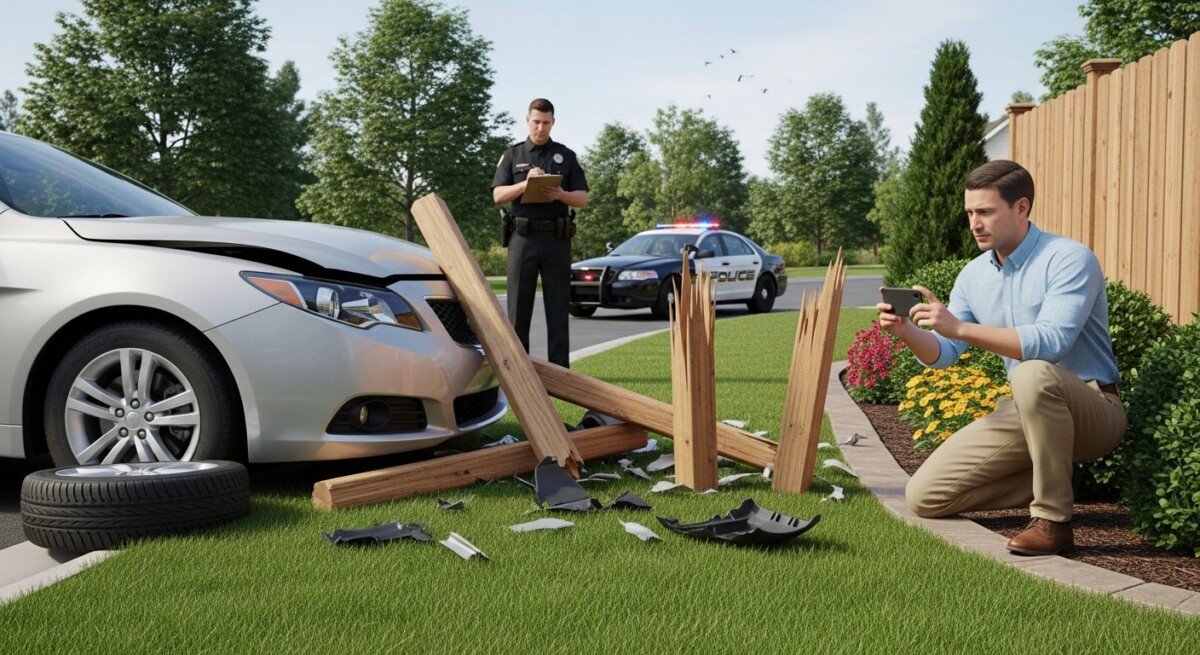
Begin by calling the police. A formal police report provides an official, third-party account of the incident. This document is invaluable to insurance adjusters. While waiting for authorities, use your smartphone to take comprehensive photographs and videos. Capture wide shots of the entire scene to show context, and close-up photos of all damaged property, from every vehicle involved to any other structures like mailboxes, landscaping, or building walls. Do not forget to document license plates and the overall road conditions, including traffic signs, skid marks, and weather. Exchange information with all other involved parties. You need their full name, contact details, insurance company, and policy number. Also, collect names and contact information from any witnesses. Their unbiased accounts can be crucial if liability is later contested.
Determining Liability and Fault
Establishing who is legally responsible, or liable, for the property damage is the central question. Liability determines which insurance policy pays for the repairs. In simple terms, the person who was negligent, or failed to act with reasonable care, causing the accident, is typically at fault. Common examples include running a red light, rear-ending another vehicle, or failing to yield. However, fault is not always clear-cut. There can be shared fault, where more than one party contributed to the accident. Some states follow “comparative negligence” rules, where your compensation is reduced by your percentage of fault. Others use “contributory negligence,” which can bar recovery if you are even 1% at fault.
Insurance companies conduct their own investigations to assign fault. They will review the police report, your evidence, statements from drivers and witnesses, and applicable traffic laws. Do not assume the other driver’s insurer will readily accept full liability. They have a financial incentive to minimize their payout. This is why your documented evidence from the scene is so powerful. It allows you, or your legal representative, to counter an insurer’s attempt to wrongly shift blame onto you. In cases involving complex scenarios, like multi-vehicle pile-ups or accidents on private property, the liability analysis becomes even more critical.
When Damage Involves Property Other Than Vehicles
Accidents often extend beyond vehicle-to-vehicle collisions. You might skid off the road and hit a utility pole, back into a neighbor’s fence, or have a tree fall on a parked car during a storm. These scenarios add layers of complexity. Damaging public property, like a guardrail, streetlight, or city-owned structure, can involve municipal claims processes and potentially significant fines beyond repair costs. Damaging private property, like a fence, shed, or landscaping, means dealing with a private individual or business directly. Their homeowners or commercial property insurance may get involved, subrogating against your auto policy to recover what they paid their client.
The principles remain the same: document everything, report it to your insurer, and cooperate with any investigation. However, the valuation of non-vehicle property can be more subjective. Replacing a custom-built fence is different from repairing a standard car bumper. You may need to get multiple repair estimates. Furthermore, the property owner has a duty to mitigate their damages, meaning they must take reasonable steps to prevent further loss (like putting up a temporary barrier if a fence is destroyed).
Navigating the Insurance Claim Process
Once you have secured the scene and gathered information, you must initiate the insurance claim process. This should be done promptly, as policies require timely notification. You generally have two avenues for a property damage claim: filing through your own insurance policy (first-party claim) or filing a claim directly against the at-fault party’s insurance (third-party claim). The best path depends on your coverage, the clarity of fault, and your state’s insurance laws. Filing with your own company (assuming you have applicable coverage like Collision or Property Damage) can be faster, as you have a contractual relationship with them. You would pay your deductible, and your insurer would then attempt to recover that cost, plus what they paid you, from the at-fault driver’s insurer in a process called subrogation.
Filing a third-party claim means dealing directly with the other driver’s insurance company. While this avoids using your own policy and paying a deductible, it can be slower and more adversarial, as their adjuster’s goal is to settle for the lowest possible amount. In either scenario, you will be assigned a claims adjuster. Their job is to investigate the accident, assess the damage, and determine a settlement value. Be prepared for this interaction. Provide the evidence you collected clearly and factually. Do not speculate or offer opinions on fault. The adjuster will likely arrange for an appraisal of the damage to your property to estimate repair costs.
Key steps in the insurance negotiation process include:
- Obtain Your Own Estimates: Get at least two written repair estimates from reputable auto body shops or contractors. This gives you a baseline for fair market repair costs.
- Review the Insurer’s Valuation: The adjuster will provide a settlement offer based on their appraisal. Scrutinize it. Ensure it covers all visible damage and includes OEM (Original Equipment Manufacturer) parts if that is important to you, rather than cheaper aftermarket parts.
- Understand Depreciation and Actual Cash Value: For older property, insurers often pay “Actual Cash Value” (ACV), which is the replacement cost minus depreciation. This may not be enough to fully replace the item with a new one.
- Negotiate: If the offer is too low, use your estimates and documentation to justify a higher settlement. Send a formal letter detailing the discrepancy.
- Consider a Public Adjuster or Attorney: For large or complex claims, especially if the damage is severe or liability is disputed, professional help can be essential to secure a fair outcome.
When to Seek Legal Assistance
While many straightforward property damage claims are resolved through insurance, certain situations warrant consulting with a legal professional. An attorney specializing in property damage or personal injury law can be a critical advocate when the path to fair compensation is blocked. Their expertise becomes particularly valuable in high-stakes or contentious scenarios where the insurance company is not acting in good faith.
You should strongly consider seeking legal counsel if you encounter any of the following: the insurance company denies your claim without a valid reason, they offer a settlement that is significantly lower than your repair estimates, they unreasonably delay the claims process, or they dispute liability despite clear evidence. Furthermore, if the accident also involved bodily injuries, the value of the claim increases dramatically, and having an attorney is almost always advisable. Lawyers understand the tactics insurers use and can handle all communications, build a strong case for liability, and negotiate from a position of strength. They can also advise on your rights if a lawsuit becomes necessary to recover your losses.
Frequently Asked Questions
What if the person who hit my property doesn’t have insurance? If you have Uninsured Motorist Property Damage (UMPD) coverage, your own policy may cover the repairs, often with a lower deductible. If you do not have this coverage, you may need to pursue the at-fault driver directly in small claims court, which can be difficult if they have no assets.
Can I be sued for property damage I caused? Yes. If you are at fault, the property owner or their insurer can sue you to recover the costs they incurred. This is why carrying adequate Property Damage Liability coverage on your auto policy is legally required and financially crucial.
Does filing a property damage claim raise my insurance rates? It can, but not always. If you are not at fault, many states and companies have rules limiting rate increases. However, if you are at fault, an increase is likely. It is best to discuss the potential impact with your agent before filing a claim for minor damage.
What if the insurance company totals my car? If the cost to repair your vehicle exceeds a certain percentage of its value (often 70-80%), the insurer will declare it a total loss. They will pay you the Actual Cash Value of the car immediately before the accident. You can negotiate this value by providing comparable sales listings for similar vehicles in your area.
How long do I have to file a property damage claim or lawsuit? Insurance policies require prompt reporting, often within a few days to a week. The legal deadline, or statute of limitations, for filing a lawsuit varies by state but is typically 2 to 6 years from the date of the accident. Do not wait; act quickly to preserve your rights.
Successfully managing a property damage claim requires a calm, documented, and proactive approach. From the moment the accident occurs, your focus should be on evidence and procedure. By understanding the steps, from scene documentation to insurance negotiation, you empower yourself to navigate this challenging situation effectively. Remember that you have rights as a policyholder or a damaged party, and you are not obligated to accept the first offer if it does not make you whole. When in doubt, especially for significant damages or disputed liability, seeking professional guidance can provide the leverage needed to ensure a fair and just resolution to your property damage claim.