
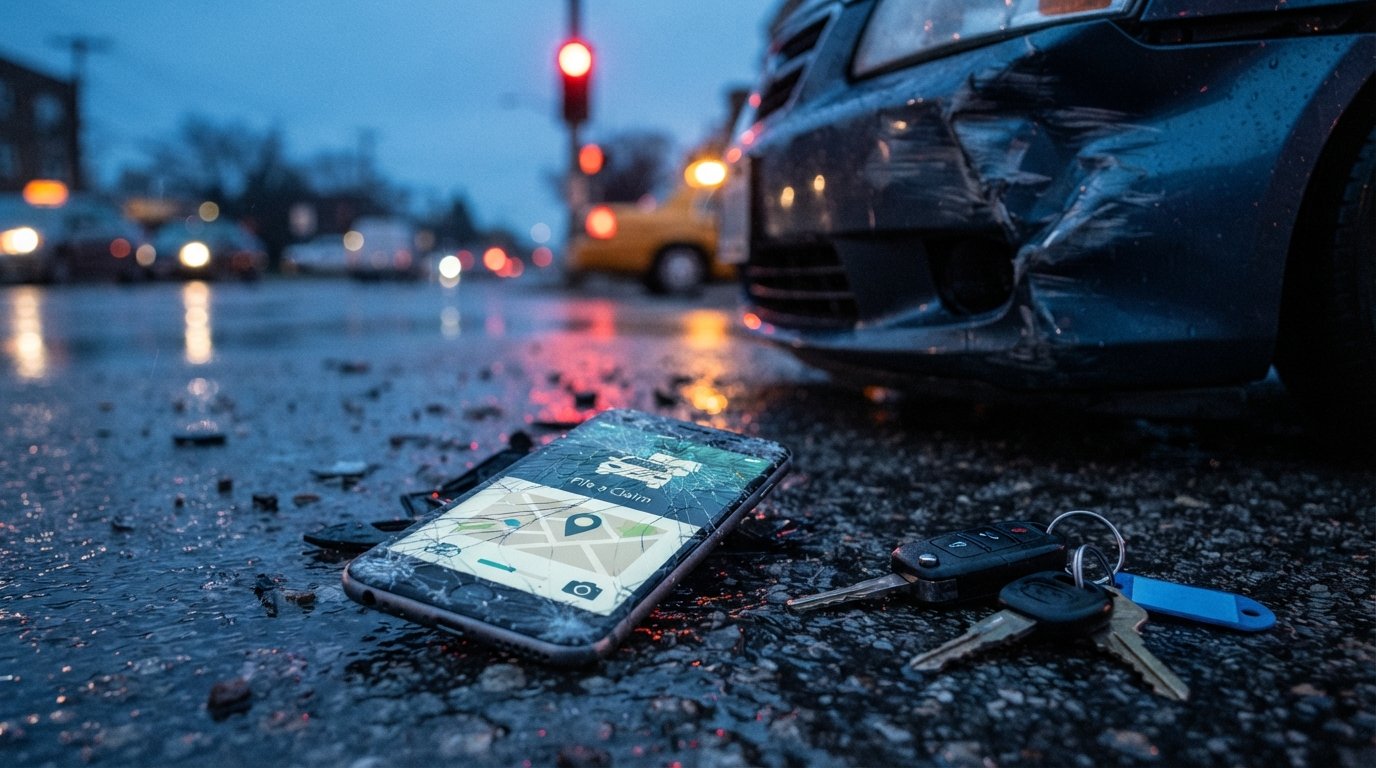
Preserving Evidence After an Accident: Why It Matters
Preserving evidence after an accident why it matters: lost video and data can sink your claim. Call (833)-248-4565 for a free case review.

Within minutes of a crash, evidence begins to disappear. A traffic camera loops over its footage, a truck's electronic control module gets overwritten, and skid marks fade under the next rain. The actions you take in the hours and days after an accident often determine whether your claim is built on proof or on guesswork. Understanding why preserving evidence after an accident matters is not a legal technicality; it is the difference between a settlement that covers your medical bills and one that leaves you paying out of pocket. This article explains which evidence vanishes fastest, how to document the scene yourself, and when to bring in an attorney to formally protect records that could otherwise be lost forever.
The Evidence That Disappears Fastest After an Accident
Not all evidence is created equal. Some items, like your own memory and photographs, can be captured at your convenience. Others are on a clock that starts ticking the moment the collision occurs. Vehicle data, surveillance video, and perishable physical evidence are the three categories most likely to be gone before you realize they existed.
Modern vehicles are computers on wheels. Event data recorders, often called black boxes, capture speed, braking, steering angle, and seat belt use in the seconds before and after impact. Many systems overwrite this data on a rolling basis, sometimes within 30 days or after a set number of ignition cycles. Commercial trucks are even more data-rich, with electronic logging devices and engine control modules that record detailed performance information. If you are hurt in a crash with a commercial vehicle, learning can I claim injury after an accident with a commercial vehicle is a good first step, but preserving the truck's data is equally urgent because the carrier may control access to it.
Surveillance footage is another fast-moving target. Businesses, homeowners, and municipalities often retain video for only a fixed period, such as 7, 14, or 30 days, before automatically recording over it. A gas station camera that captured the moment of impact may be useless by the time you request a copy three weeks later. Physical evidence such as tire marks, debris, damaged guardrails, and fluid trails also degrades quickly due to weather, traffic, and road maintenance. The sooner you identify and preserve these perishable items, the stronger your position becomes.
Spoliation Rules and Preservation Letters
Spoliation refers to the destruction or alteration of evidence that is relevant to a legal case. Courts take spoliation seriously, and in many jurisdictions, a party that destroys evidence after being put on notice can face sanctions, adverse inferences, or even dismissal of claims. The key phrase is "after being put on notice." Once an insurance company, business, or individual knows that litigation is reasonably anticipated, they have a duty to preserve relevant evidence. Your job is to trigger that duty as early as possible.
A preservation letter, sometimes called a litigation hold letter, is a formal written request sent to parties who may hold evidence. It should identify the accident, the parties involved, and the categories of evidence you want preserved. Typical recipients include the at-fault driver, their insurance company, the vehicle owner, a trucking company, a business that owns surveillance cameras, and any maintenance contractor responsible for the road. The letter does not need to be lengthy, but it should be specific and sent via a method that proves delivery, such as certified mail or email with a read receipt.
Insurance companies and businesses often have internal procedures for handling preservation requests. A well-timed letter can stop a video system from overwriting its footage or prompt a trucking company to download electronic data before it is recycled. If you are unsure how to draft or send such a letter, an attorney can do it for you and ensure it complies with your state's rules. The cost of sending a preservation letter is minimal compared to the value of the evidence it protects.
How to Document the Scene, Injuries, and Property Damage Yourself
You are often the first and best evidence collector at an accident scene. Even if police respond, their report may not capture every detail that matters to your claim. Start by making safety your priority: move to a safe location, call 911, and do not put yourself in further danger. Once it is safe, document as much as you can with your phone.
Photographs and video should cover more than the damaged vehicles. Capture the position of the cars, traffic signals, road signs, skid marks, debris, and the weather conditions. Take wide shots to show context and close-ups to show detail. If there are witnesses, ask for their names and contact information, and record a brief statement if they are willing. Exchange insurance and registration information with the other driver, but avoid discussing fault or apologizing, as those statements can be used against you later.
Your injuries deserve the same careful documentation. Photograph visible injuries on the day of the accident and at intervals as they heal or change. Keep a journal that records pain levels, medical appointments, missed work, and how the injury affects daily activities. Save all medical records, bills, and receipts. These records create a timeline that links the accident to your treatment and supports your claim for compensation. If you are considering a free case evaluation, having this documentation ready will make the process faster and more productive.
- Take photos of vehicles, road conditions, and injuries from multiple angles.
- Collect witness names and contact details before they leave the scene.
- Keep a daily pain and activity journal to document recovery.
- Save every medical bill, receipt, and insurance communication.
- Avoid posting about the accident on social media, as insurers may monitor it.
Self-documentation is not a substitute for a formal investigation, but it fills gaps that official reports often miss. It also demonstrates that you took the incident seriously from the start, which can strengthen your credibility with an adjuster or a jury.
When to Involve an Attorney to Formally Preserve Records
You do not need to hire an attorney to take photos or send a basic preservation letter, but there are situations where professional involvement is critical. If the accident involved a commercial truck, a government vehicle, a construction zone, or a large company, the opposing side likely has a legal team and resources designed to minimize payouts. In those cases, an attorney can issue subpoenas, file court orders, and coordinate with experts to preserve and analyze evidence before it disappears.
An attorney can also help you navigate the formal discovery process, which allows you to request documents, data, and video from parties who might otherwise ignore a letter. If a party destroys evidence after receiving a preservation notice, an attorney can pursue spoliation sanctions and argue for an adverse inference at trial. Timing matters: the longer you wait, the more opportunities there are for evidence to be lost, overwritten, or conveniently "misplaced."
Many personal injury attorneys work on a contingency fee basis, meaning you pay nothing upfront and only owe a fee if they recover compensation for you. Services like CheapInjuryLawyer connect injured people with attorneys who offer free case reviews, making it easier to get professional help without financial risk. If you are unsure whether your case needs an attorney, a no-cost consultation can clarify your options and help you decide on next steps.
How Preserving Evidence After an Accident Why It Matters to Your Claim
Insurance adjusters evaluate claims based on evidence. When evidence is missing, they often fill the gap with assumptions that favor their bottom line. A preserved video of the collision, a downloaded data report showing the other driver's speed, or a timely preservation letter can shift the negotiation in your favor. Conversely, missing evidence can lead to a denied claim, a low settlement offer, or a disputed liability finding that delays your recovery.
Preserving evidence after an accident why it matters also extends to your medical claim. If you wait weeks to see a doctor, the insurer may argue that your injuries are unrelated to the crash. If you fail to document property damage, they may undervalue your repair or replacement costs. A consistent, timely record of everything from the scene to the doctor's office creates a cohesive story that is hard to dispute.
Finally, evidence preservation protects you if the case goes to court. Trials can happen months or years after an accident, and memories fade. Physical evidence, photographs, video, and data records become the objective foundation of your case. Without them, your attorney may be left arguing from memory and inference rather than fact. By acting early, you give yourself the best chance at a fair outcome.
Practical Steps to Protect Evidence Starting Today
If you or someone you know was recently in an accident, the following steps can help preserve evidence before it disappears. Start with the most time-sensitive items and work backward. Even if some time has passed, it is rarely too late to take action, but the sooner you start, the better.
- Request a copy of the police report and note the report number.
- Send written preservation requests to the at-fault driver, their insurer, and any business with potential video footage.
- Download and back up photos, videos, and witness statements to cloud storage.
- Keep your vehicle in a secure location and avoid repairs until it has been inspected by an expert.
- Consult with an attorney about formal discovery and data preservation for vehicles with event data recorders.
Each of these steps reinforces the others. A police report provides an official narrative, preservation letters create a legal duty, and your own documentation fills in the details. Together, they form a protective layer around the evidence your claim depends on.
An accident can feel overwhelming, and the insurance process can seem designed to wear you down. But evidence is the great equalizer. When you take deliberate steps to preserve it, you put yourself in a stronger position to negotiate, to prove your case, and to recover the compensation you deserve. For a free, confidential case review, contact (833)-248-4565 to speak with a team that can help you understand your options and protect your rights.