
Expert Witnesses in Mass Tort Litigation Explained
Expert witnesses in mass tort litigation explained: how their testimony shapes causation and settlement values. Call (833)-248-4565 for a free case review.

By Aurelia Finch
When thousands of plaintiffs file lawsuits alleging that the same drug, device, or chemical caused their injuries, the outcome often hinges on a battle of scientific experts. Judges and juries rarely have the medical or technical background to determine whether a product caused a specific harm, so they rely on expert witnesses to translate complex evidence into understandable conclusions. Understanding how these experts operate, how courts evaluate their testimony, and how their findings shape settlement values can help claimants make sense of a mass tort's trajectory. This guide breaks down the role of expert witnesses in mass tort litigation, from causation battles to Daubert challenges, and explains what claimants should know about their own records being reviewed by hired specialists.
What Expert Witnesses Do in Mass Tort Cases
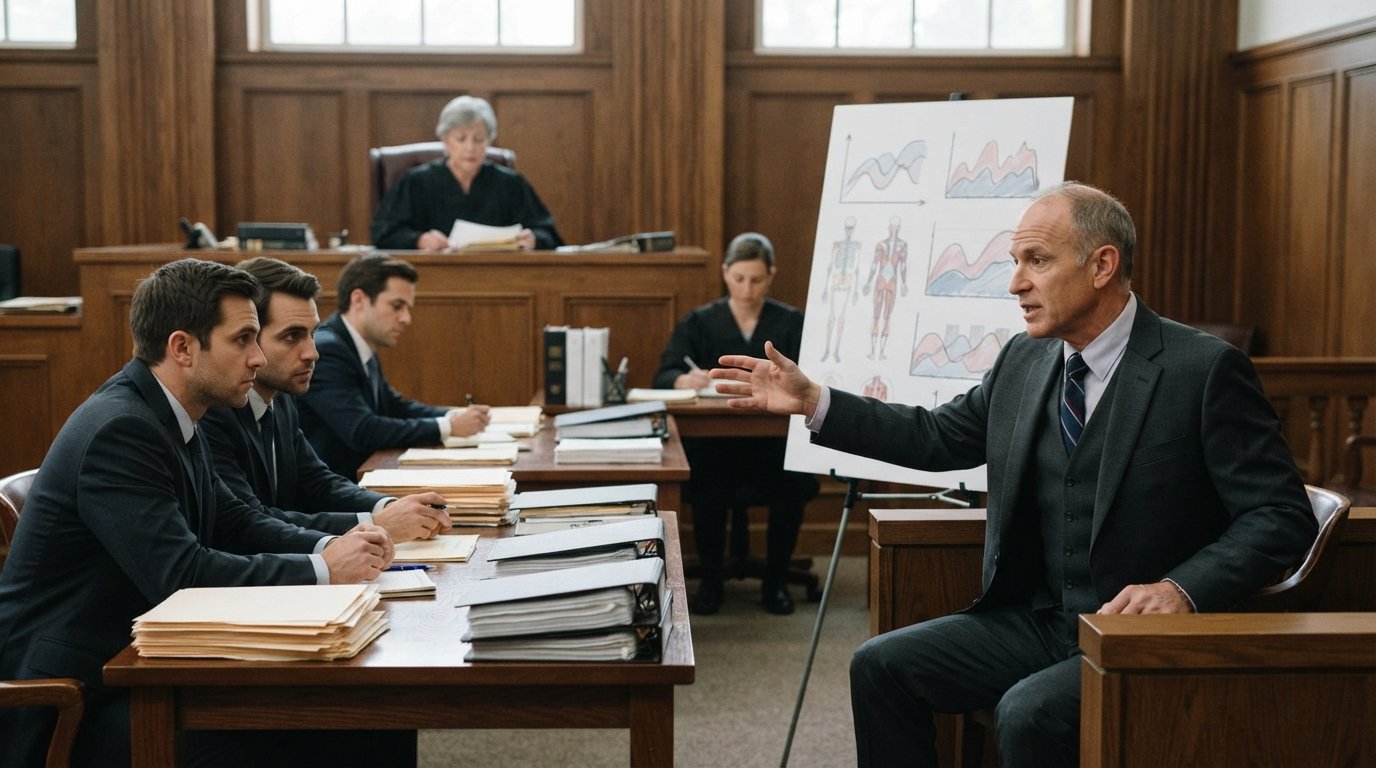
An expert witness is a person with specialized knowledge, training, or experience who is permitted to offer opinions that help the court understand evidence or determine a fact in issue. In mass tort litigation, experts serve a pivotal function: they connect the dots between a product and an injury. Unlike a fact witness, who testifies only about what they saw or did, an expert can analyze data, review medical records, and explain scientific literature to support conclusions about causation, defect, or damages. Both plaintiffs and defendants rely heavily on experts because mass torts typically involve complex questions of pharmacology, epidemiology, engineering, and medicine that fall outside the average juror's understanding.
Plaintiffs use experts to establish general causation (whether a product can cause a particular injury) and specific causation (whether it did cause the plaintiff's injury). Defendants use experts to challenge those conclusions, point to alternative causes, or argue that the scientific evidence is too weak to support liability. The credibility and admissibility of these experts often determine whether a case settles, proceeds to trial, or collapses entirely. In many mass torts, the outcome of early expert challenges can set the tone for thousands of individual claims.
How Plaintiffs and Defendants Use Medical and Scientific Experts to Prove Causation
Causation is the central battleground in most mass torts. Plaintiffs must prove that the defendant's product was a substantial factor in causing their injuries. To do so, they typically retain a team of experts who can address different links in the causal chain. For example, in a pharmaceutical case, a plaintiff might rely on a pharmacologist to explain how the drug interacts with the body, an epidemiologist to show a statistical association between the drug and the injury, and a treating physician to confirm the diagnosis and rule out other causes. Each expert plays a distinct role, and their opinions must fit together coherently.
Defendants counter with their own experts, often challenging the methodology, data, or conclusions of the plaintiff's experts. They may argue that the plaintiff's experts relied on studies that are too small, inconsistent, or not statistically significant. They may also present alternative causes for the injury, such as pre-existing conditions, lifestyle factors, or other medications. The strength of each side's expert evidence often determines whether a case survives summary judgment and whether a jury finds for the plaintiff. In mass torts, defendants frequently seek to exclude plaintiff experts before trial, which can eliminate entire categories of claims if successful.
To illustrate, consider a hypothetical mass tort involving a chemical exposure. Plaintiffs might call an industrial hygienist to reconstruct the exposure levels at a workplace, a toxicologist to explain how the chemical causes disease, and a medical expert to diagnose the plaintiff's condition. Defendants might call their own toxicologist to dispute the dose-response relationship or an epidemiologist to argue that the studies relied upon by plaintiffs are flawed. The judge acts as a gatekeeper, deciding which experts may testify and which opinions must be excluded. This gatekeeping role is where the Daubert standard comes into play.
The Daubert Standard and Challenges to Expert Testimony
For decades, federal courts and many state courts have applied the Daubert standard to assess the admissibility of expert testimony. Under Daubert v. Merrell Dow Pharmaceuticals, Inc., the trial judge must ensure that an expert's testimony is both relevant and reliable. The Supreme Court outlined several factors that courts may consider, including whether the expert's theory or technique can be and has been tested, whether it has been subjected to peer review and publication, the known or potential error rate, and whether it is generally accepted in the relevant scientific community. The goal is to prevent juries from being swayed by unreliable or speculative opinions.
In mass tort litigation, Daubert challenges are often the most consequential pretrial battles. Defendants frequently file motions to exclude plaintiff experts on the ground that their opinions are not based on sufficient data or reliable methods. If a court excludes a key causation expert, the plaintiff may be unable to prove an essential element of the case, leading to dismissal or a greatly reduced settlement value. Conversely, if the court allows the expert to testify, the defendant may face increased pressure to settle. These rulings can have ripple effects across thousands of similar claims, so both sides invest heavily in expert preparation and challenge.
For claimants, understanding Daubert is important because it explains why some mass torts take years to resolve. The litigation may pause while courts evaluate expert evidence, and the outcome of those rulings can determine whether a settlement is reached or whether cases proceed to trial. It also highlights the importance of selecting qualified experts with strong credentials and methodologies, as weak expert testimony can undermine an otherwise valid claim.
Common Expert Types in Drug, Device, and Chemical Exposure Cases
Mass torts involving pharmaceuticals, medical devices, and toxic chemicals typically require a multidisciplinary team of experts. The specific experts retained depend on the nature of the product and the injury, but certain roles appear repeatedly. Understanding these roles can help claimants appreciate the complexity of the litigation and the types of evidence that will be used to evaluate their claims.
- Medical experts: Physicians in relevant specialties (e.g., oncology, cardiology, neurology) diagnose the plaintiff's condition, explain its cause, and assess prognosis and damages.
- Epidemiologists: These experts study patterns of disease in populations to determine whether exposure to a product is associated with an increased risk of injury.
- Toxicologists: They analyze how substances interact with biological systems and assess dose-response relationships.
- Pharmacologists: In drug cases, they explain how a medication is metabolized and how it may cause adverse effects.
- Regulatory experts: Former FDA or EPA officials may testify about what the manufacturer knew or should have known about the product's risks and whether it complied with regulations.
- Economists and life care planners: These experts calculate economic damages, such as lost earnings and future medical costs. For severe injuries, a life care plan in catastrophic injury litigation can be essential to quantify long-term care needs.
Each expert's testimony must be tailored to the specific plaintiff's case, even in a mass tort where common issues are litigated collectively. For example, a plaintiff in a hernia mesh case might rely on a surgeon to explain the complications of mesh erosion, a biomedical engineer to discuss mesh design defects, and a life care planner to project future surgeries and care. Defendants will counter with their own experts, leading to a battle of credentials and methodologies that the jury must resolve.
The selection of experts is strategic. Plaintiffs' attorneys look for experts with strong academic credentials, publication records, and courtroom experience. They also consider whether an expert's opinions have been accepted in prior cases. Defendants often seek to disqualify experts who have testified frequently for plaintiffs or who have been criticized by other courts. The outcome of these challenges can shape the entire litigation.
How Expert Findings Shape Settlement Values Across a Mass Tort
Expert findings do more than determine liability; they also drive settlement values. In mass torts, settlements are often structured around a matrix that assigns values based on injury severity, exposure duration, and other factors. Experts help establish the causal link between the product and the injury, which in turn determines which claimants are eligible for compensation. For example, if plaintiffs' experts can reliably show that a drug causes a specific type of cancer, the settlement may include all claimants with that diagnosis. If the causal link is weaker or limited to certain populations, the settlement may be narrower.
Experts also influence the amount of compensation. Medical experts opine on the severity of the injury, the need for future medical care, and the impact on the plaintiff's quality of life. Economists calculate lost wages and earning capacity. These opinions are used to categorize claimants into different tiers, with more severe injuries receiving larger awards. Defendants may challenge these opinions to reduce payouts, so the credibility of the experts is directly tied to the compensation claimants receive.
Moreover, the overall strength of the expert evidence can affect the global settlement value. If plaintiffs have strong, admissible expert testimony on causation and damages, defendants may be more willing to settle for a higher amount to avoid the risk of a large jury verdict. Conversely, if the expert evidence is weak or excluded, defendants may offer less or refuse to settle altogether. Claimants should understand that their individual case value is not determined in isolation; it is influenced by the collective strength of the expert evidence across the entire mass tort.
What Claimants Should Know About Their Records Being Reviewed by Experts
If you have filed or are considering a mass tort claim, your medical records, employment history, and other personal information will be reviewed by experts hired by both sides. This is a standard part of the litigation process. Plaintiffs' experts will review your records to confirm your diagnosis, establish causation, and assess damages. Defendants' experts will review the same records to look for alternative causes, inconsistencies, or evidence that your injury is not as severe as claimed. This review can feel invasive, but it is necessary for the legal process to function.
To prepare, you should ensure that your medical records are complete and accurate. Provide your attorney with a full history of your health, including any pre-existing conditions or prior injuries. Be honest and consistent in your statements to healthcare providers, as discrepancies can be used by defense experts to challenge your credibility. You should also keep a detailed diary of your symptoms, treatments, and how your injury affects your daily life. This information can be valuable to your experts when they form their opinions.
It is also important to understand that experts may not always agree. Your experts will advocate for your position, while defense experts will try to undermine it. The judge or jury will ultimately decide which experts are more credible. By providing thorough and accurate information, you can help your experts build a strong case. If you have not yet retained an attorney, you can request a free case evaluation through services like GoFreeLegal to connect with lawyers experienced in mass tort litigation. These evaluations are confidential and carry no obligation, allowing you to understand your options before committing.
Preparing for Expert Scrutiny in Mass Tort Claims
Mass tort litigation is a complex, expert-driven process. The outcome of your claim may depend on how well your experts can convince a judge and jury that the product caused your injury. By understanding the roles of expert witnesses, the Daubert standard, and the ways experts shape settlement values, you can approach the process with realistic expectations. Work closely with your attorney to ensure your records are complete and your story is consistent. Remember that free resources are available to help you navigate the legal system and connect with qualified professionals who can evaluate your case.