
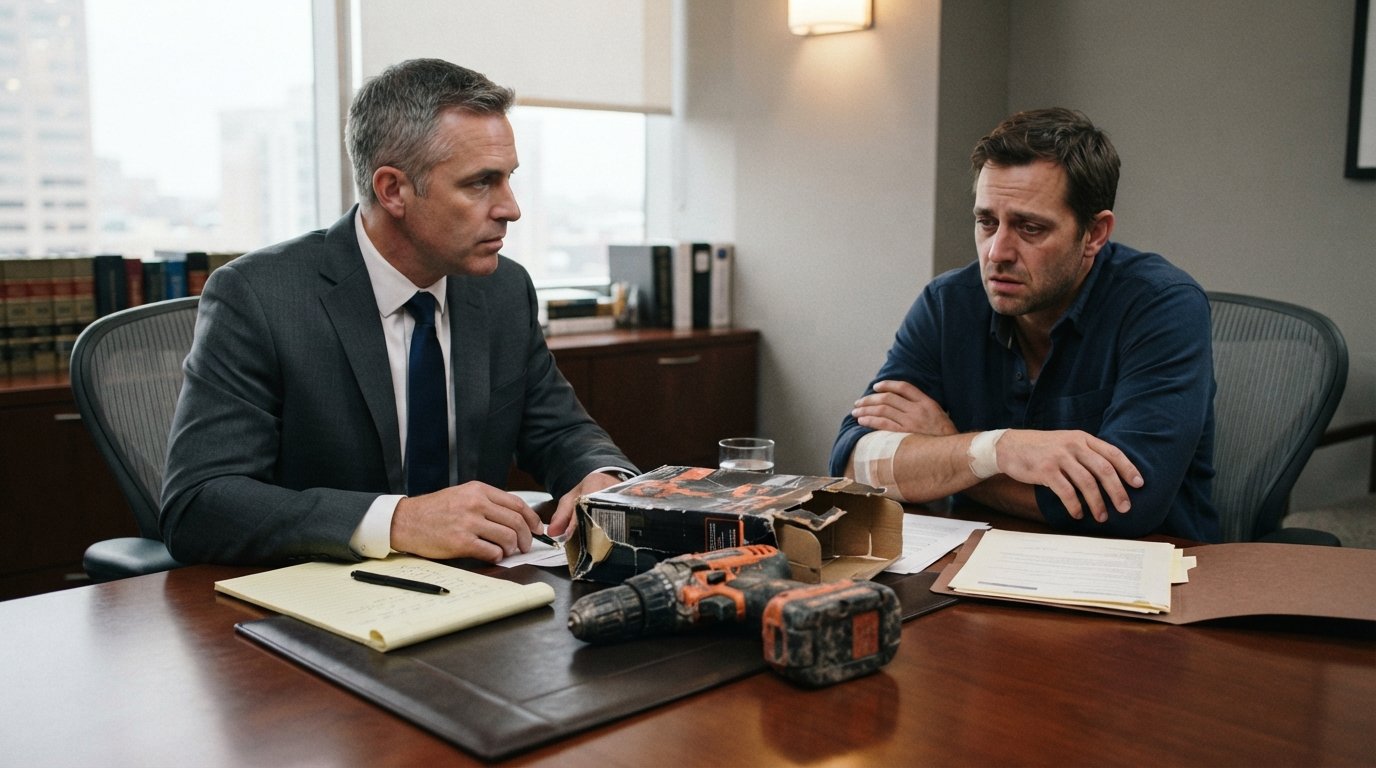
Defective Product Claim: Manufacturer vs Retailer
Understand who is liable in a defective product claim: manufacturer vs retailer. Call (833)-248-4565 for a free case evaluation and protect your rights.
When a product fails and causes injury, the first question many people ask is simple: who do I sue? The answer is rarely straightforward. A defective product claim against a manufacturer versus a retailer involves different legal theories, different defendants, and different strategic considerations. Whether you can pursue the maker, the seller, or both depends on the type of defect, the state's liability rules, and the evidence you preserve. Understanding these distinctions can mean the difference between a stalled claim and a successful recovery. This article breaks down the key differences, the legal theories that apply, and the practical steps to protect your rights.
Understanding Product Liability: Who Can Be Held Responsible?
Product liability law holds parties in the supply chain accountable when a defective product causes harm. The chain typically includes the manufacturer, the distributor, and the retailer. Each may bear responsibility under different legal theories, but the extent of that responsibility varies by jurisdiction and by the nature of the defect. In many states, strict liability applies to manufacturers, meaning an injured person does not need to prove negligence, only that the product was defective and caused injury. Retailers, however, may face strict liability only in certain circumstances, such as when they are considered part of the marketing chain or when they sell products under their own brand.
The distinction matters because it affects whom you name in a lawsuit and how you prove your case. A manufacturer is generally the primary defendant because they design, produce, and market the product. But suing a manufacturer can be complex if they are out of state or overseas. Retailers are often more accessible, but their liability may be narrower. In some cases, pursuing both is the best strategy, but that requires careful legal analysis. For a deeper look at how injury claims proceed after specific incidents, such as a rollover accident, see our guide on can I file a claim after a rollover accident, which illustrates similar principles of identifying responsible parties.
Ultimately, the question of manufacturer versus retailer is not about picking one over the other; it is about understanding the legal avenues available and choosing the path that maximizes your chances of full compensation. An experienced attorney can evaluate the facts and determine which parties are most likely to be held liable.
The Three Types of Product Defects and How They Affect Liability
Product defects generally fall into three categories: design defects, manufacturing defects, and failure to warn. Each type triggers different liability rules and may point to different defendants.
Design Defects
A design defect exists when a product is inherently unsafe because of its design, even if it was manufactured correctly. In these cases, the manufacturer is almost always the primary defendant because the flaw originates at the design stage. Retailers are rarely liable for design defects unless they had a role in designing or specifying the product, such as private-label goods. Proving a design defect often requires expert testimony to show that a safer alternative design was feasible and would have prevented the injury.
Manufacturing Defects
Manufacturing defects occur when a product deviates from its intended design during production. For example, a batch of medication may be contaminated, or a batch of helmets may have a weak shell. Here, liability can extend beyond the manufacturer to the retailer if the retailer sold the defective item. Under strict liability, a retailer that sells a defective product may be held liable even if they did not know about the defect, particularly if the retailer is part of the chain of distribution. However, some states limit retailer liability to instances where the manufacturer is insolvent or unavailable.
Failure to Warn
Failure to warn, also known as a marketing defect, occurs when a product lacks adequate warnings or instructions, making it unsafe for foreseeable use. Manufacturers have a duty to warn consumers about hidden dangers. Retailers may also have a duty to pass along warnings from the manufacturer, but their liability is usually secondary. If a retailer modifies the product or provides its own instructions, it may assume a greater duty. In failure to warn cases, comparative fault can come into play if the user ignored obvious warnings or misused the product.
Understanding which defect applies is crucial for determining whom to sue. A lawyer can help identify the defect type and the responsible parties through investigation and expert consultation.
Strict Liability for Retailers: When Sellers Are on the Hook
Strict liability is a legal doctrine that holds a party liable for harm caused by a defective product without proof of negligence. While manufacturers are almost always subject to strict liability, retailers are not uniformly liable. The rules vary significantly by state.
In many states, retailers can be held strictly liable if they are engaged in the business of selling the product and the product was defective when it left their possession. This is known as being part of the "stream of commerce." However, some states have enacted statutes that shield retailers from strict liability unless the manufacturer is not subject to the court's jurisdiction or is insolvent. For example, a retailer might be liable if the manufacturer is a foreign company with no U.S. presence.
Additionally, retailers may be liable under a negligence theory if they knew or should have known about a defect but failed to take action, such as failing to remove a recalled product from shelves. They may also be liable for breach of warranty, both express and implied. Express warranties are statements made by the retailer about the product, while implied warranties, such as the warranty of merchantability, arise by law and guarantee that the product is fit for its ordinary purpose.
To determine whether a retailer can be sued in your state, you need to understand local product liability statutes. A free case evaluation with a qualified attorney can clarify your options and help you decide whether to name the retailer, the manufacturer, or both.
Warnings, Instructions, and Comparative Fault
Warnings and instructions play a significant role in product liability cases, especially in failure to warn claims. Manufacturers are required to provide adequate warnings about foreseeable risks and clear instructions for safe use. If a product contains an obvious danger, the manufacturer may not need to warn about it, but hidden dangers require disclosure.
When a user ignores warnings or misuses a product, comparative fault can reduce or bar recovery. For example, if a power tool clearly warns against removing a safety guard, and the user removes it and gets injured, the manufacturer may argue that the user's actions contributed to the injury. In states that follow comparative negligence, the plaintiff's recovery may be reduced by their percentage of fault. In a few states with contributory negligence, any fault on the plaintiff's part can completely bar recovery.
Retailers can also raise comparative fault defenses. If a retailer provided additional instructions that were inadequate or misleading, they might share liability. Conversely, if the retailer simply passed along the manufacturer's warnings, they may not be liable for failure to warn.
To counter comparative fault arguments, it is important to preserve all packaging, inserts, and labels that show what warnings were given. Photos of the product and the injury scene can also help demonstrate that the user followed instructions or that the warnings were inadequate.
Records to Keep: Packaging, Receipts, Lot Numbers, and Photos
Preserving evidence is critical in any product liability claim. The specific records you keep can make or break your case against a manufacturer or retailer. Here is a checklist of the most important items to retain:
- Packaging and labels: Keep the original box, container, and any inserts. These show the warnings and instructions that were provided and can help identify the product's batch or lot number.
- Receipts and proof of purchase: A receipt establishes where and when you bought the product, which is essential for identifying the retailer and proving the product was purchased within the statute of limitations.
- Lot numbers and serial numbers: These unique identifiers can link your product to a specific manufacturing batch, which is crucial for proving a manufacturing defect and for identifying recalls.
- Photographs and videos: Take clear photos of the product from multiple angles, the injury, and the scene. If possible, photograph the product before the incident to show its condition.
- Medical records: Documentation of your injuries and treatment is necessary to prove causation and damages.
In addition to these items, keep any correspondence with the manufacturer or retailer, including emails, letters, and chat logs. If the product was subject to a recall, save any recall notices you received. This evidence can support claims that the manufacturer or retailer knew about the defect and failed to act.
If you have not yet preserved these items, do so immediately. Memory fades and evidence can be lost or destroyed. An attorney can help you organize and maintain the evidence throughout the case.
Strategic Considerations: Suing Manufacturer, Retailer, or Both
Deciding whom to sue involves strategic and practical considerations. Suing the manufacturer is often the most direct path to holding the party responsible for the defect, but it can be time-consuming and expensive, especially if the manufacturer is large or located far away. Retailers are usually local and easier to serve, but their liability may be limited.
In many cases, plaintiffs name both the manufacturer and the retailer as defendants. This approach preserves all potential claims and allows the court to determine liability. However, it also increases the complexity of the case. Some attorneys prefer to start with the manufacturer and add the retailer only if necessary. Others may pursue the retailer first if the manufacturer is insolvent or has gone out of business.
Another consideration is the potential for a recall. If a product has been recalled, the manufacturer has acknowledged a defect, which can strengthen your case. Retailers are required to remove recalled products from shelves, and if they fail to do so, they may face additional liability.
For a broader perspective on legal case analysis and how different parties are evaluated, resources like LegalCaseReview provide educational insights into litigation trends and case outcomes. Such information can help you understand the landscape before consulting with an attorney.
Ultimately, the decision should be made with the guidance of a lawyer who understands your state's laws and the specific facts of your case. A free case evaluation can provide clarity and help you choose the best strategy.
How a Free Case Evaluation Can Clarify Your Options
Navigating a defective product claim against a manufacturer versus a retailer can be overwhelming, especially while recovering from injuries. A free, no-obligation case evaluation with a qualified attorney can help you understand your rights, identify the responsible parties, and determine the best course of action.
During the evaluation, the attorney will review the facts, examine the evidence you have preserved, and explain the applicable legal theories. They can advise you on whether to pursue the manufacturer, the retailer, or both, and they can outline the steps involved in the legal process. There is no cost or obligation to proceed, and the evaluation is confidential.
If you are considering a product liability claim, do not wait. Evidence can degrade, and statutes of limitations impose strict deadlines. Seeking legal guidance early can protect your rights and improve your chances of a successful outcome. Remember, FreeLegalCaseReview.com is not a law firm and does not provide legal advice, but it can connect you with experienced attorneys who can evaluate your case for free.
Taking the first step toward accountability is empowering. Whether the defect was in the design, the manufacturing, or the warnings, you deserve to know your options and pursue the compensation you need to move forward.