
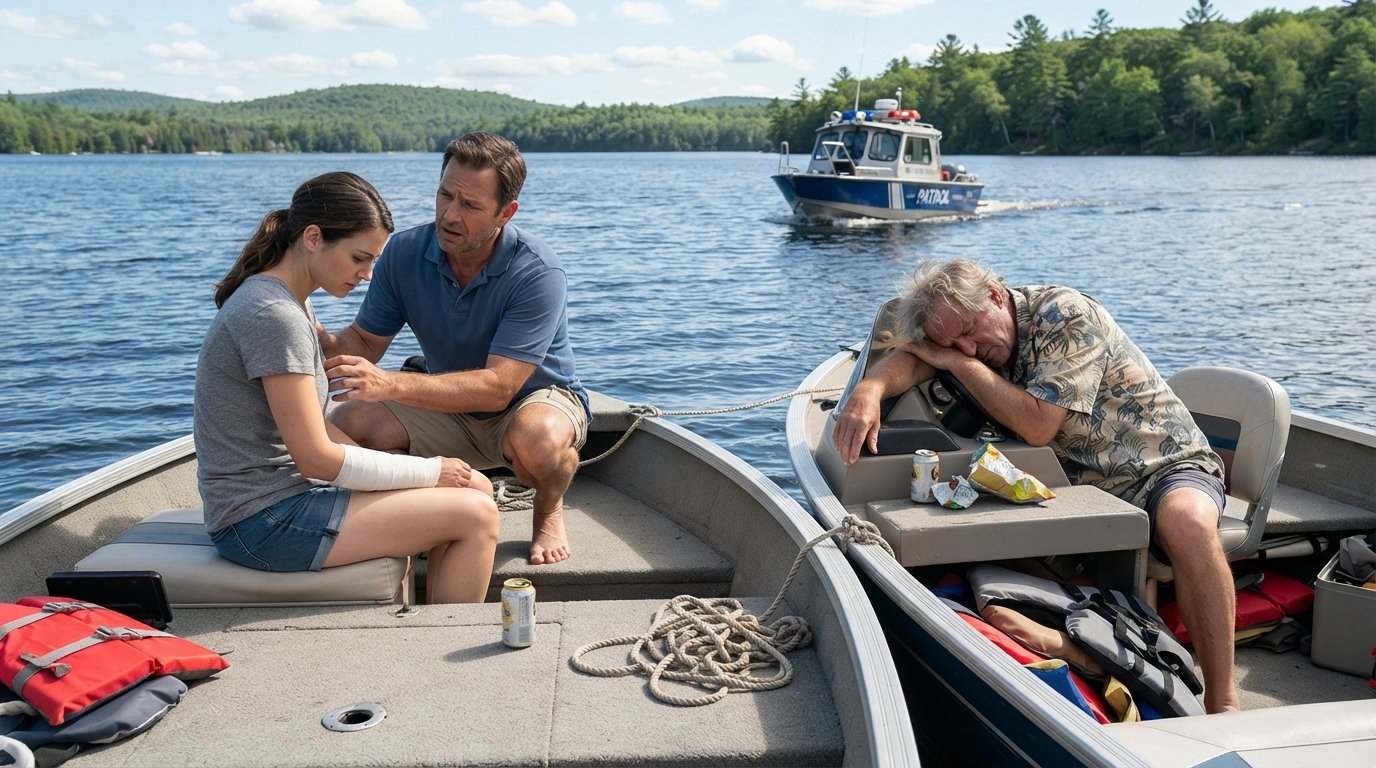
Boating Under the Influence Injury Claim Liability Guide
Injured by a drunk boater? Understand boating under the influence injury claim liability and your rights. Call (833)-248-4565 for a free case evaluation.

By Ione Calderwood
When a day on the water turns into a nightmare because another boater chose to drink and operate, the physical and emotional toll can be overwhelming. You may be facing surgeries, lost wages, and a mountain of medical bills while the responsible party faces criminal charges. Understanding boating under the influence injury claim liability is the first step toward holding that person accountable and securing the compensation you deserve. This guide explains how alcohol-related boating accidents are investigated, who can be held responsible, and what evidence you need to build a strong civil claim.
BUI Laws, Blood Alcohol Limits, and Operator Liability
Every state has laws that make it illegal to operate a boat while intoxicated, commonly referred to as boating under the influence (BUI). While specific statutes vary, most states have adopted a blood alcohol concentration (BAC) limit of 0.08 percent for recreational boaters, mirroring drunk driving laws. Some states enforce a lower limit for commercial operators or for boaters under 21. In addition to BAC, impairment can be proven through field sobriety tests, witness observations, and drug recognition expert evaluations. The legal definition of "operate" is broad and can include having actual physical control of the vessel, even if it is anchored or drifting.
Operator liability in a BUI case rests on the legal principle that a person who voluntarily consumes alcohol and then operates a boat owes a duty of care to others on the water. When that duty is breached, the operator can be held civilly liable for any resulting injuries. This is true even if the operator did not intend to cause harm. In many jurisdictions, a BUI conviction or even an arrest can be used as evidence of negligence in a parallel civil lawsuit. The standard is typically a preponderance of the evidence, meaning it is more likely than not that the operator was impaired and that impairment caused the accident. This is a lower burden than the "beyond a reasonable doubt" standard used in criminal court.
It is important to note that boating under the influence liability is not limited to the operator. Boat owners who knowingly allow an intoxicated person to operate their vessel can also be held responsible under a theory of negligent entrustment. Similarly, if a commercial vessel or rental company negligently provides a boat to an impaired person, they may share liability. These nuances mean that a thorough investigation is essential to identify all potential defendants.
Negligence Per Se and How Criminal Charges Help a Civil Claim
Negligence per se is a legal doctrine that can significantly strengthen a boating under the influence injury claim liability case. Under this doctrine, if a defendant violates a statute that is designed to protect a class of people (such as boaters and passengers) from a particular type of harm (such as injuries caused by impaired operation), the violation itself can establish negligence. In practical terms, this means that if the other boater was cited or convicted for BUI, the injured victim may not need to prove that the operator was negligent; the criminal violation establishes that element automatically.
Even without a conviction, an arrest for BUI can be powerful evidence in a civil case. The civil standard of proof is lower, so a victim can use the fact of an arrest, failed sobriety tests, or a breath test result to persuade a jury that the operator was impaired. Moreover, criminal proceedings often generate valuable evidence that can be used in the civil case, including police reports, dashcam or bodycam footage, and witness statements. An experienced attorney can monitor the criminal case and use the discovery process to obtain these materials.
However, it is crucial to remember that a criminal case is separate from a civil claim. The criminal justice system seeks to punish the offender, while the civil justice system seeks to compensate the victim. A not-guilty verdict in criminal court does not automatically defeat a civil claim, and a conviction does not guarantee a civil recovery. Each case must be proven independently, but the two processes can inform and support one another.
Dram Shop and Social Host Liability for Supplying Alcohol on Water
In many situations, the intoxicated boater did not act alone. Someone may have supplied the alcohol, either through a commercial establishment (such as a marina bar or restaurant) or a private social gathering. Dram shop laws hold businesses that serve alcohol liable for injuries caused by their intoxicated patrons. These laws vary widely by state; some impose strict liability, while others require proof of negligence, such as serving a visibly intoxicated person. If a marina bar or waterfront restaurant overserved a boater who then caused an accident, the injured victim may have a claim against that establishment.
Social host liability is similar but applies to private individuals who furnish alcohol. Many states have social host laws that can impose liability on a person who knowingly provides alcohol to an intoxicated guest, including a guest who then operates a boat. These claims can be complex because it can be difficult to prove who supplied the alcohol and whether they knew the boater was intoxicated. However, they are worth exploring because they can provide an additional source of compensation, especially if the boater has limited insurance or assets.
To pursue a dram shop or social host claim, you will need evidence showing that the alcohol was served to the boater, that the server knew or should have known the boater was intoxicated, and that the intoxication led to the accident. This often requires gathering receipts, witness statements, and surveillance footage. An attorney can help you identify and pursue these third-party claims.
Evidence Gathering: Boating Reports, Breath Tests, and Witness Accounts
Building a successful boating under the influence injury claim liability case requires a thorough and prompt investigation. Evidence can disappear quickly, especially on the water where conditions change and memories fade. The following steps outline the key evidence you should try to secure as soon as possible after an accident.
- Obtain the official boating accident report. Most states require that boating accidents involving injury or significant property damage be reported to law enforcement or the state boating agency. This report will contain the officer's observations, statements from parties and witnesses, and any citations issued. It is a foundational document for your claim.
- Secure breath or blood test results. If law enforcement responded to the scene, they may have administered chemical tests to the operator. These results are critical evidence of impairment. Your attorney can request them through discovery or public records requests.
- Collect witness statements and contact information. Witnesses on other boats, on shore, or at the marina can provide independent accounts of the operator's behavior, the accident sequence, and any signs of intoxication. Their contact information should be recorded immediately.
- Preserve photographic and video evidence. Photos of the vessels, the scene, injuries, and any visible alcohol containers can be powerful. Surveillance footage from marinas, docks, or nearby businesses may also exist and should be requested before it is overwritten.
- Document your injuries and damages. Keep all medical records, bills, and receipts. Photograph your injuries as they heal. Maintain a journal of your pain, limitations, and emotional distress. This documentation will support your claim for damages.
In addition to these steps, it is wise to consult with an attorney who has experience in maritime injury and boating accident cases. Maritime law can be complex, and there are unique rules that may apply depending on whether the accident occurred on navigable waters. An attorney can help you navigate these issues and ensure that all evidence is properly preserved. For example, if your accident involved a rental boat or a chartered vessel, there may be contractual waivers or insurance issues to address. Similarly, if you were injured by a falling object while on a boat, the principles of liability may differ, as discussed in our guide on filing a claim for injury caused by a falling tree.
Proving Liability and Maximizing Your Compensation
To recover compensation in a boating under the influence injury claim, you must prove four elements: duty, breach, causation, and damages. The operator owed you a duty to operate the boat safely. They breached that duty by operating while intoxicated. That breach caused the accident and your injuries. And you suffered actual damages as a result. Each element must be supported by evidence. Your attorney will likely hire expert witnesses, such as accident reconstruction specialists or toxicologists, to strengthen your case.
Compensation in a BUI case can include medical expenses (past and future), lost wages and earning capacity, pain and suffering, emotional distress, and property damage. In some cases, punitive damages may be available if the operator's conduct was particularly egregious, such as extreme intoxication or a hit-and-run. However, punitive damages are not available in every state and are subject to specific legal standards.
It is also important to be aware of comparative fault rules. If you were partially at fault for the accident, your recovery may be reduced or barred depending on your state's laws. For example, if you were standing in an unsafe location or not wearing a life jacket, the defense may argue that you contributed to your injuries. An attorney can help you anticipate and counter these arguments.
Navigating the claims process can be daunting, especially when dealing with insurance companies that may try to minimize your payout. Having a knowledgeable advocate on your side can make a significant difference. If you are seeking legal help and want to explore your options, platforms like LawyerOffer can connect you with attorneys who handle boating accident cases. They provide educational resources and referrals to qualified legal professionals, helping you understand your rights and pursue the compensation you deserve.
Steps to Take After a Boating Under the Influence Accident
If you or a loved one has been injured in a boating accident involving alcohol, taking the right steps immediately can protect your health and your legal claim. Here is a concise action plan to follow:
- Seek medical attention immediately. Even if you feel fine, some injuries, such as internal bleeding or concussions, may not be immediately apparent. A medical record also links your injuries to the accident.
- Report the accident to law enforcement. Insist on a formal report and provide a statement. If the operator appears intoxicated, tell the officer.
- Exchange information. Get the operator's name, contact details, insurance information, and boat registration number. Also collect contact information from witnesses.
- Document the scene. Take photos of the boats, the damage, your injuries, and any relevant conditions (such as empty alcohol containers).
- Contact a boating accident attorney. An attorney can advise you on your rights, handle communication with insurers, and ensure evidence is preserved. Many offer free consultations.
Following these steps can help establish a strong foundation for your claim. Remember that time is of the essence; statutes of limitations vary by state, and evidence can be lost. Acting quickly is in your best interest.
How FreeLegalCaseReview.com Can Help
At FreeLegalCaseReview.com, we understand the devastating impact of boating under the influence accidents. Our platform is designed to connect injury victims with top-tier attorneys who specialize in personal injury and maritime law. We offer free, confidential case evaluations and a patented attorney selection process that identifies legal professionals best suited to your needs. There is no obligation to retain, and the evaluation is completely free.
If you have been injured by an intoxicated boater, do not navigate the legal system alone. The insurance companies and defense attorneys will be working hard to protect their interests. You need an advocate who will fight for your rights. Visit our site to request a complimentary case assessment and learn more about your options. With the right legal team, you can pursue the compensation you need to move forward with your life.