
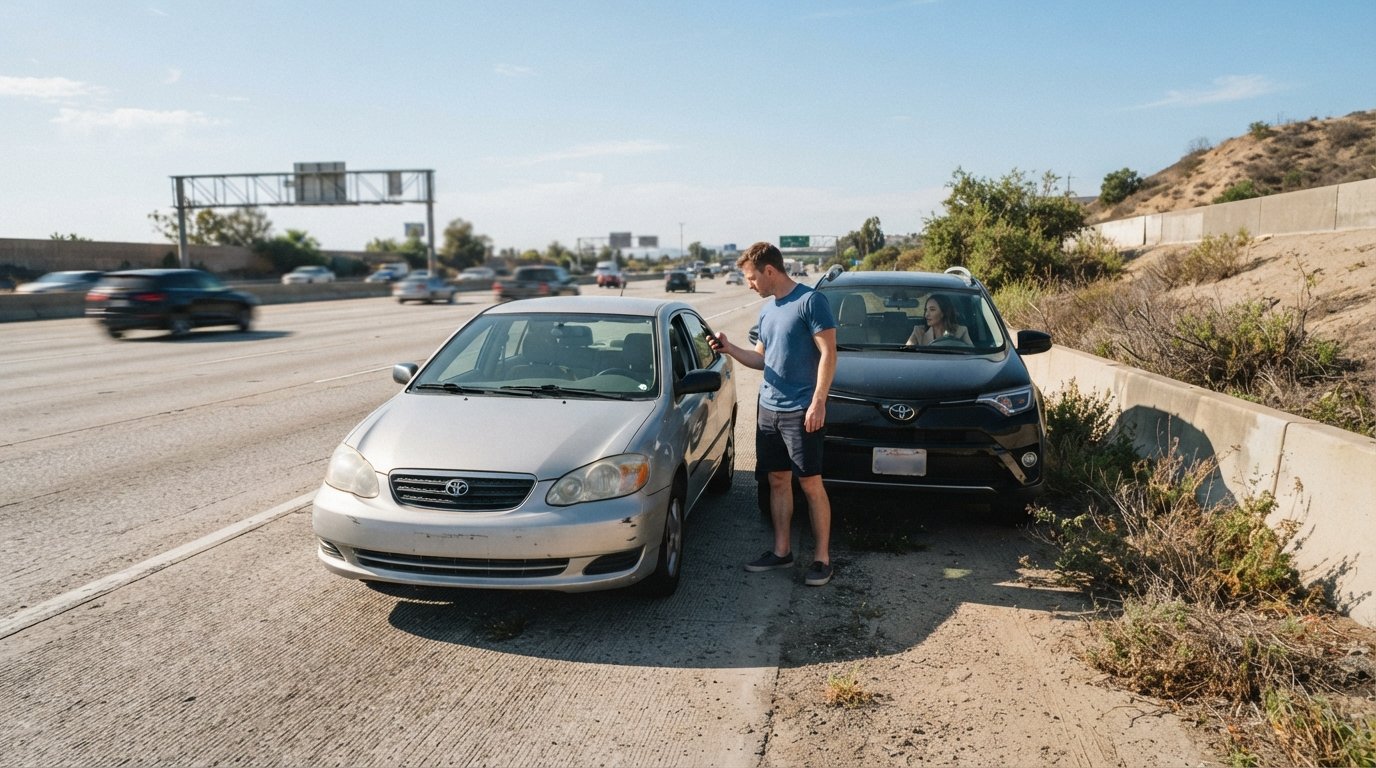
What To Do After A Car Accident In California: 12 Key Steps
Learn what to do after a car accident in California, from immediate safety steps to protecting your injury claim and maximizing your compensation.

By Samuel Anderson
You are driving down the 405 or crossing a busy intersection in Los Angeles when suddenly, another vehicle slams into you. In that moment, everything changes. Your heart races, your mind swirls with questions, and you might not know what to do next. California's roads see thousands of accidents every day, and how you handle the immediate aftermath can protect your health, your legal rights, and your financial future. Knowing what to do after a car accident in California is not about legal jargon; it is about practical, step-by-step actions that keep you safe and position you to recover the compensation you deserve.
This guide walks you through the critical moments after a collision, from checking for injuries to dealing with insurance companies and filing a claim. Whether you are dealing with a minor fender bender or a serious crash, these steps can help you avoid common mistakes that can undermine your personal injury claim. When you need more tailored advice and a free case evaluation, resources like this San Francisco claim review guide can offer city-specific insight, but the foundational steps apply across the Golden State.
Immediate Steps At The Accident Scene
The moments right after a collision are often chaotic and stressful. Your primary focus should be safety and gathering essential information. Do not panic; instead, work through a clear sequence of actions that every driver in California should know.
1. Stop, Assess, And Ensure Safety
California law requires you to stop at the scene of any accident involving injury, death, or property damage. Failing to stop is a hit-and-run, which carries severe penalties, including potential criminal charges. Once you have stopped, your first priority is to check yourself and your passengers for injuries. If anyone is hurt, call 911 immediately. If the vehicles are drivable and it is safe to do so, move them to the shoulder or a nearby parking lot to avoid blocking traffic and to reduce the risk of secondary accidents. Turn on your hazard lights and, if you have them, set out flares or reflective triangles to warn other drivers.
Do not move seriously injured individuals unless there is an immediate danger such as a fire or oncoming traffic. Moving someone with a potential spinal injury can cause permanent damage. Leave that to trained emergency medical personnel. Even if the accident seems minor, it is still wise to call the police, as a police report can be vital evidence for your insurance claim.
2. Call The Police And File A Report
In California, you must report any accident that results in injury, death, or property damage exceeding $1,000 to the DMV within 10 days using Form SR-1. However, it is best practice to call local law enforcement to the scene, regardless of perceived severity. A responding officer will create an official accident report, which includes their observations, statements from drivers and witnesses, and often a preliminary determination of fault. This report is an unbiased record that insurance adjusters and attorneys will use to evaluate your claim.
When the police arrive, provide factual information but do not admit fault or apologize. Even a casual statement like "I did not see you" can be interpreted as an admission of liability. Stick to describing what happened without speculating or accepting blame.
3. Exchange Information With The Other Driver
You are legally required to exchange specific information with the other driver(s) involved. This includes each person's full name, address, phone number, driver's license number, license plate number, insurance company name, and policy number. If the driver is not the owner of the vehicle, ask for the owner's information as well. Be polite but firm in gathering this data. If the other driver refuses to provide information or flees the scene, note their license plate number and a description of the vehicle as best you can, and report this to the police immediately.
Beyond the required information, it is also smart to capture details that will help later. For instance, note the exact location of the accident, the time of day, road conditions, and weather. Take photos of the damage to all vehicles, the surrounding area, traffic signs, and any visible skid marks. These visual records can be powerful evidence.
4. Document The Scene Thoroughly
Modern smartphones make documentation easier than ever. Use your camera to take a wide variety of shots. Capture the overall scene from multiple angles, close-ups of the damage to each vehicle, and shots that show the positioning of the cars relative to intersections or landmarks. Also, photograph any visible injuries you or your passengers have sustained. If there are witnesses, ask for their names and contact information. Police will often interview them, but having your own list can be helpful if their statements become relevant later.
After you have exchanged information and documented the scene, do not discuss fault with the other driver or bystanders. Anything you say can be used against you later. Simply state that you are injured or need to speak with your insurance company before discussing details.
Reporting The Accident To Your Insurance Company
Once you have left the scene, your next responsibility is to notify your insurance provider. Doing so promptly is a requirement under most auto policies. However, how you communicate with them can significantly affect your claim. You should call your insurance company as soon as reasonably possible, but be thoughtful about what you say. Report the basic facts: when and where the accident occurred, who was involved, and that you are filing a claim. Do not speculate about fault, do not provide a recorded statement immediately if you feel pressured, and do not accept any blame. Your insurance company has a duty to defend you, but their ultimate goal is to minimize payout.
- Notify your insurer promptly: Delays can raise red flags and may even violate your policy terms.
- Provide only basic facts: Stick to the who, what, when, and where without offering opinions.
- Never admit fault on the call: Even if you think you might have contributed, let investigators determine that.
- Ask about your coverage: Understand what your policy covers, including medical payments and uninsured motorist coverage.
- Document everything: Keep a log of all calls, emails, and letters you exchange with your insurer.
After that initial report, your insurance company will likely assign an adjuster to your case. This person will investigate the accident, review the police report, and determine the value of your claim. They may ask for a recorded statement. You have the right to decline this request until you have consulted with an attorney. Insurance adjusters are skilled at asking questions that can minimize your claim or shift blame. It is always in your best interest to speak with a personal injury lawyer before giving any formal recorded statement.
Seeking Medical Attention And Documenting Injuries
Even if you feel fine immediately after the accident, you must seek medical evaluation. The adrenaline rush from a crash can mask pain and injuries. Conditions like whiplash, concussions, and internal bleeding may not show symptoms for hours or even days. Visiting a doctor or an emergency room after the accident creates a medical record that links your injuries to the collision. This documentation is critical for any personal injury claim. If you wait too long to seek treatment, insurance companies may argue that your injuries are pre-existing or not serious.
When you do see a doctor, be completely honest about all symptoms, even those that seem minor. Describe where you feel pain, any stiffness, headaches, dizziness, or emotional distress. Follow your physician's orders closely, attend all follow-up appointments, and keep copies of every medical bill and treatment record. Your medical records are the strongest evidence you have of the accident's impact on your life.
Understanding California's Fault System And Compensation
California uses a fault-based system for car accidents, meaning the driver who caused the accident (or their insurance company) is responsible for paying damages. Unlike no-fault states, you have the right to pursue a claim directly against the at-fault party. However, California also follows a legal rule called pure comparative negligence. This means that if you are partially at fault, your compensation is reduced by your percentage of fault. For example, if you were 20% at fault for running a yellow light, your total damages will be reduced by 20%. Even if you are 99% at fault, you can still recover 1% of your damages. This system makes it essential to build a strong case that minimizes your own perceived fault.
Compensation in a car accident case typically falls into two categories: economic damages and non-economic damages. Economic damages are concrete financial losses, such as medical bills, lost wages, vehicle repair costs, and future earning capacity. Non-economic damages are more subjective and include pain and suffering, emotional distress, loss of enjoyment of life, and permanent disability. In rare cases where the at-fault driver acted with malice or gross negligence, punitive damages might also be awarded, though this is uncommon.
To maximize your recovery, you need to prove both the liability of the other driver and the extent of your damages. This often requires gathering evidence, obtaining expert testimony, and negotiating aggressively with insurance companies. This is why many accident victims choose to work with an attorney.
Dealing With Insurance Adjusters And Settlement Offers
After the accident, the at-fault party's insurance company will assign an adjuster to contact you. This adjuster may appear friendly and empathetic, but their primary goal is to protect their company's bottom line. They will often try to get you to settle quickly and for as little as possible. You are under no obligation to accept a fast settlement offer. In fact, you should never accept an offer before you have reached maximum medical improvement, which means you have healed as much as you are going to heal. If you settle prematurely, you cannot later ask for more money if your injuries worsen or new ones appear.
A skilled personal injury attorney can handle all communication with the adjuster. They will know how to present your medical records, negotiate a fair settlement, and push back against lowball offers. If the insurance company refuses to offer a fair amount, your attorney can file a lawsuit on your behalf. Most car accident cases settle out of court, but having the option to litigate strengthens your negotiating position significantly.
When To Consult A Personal Injury Attorney
You do not need to hire a lawyer for every minor fender bender, but there are clear signs that professional legal help is wise. If you sustain serious injuries, if the insurance company is disputing liability, if there are multiple parties involved, or if you are struggling to get fair compensation, you should consult an attorney. Most personal injury lawyers offer a free initial consultation, so you can get professional advice without any financial commitment. They typically work on a contingency fee basis, meaning they only get paid if you win your case. This arrangement makes legal representation accessible to everyone, regardless of their financial situation.
If you need help navigating the aftermath of an accident, resources like LegalCaseReview offer educational information about personal injury law and can connect you with qualified attorneys in your area. You can also request a free case evaluation through platforms like FreeLegalCaseReview.com, which can match you with top-rated lawyers who handle car accident claims in California.
Protecting Your Rights: Mistakes To Avoid
The days and weeks after an accident are a critical window. Certain actions can jeopardize your claim. Here are common pitfalls to avoid:
- Posting on social media: Insurance companies may monitor your accounts. Do not post about the accident or your injuries, and do not share photos that could contradict your claims.
- Signing a release without legal review: A release of liability is a legal contract. Signing it ends your right to seek further compensation.
- Giving a recorded statement to the other insurer: This is a classic tactic to catch you in inconsistencies. Politely decline until you have counsel.
- Missing the statute of limitations: In California, you generally have two years from the date of the accident to file a personal injury lawsuit. Missing this deadline bars your claim forever.
- Not keeping a journal: Document your daily pain levels, emotional struggles, and how the injuries affect your life. This can help prove non-economic damages.
Each of these mistakes can cost you thousands of dollars. An experienced attorney can help you navigate these issues and ensure you meet all deadlines and legal requirements.
Your Path To Recovery: Final Thoughts
Being involved in a car accident in California is a disruptive and often painful experience. However, by taking the right steps immediately after the collision, you can protect your health, your legal rights, and your financial stability. From calling the police and documenting the scene to seeking medical care and consulting a personal injury attorney, each action you take lays the foundation for a fair recovery. Insurance companies are not your friends, but you do not have to face them alone. With the right preparation and legal support, you can navigate the claims process with confidence and secure the compensation you need to move forward. Remember, your focus should be on healing, and a skilled legal advocate can handle the rest.