
What Happens at a Disability Hearing Before an ALJ
See what happens at a disability hearing before an administrative law judge, from testimony to the written decision that can approve your SSDI or SSI benefits.

By Lucian Northwood
A disability hearing before an administrative law judge (ALJ) is the moment when a denied Social Security Disability Insurance (SSDI) or Supplemental Security Income (SSI) claim finally gets a human audience. After months of paperwork, medical records requests, and reconsideration denials, you sit across from a judge whose decision can approve benefits, send the case back for more review, or close the door on your claim. Understanding what happens at a disability hearing before an administrative law judge removes the fear of the unknown and helps you prepare for the questions, testimony, and evidence that shape the outcome. This guide walks through the entire hearing process, from the moment the notice arrives to the written decision that follows weeks later, so you can walk into the room informed and ready.
Why the Hearing Matters More Than Any Earlier Stage
Most initial SSDI and SSI applications are denied, and the majority of reconsideration appeals are denied too. The administrative hearing is the first time an independent judge reviews your entire file, listens to your testimony, questions a vocational expert, and applies the Social Security Administration's five-step sequential evaluation to the facts of your life. It is not a formality. It is a fresh, adversarial-style proceeding where credibility, medical consistency, and functional limitations carry enormous weight.
Unlike the paper stages, the hearing gives you a chance to explain gaps in treatment, describe a typical bad day, and correct misunderstandings in the record. Judges often decide cases based on testimony that never made it into the written file. That is why preparation for the hearing is one of the highest-leverage activities in the entire disability process, and why many claimants hire an attorney or representative once they reach this stage.
If you are still deciding whether to bring representation, a free case evaluation can clarify whether your medical record supports the specific listing or residual functional capacity argument that wins at hearing. The platform connects claimants with qualified attorneys who handle Social Security appeals, and there is no obligation to retain anyone.
Receiving the Notice of Hearing and What It Contains
Once your request for a hearing is processed, the Office of Hearings Operations (OHO) sends a Notice of Hearing. This document typically arrives at least 75 days before the scheduled date, though the exact timing varies by region and backlog. The notice names the administrative law judge assigned to your case, states whether the hearing will be in person, by video teleconference, or by telephone, and lists the issues the judge will consider.
The notice also identifies any medical or vocational experts who may testify, explains your right to representation, and tells you how to submit additional evidence before the deadline. Read it carefully and calendar every deadline. Missing an evidence cutoff can mean the judge never sees a treating physician's opinion that could have changed the outcome.
Pre-Hearing Conferences and Briefs
Some judges hold a brief pre-hearing conference by phone to narrow the disputed issues. Your representative may also file a pre-hearing brief that summarizes your impairments, cites the relevant listings, and previews the testimony you will give. A well-written brief frames the case before the judge ever sees you, which is one reason experienced representatives spend hours preparing these documents.
How the Hearing Room Is Set Up
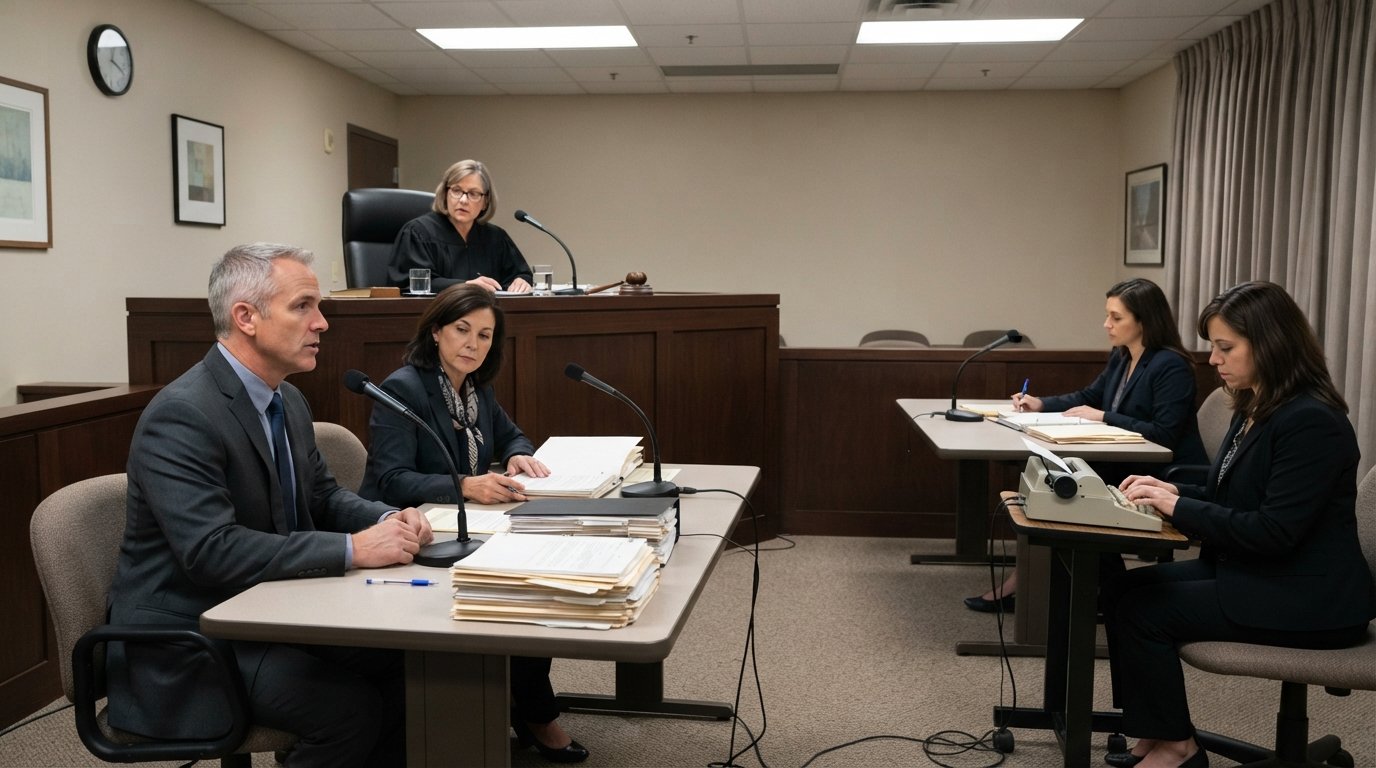
An in-person hearing usually takes place in a small conference room at a Social Security hearing office. The judge sits at the head of a table or behind a low bench. You sit with your representative on one side, and a hearing reporter records the proceeding. If a vocational expert or medical expert attends, they sit to the side, often by phone or video.
Video hearings connect you to the judge from a remote location, usually a Social Security field office or a designated site with a monitor and camera. Telephone hearings became common during the pandemic and remain an option in some cases. Regardless of format, the structure is the same: opening statements, your testimony, expert testimony, and closing remarks. The judge controls the pace and decides which questions to ask.
Opening Statements and the Judge's Preliminary Questions
The hearing begins with the judge confirming that you understand your rights, that you are not working above the substantial gainful activity level, and that the record is accurate. Your representative may give a short opening statement, usually no more than a few minutes, summarizing why the medical evidence proves disability. Judges vary in how much they welcome opening statements, so representatives typically keep them tight and factual.
The judge then asks preliminary questions about your age, education, work history, and living situation. These questions establish the vocational baseline used later in the five-step analysis. Answer honestly and briefly. If you are unsure about a date or a job title, say so rather than guessing.
Your Testimony: The Heart of the Hearing
The most important part of the hearing is your testimony about symptoms, limitations, and daily functioning. Judges ask about pain levels, medication side effects, sleep problems, fatigue, mental health symptoms, and the specific activities you can and cannot perform. They want concrete examples, not general statements like "I hurt all the time."
Prepare by writing a typical day in detail: when you wake, how long it takes to get dressed, whether you can cook, drive, shop, or visit family, and how often you need to rest. Then prepare a worst day. The contrast between an average day and a bad day often shows the judge the true severity of your condition. Be consistent with your medical records and prior statements, because inconsistencies are the fastest way to lose credibility.
Here are the categories of questions you can expect from the judge:
- Physical limitations: lifting, standing, walking, sitting, stooping, reaching, and handling objects.
- Mental limitations: concentration, memory, following instructions, interacting with others, and handling stress.
- Treatment history: medications, therapies, surgeries, hospitalizations, and side effects.
- Daily activities: personal care, household chores, transportation, and social contact.
- Work history: the physical and mental demands of your past jobs and why you stopped working.
After the list above, the judge may ask follow-up questions designed to test whether your limitations are as severe as you claim. Answer each one directly. If a question is confusing, ask for clarification rather than guessing. Your representative can also ask questions after the judge finishes, often to fill gaps the judge did not cover.
The Role of Vocational and Medical Experts
A vocational expert (VE) testifies about the jobs available in the national economy that fit your residual functional capacity. The judge poses hypothetical questions: for example, whether a person of your age, education, and work history could perform sedentary work with certain restrictions. The VE then identifies specific job titles and their numbers in the national economy. If the VE says no jobs exist, your case moves toward approval.
A medical expert (ME), usually a physician, may testify about whether your impairments meet or equal a Social Security listing. MEs do not examine you; they review the records and offer an opinion. Their testimony can support or undermine your claim, which is why representatives often cross-examine them with citations to treating source notes and objective findings.
Cross-Examination and Closing Remarks
Your representative has the right to question the vocational and medical experts. Good cross-examination exposes assumptions that do not match the record, such as a VE assuming you can sit for six hours when your treating physician documented an inability to sit more than thirty minutes. After all testimony, the judge may allow closing remarks. This is the last chance to tie the evidence together and remind the judge which listing or functional limitation controls.
If you do not have a representative, you can still question the experts yourself, but the process is far more difficult without knowledge of Social Security regulations and case law. Many claimants use the hearing stage as the point to bring in professional help, which is why understanding what a top rated injury lawyer consultation covers can be useful even in disability cases, since the intake and evaluation process is similar.
What Happens After the Hearing
The judge does not announce a decision at the hearing. Instead, the record closes, and the judge issues a written decision, usually within 30 to 90 days, though some cases take longer. The decision either approves benefits, denies them, dismisses the request, or remands the case for further development. If you win, the notice explains the benefit amount and any back pay owed. If you lose, the notice explains the appeal rights, including the option to request review by the Appeals Council.
Winning at the hearing often unlocks monthly cash benefits, Medicare or Medicaid eligibility depending on the program, and retroactive payments covering the months between your alleged onset date and the approval. The financial impact can be life-changing, which is why so many claimants persist through the long wait.
For readers who want to track how courts and agencies handle similar disputes, resources such as LegalCaseReview provide analysis of notable legal cases and litigation trends that can deepen your understanding of how administrative decisions are shaped.
Practical Steps to Prepare for Your Hearing
Preparation separates claimants who persuade judges from those who do not. Start at least a month before the hearing date and work through the following steps methodically:
- Review your complete file, including the denial notices and any medical records you have not seen.
- Submit all outstanding treatment records and treating source opinions before the evidence deadline.
- Write out your typical day and your worst day, with concrete details about duration and frequency.
- Practice answering questions out loud with a family member or representative, focusing on honesty and consistency.
- Confirm the hearing format, location, and any technology requirements at least a week in advance.
After completing these steps, review your medication list and bring it to the hearing, along with a photo ID and any assistive devices you use. Judges notice when a claimant's presentation matches the medical record, and that alignment builds credibility.
Finally, remember that the hearing is not a trial in the criminal sense. There is no jury, no prosecutor, and no requirement to prove your case beyond a reasonable doubt. The judge applies a preponderance of the evidence standard and decides whether the record as a whole supports disability. That standard is achievable with solid medical documentation and clear, consistent testimony.
Walking into a disability hearing before an administrative law judge can feel intimidating, but the process is structured and predictable once you know the sequence. Gather your evidence, tell your story plainly, and let the judge see the full picture of your limitations. Whether you proceed alone or with representation, preparation is the single factor you control, and it is the factor that most often decides the outcome.