
Slip and Fall on Commercial Property: Liability Rules
Understand slip and fall on commercial property liability rules, from notice to comparative fault. Call (833)-248-4565 for a free case evaluation.

By Hector Winslow
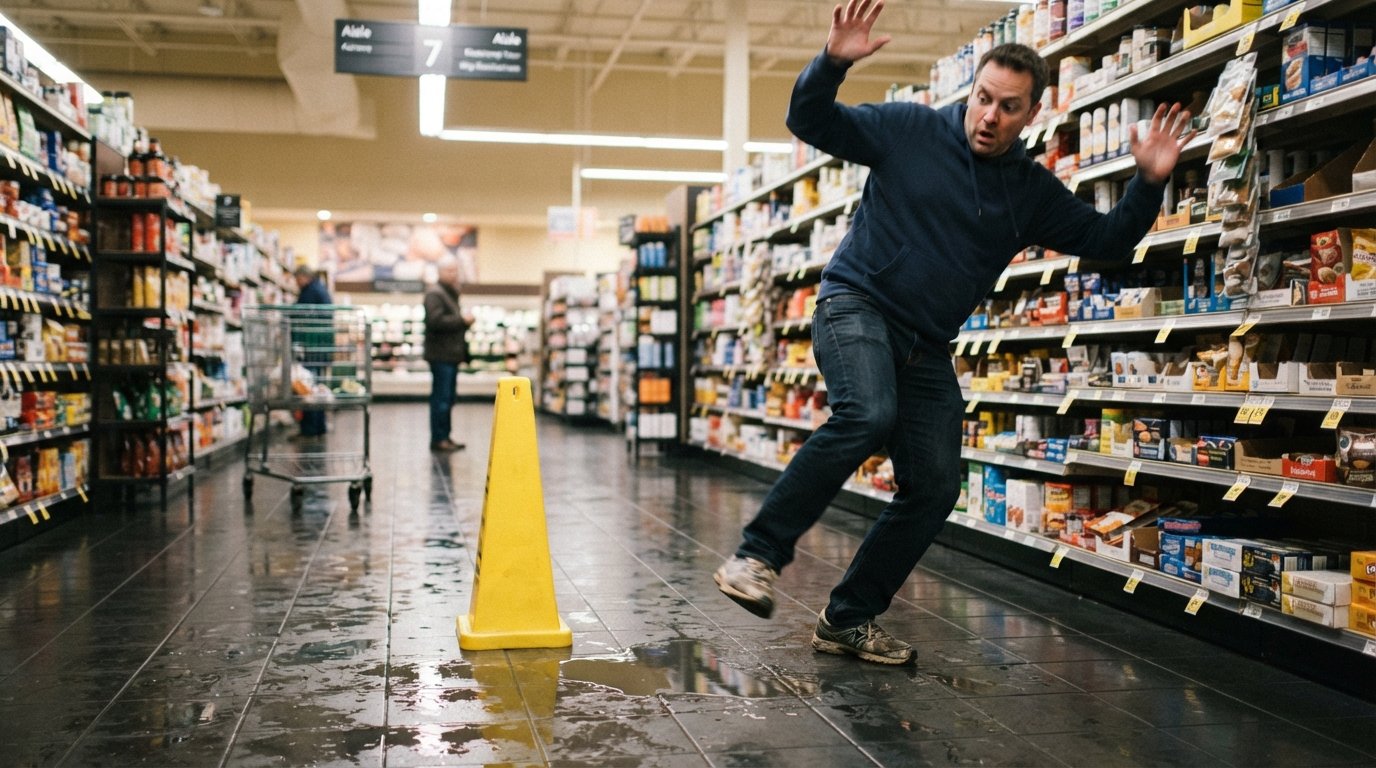
A slip and fall on a freshly mopped grocery store floor or a tumble over a buckled sidewalk outside a retail center can upend your life in seconds. Beyond the immediate pain, you face medical bills, lost wages, and a maze of insurance paperwork. Understanding slip and fall on commercial property liability rules is the first step toward protecting your rights and securing fair compensation. This guide breaks down the legal duties property owners owe, the critical notice requirement, how comparative fault can reduce your recovery, and the urgent need to preserve evidence like surveillance video. Whether you were hurt in a big-box store, an office building, or a parking lot, these rules shape whether you can recover and how much you might receive. For a free, no-obligation case evaluation with a qualified attorney, call (833)-248-4565 today.
The Foundation: Property Owner Duties Under Premises Liability
Commercial property owners are not automatically liable every time someone trips on their premises. The law imposes a duty of reasonable care, but what that means depends on the visitor's legal status. In most states, visitors fall into three categories: invitees (customers, clients), licensees (social guests), and trespassers. Shoppers and other business visitors are typically invitees, which means the owner owes the highest duty: to inspect the premises, warn of hidden dangers, and maintain a safe environment. This duty extends to entryways, aisles, parking lots, and common areas.
To succeed in a slip and fall claim, you must show that the owner breached this duty. That usually requires proof that a dangerous condition existed, that the owner knew or should have known about it, and that the condition caused your injury. For example, if a store employee mops a floor and leaves it wet without a warning sign, the owner likely breached the duty to warn. If a pothole in the parking lot has been ignored for months, the owner may have breached the duty to maintain. These slip and fall on commercial property liability rules are designed to hold businesses accountable, but they also require injured victims to act quickly and gather evidence.
Property owners often argue that the hazard was open and obvious, meaning a reasonable person would have seen it. This defense can reduce or eliminate liability, so it is crucial to document the scene thoroughly. Take photos of the condition, note lighting and signage, and collect contact information from witnesses. If you are unsure whether the open and obvious defense applies, an attorney can evaluate your case. Learn more about how to prove negligence in a slip and fall accident to strengthen your claim.
The Notice Requirement: Proving the Owner Knew or Should Have Known
One of the most contested issues in slip and fall cases is notice. You cannot simply show that you fell and got hurt; you must prove that the property owner had actual or constructive notice of the dangerous condition. Actual notice means the owner or an employee knew about the hazard, for example, a spill reported to a manager. Constructive notice means the condition existed long enough that a reasonable inspection would have discovered it. Courts often look at how long the hazard was present, whether it was in a high-traffic area, and whether the owner had a regular inspection policy.
For instance, if a banana peel lies on the floor for hours in a busy supermarket, a jury may find constructive notice because employees should have seen it during routine sweeps. Conversely, if a spill happens moments before a customer slips, the owner may not have had a reasonable opportunity to clean it up. These fact-specific inquiries make evidence collection vital. Surveillance video, maintenance logs, and incident reports can establish how long a hazard existed and whether employees followed safety protocols.
In many states, the notice requirement is the make-or-break element of a slip and fall case. Without proof of notice, your claim may fail even if the owner was careless. An experienced attorney can help you obtain internal records and interview witnesses to build a timeline. If you are struggling to prove notice, consider reaching out for a free case review to understand your options.
Comparative Fault and Its Impact on Your Recovery
Even if you prove that the property owner was negligent, the owner may argue that you were partly at fault for your own injuries. Most states follow a comparative fault system, which reduces your compensation by your percentage of fault. For example, if you were texting and failed to see a wet floor sign, a jury might assign you 30% of the blame, reducing your award by that amount. In some states, if you are found more than 50% at fault, you may recover nothing. This rule can significantly affect the outcome of your case, so it is essential to present yourself as a careful visitor who was caught off guard by a hidden hazard.
Comparative fault can arise from various actions: wearing inappropriate footwear, ignoring warnings, running, or being distracted. Property owners and their insurers will scrutinize your behavior to shift blame. To counter this, gather evidence that shows you were paying attention and that the hazard was not obvious. Witness statements and video footage can help. An attorney can also anticipate comparative fault arguments and build a strategy to minimize your assigned fault.
Understanding these slip and fall on commercial property liability rules is crucial because they directly affect how much you can recover. If you are unsure how comparative fault might apply to your situation, a free case evaluation can provide clarity. Call (833)-248-4565 to speak with a legal professional who can assess your case at no cost.
Preserving Critical Evidence: Surveillance Video and Incident Reports
Immediately after a slip and fall, your priority should be your health, but preserving evidence is a close second. Commercial properties often have surveillance cameras that capture the incident, but that footage may be overwritten or deleted within days or weeks. You must act quickly to request preservation. Send a written spoliation letter to the property owner and their insurer, demanding that they retain all video, maintenance records, and incident reports. If they fail to preserve evidence, you may have grounds for sanctions, but the best approach is to secure the footage early.
Incident reports are another key piece of evidence. When you report the fall to a manager, an incident report is usually created. Request a copy, but be aware that the store may not provide it immediately. Your attorney can obtain it through the discovery process. Additionally, take photos of the scene, your injuries, and any hazardous conditions. Collect names and contact information from witnesses, and keep your shoes and clothing as evidence. These steps can make or break your case.
If you or a loved one has been injured in a slip and fall on commercial property, do not wait to seek legal help. Evidence disappears quickly, and insurance companies may try to contact you with lowball offers. Protect your rights by consulting with a qualified attorney. For a free, confidential case review, call (833)-248-4565 or visit AutoInjuryAccident to connect with participating attorneys nationwide.
How Premises Liability Claims Differ from Other Injury Cases
Slip and fall claims fall under premises liability, a subset of personal injury law that focuses on unsafe conditions on someone else's property. Unlike car accident cases, where fault is often determined by traffic laws, premises liability cases hinge on the property owner's duty and notice. This distinction means that evidence collection and legal arguments are different. For example, in a car crash, you might rely on police reports and witness statements; in a slip and fall, you need maintenance logs, inspection records, and video footage.
Another difference is the potential for multiple liable parties. In a commercial setting, the property owner, the tenant, the property management company, and even cleaning contractors could share responsibility. Identifying all responsible parties is critical to maximizing your recovery. An attorney can investigate the contractual relationships and insurance policies to determine who is accountable.
Additionally, premises liability cases often involve complex insurance defenses. Commercial general liability policies may cover the owner's negligence, but insurers may dispute coverage or argue comparative fault. Having a lawyer who understands these tactics can level the playing field. If you are facing pushback from an insurer, consider a free case evaluation to explore your legal options.
Steps to Take After a Slip and Fall on Commercial Property
Knowing what to do immediately after an accident can significantly impact your claim. Here is a step-by-step guide to protect your health and your legal rights:
- Seek medical attention immediately. Your health comes first, and a medical record links your injuries to the fall.
- Report the incident to the property owner or manager. Ensure an incident report is filed and request a copy.
- Document the scene. Take photos of the hazard, lighting, signage, and your injuries. Note the time and date.
- Collect witness information. Get names, phone numbers, and email addresses of anyone who saw the fall.
- Preserve evidence. Keep your shoes and clothing, and send a spoliation letter to preserve surveillance video.
- Contact a personal injury attorney. A lawyer can guide you through the process and protect your rights.
Following these steps can strengthen your case and prevent the property owner from destroying evidence. Remember that insurance adjusters may contact you soon after the fall; avoid giving recorded statements without legal advice. An attorney can handle communication and negotiate on your behalf.
Common Defenses in Slip and Fall Cases
Property owners and their insurers often raise specific defenses to avoid liability. Understanding these can help you prepare. The open and obvious doctrine argues that the hazard was visible and a reasonable person would have avoided it. However, if the hazard was obscured or unexpected, this defense may fail. Another defense is the lack of notice, as discussed earlier. The owner may claim they did not know and had no reason to know about the condition. Comparative fault is also common, as is the argument that the injured person was trespassing or exceeded the scope of their invitation.
To counter these defenses, your attorney will gather evidence and expert testimony. For example, an expert in retail safety may testify about industry standards for inspections and warnings. Surveillance video can rebut claims that the hazard was open and obvious or that the owner lacked notice. Each case is unique, so a tailored strategy is essential.
Why You Need an Attorney for Your Slip and Fall Claim
Insurance companies are businesses focused on minimizing payouts. They may offer a quick settlement that does not cover your full damages, including future medical expenses, lost earning capacity, and pain and suffering. An experienced slip and fall attorney can evaluate your case, negotiate with insurers, and, if necessary, file a lawsuit. Attorneys work on a contingency fee basis in most personal injury cases, meaning you pay nothing upfront and only pay if they win. This arrangement levels the playing field and ensures you have professional representation.
If you are considering legal action, start with a free case evaluation. FreeLegalCaseReview.com connects injured individuals with qualified attorneys across the country. Their patented attorney selection process helps identify top legal professionals who can handle your case. There is no obligation to retain, and the evaluation is confidential. Call (833)-248-4565 to get started.
In conclusion, slip and fall on commercial property liability rules are complex and fact-intensive. Property owners have a duty to inspect, warn, and maintain safe premises, but you must prove notice and overcome comparative fault defenses. Preserving evidence like surveillance video and incident reports is critical. By taking immediate action and seeking legal guidance, you can protect your rights and pursue the compensation you deserve. Do not navigate this alone; reach out for a free case review today.