
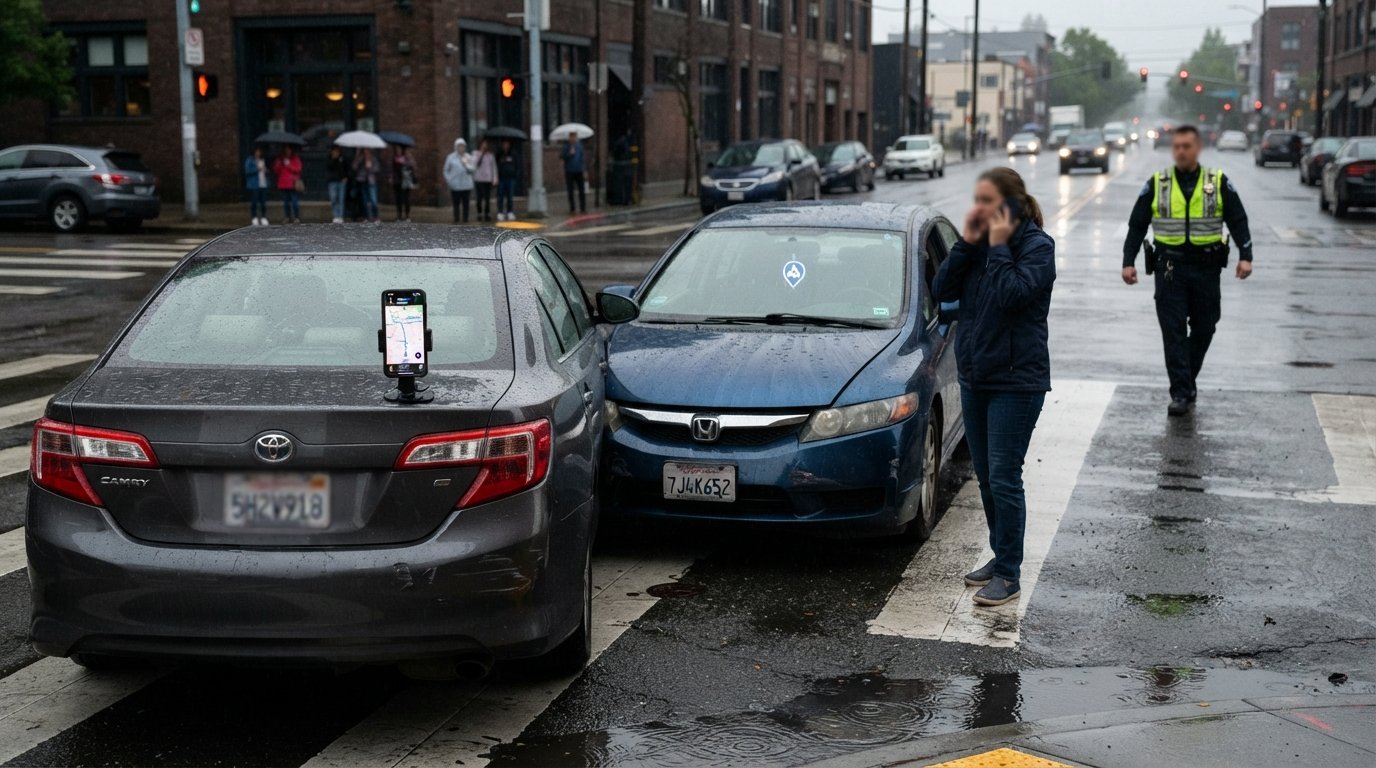
Rideshare Accident Claim Against Uber or Lyft: Key Steps
A rideshare accident claim against Uber or Lyft starts with the right evidence and coverage stage. Call 8332484565 for a free case review.

By Hector Winslow
A rideshare accident can turn an ordinary trip into a confusing legal maze. You may be hurt, your car may be damaged, and the first question on your mind is simple: who pays? Uber and Lyft rely on layered insurance policies, independent contractor drivers, and aggressive claims teams to control costs. Understanding how a rideshare accident claim against Uber or Lyft actually works gives you leverage before you sign anything or accept a quick settlement.
This guide explains the insurance structure, the steps to protect your claim, the evidence that matters, and the mistakes that silently reduce payouts. It is written for injured passengers, other drivers, pedestrians, and cyclists who were harmed by a rideshare driver, and it focuses on practical actions you can take in the first days and weeks after a crash.
How Uber and Lyft Insurance Works After a Crash
Uber and Lyft do not operate like a traditional taxi company, and that difference shapes every claim. Both companies classify drivers as independent contractors who use their personal vehicles. When a crash happens, coverage depends on what the driver was doing at that exact moment, not simply on who was at fault.
Both companies maintain commercial auto liability policies that apply in three distinct periods, and each period carries different limits. The chart below reflects the standard structure used by Uber and Lyft in the United States, though limits and requirements vary by state.
- App off or logged out: Only the driver's personal auto policy applies, which often excludes commercial rideshare use.
- App on, waiting for a ride request: Contingent liability coverage applies, typically up to $50,000 per person and $100,000 per accident for bodily injury, plus $25,000 for property damage.
- En route to pick up a passenger or during a ride: Full commercial liability coverage applies, commonly $1 million in third-party liability, plus uninsured and underinsured motorist coverage where required.
That third stage is where most injured riders find meaningful coverage. If the rideshare driver was carrying you when the crash occurred, the $1 million commercial policy usually sits behind the driver's personal policy and can pay for medical bills, lost wages, and pain and suffering. If another driver caused the crash, that driver's insurance is primary, and the rideshare policy may fill gaps.
The stage matters enormously. A driver who had not yet accepted your request may be covered only by the lower contingent limits or by a personal policy that denies the claim entirely. This is why the first investigative question in any rideshare injury case is not "who hit whom" but "what was the driver doing in the app at the moment of impact."
Steps to Take Immediately After a Rideshare Accident
Evidence disappears quickly after a crash. Trip records, app logs, and witness memories are perishable, and insurers know it. The actions you take in the first hours and days often determine whether your claim is straightforward or contested for months.
Start with safety and documentation, then move to notification and medical care. The sequence below reflects how experienced personal injury attorneys approach these cases.
- Call 911 and request a police report. A formal report creates an official record of the crash, the parties, and the responding officer's observations. Ask for the report number before you leave the scene.
- Photograph everything. Capture vehicle damage from multiple angles, license plates, street signs, traffic signals, skid marks, and any visible injuries. Screenshot your ride receipt and the driver's profile in the app.
- Collect witness information. Names and phone numbers from bystanders and other drivers can rebut a later claim that you caused the crash or exaggerated your injuries.
- Seek medical attention promptly. Even if you feel fine, adrenaline can mask symptoms. A same-day or next-day evaluation creates a medical record linking your injuries to the crash.
- Report the crash in the app. Both Uber and Lyft have in-app accident reporting. Keep copies of any response, claim number, or adjuster contact you receive.
One additional step deserves emphasis: do not give a recorded statement to the rideshare company's insurer before you understand the coverage stage and your injuries. Adjusters are trained to lock in early accounts that later limit compensation. A brief, factual report is fine; a recorded interrogation is not.
If you are unsure whether you are dealing with a covered trip or a coverage gap, a free case evaluation can clarify which policies apply before you speak with anyone. In our guide on claiming injury from rideshare driver negligence, we explain how fault and coverage interact when the driver's conduct caused the harm.
Who Can File a Claim and What Damages Are Available
Rideshare crashes generate multiple potential claimants, and each has a different path to recovery. Passengers usually have the strongest position because they were injured while the full commercial policy applied. Other drivers, pedestrians, and cyclists must typically pursue the at-fault driver first, then look to the rideshare policy or their own uninsured motorist coverage for the remainder.
Drivers themselves face a harder road. Because they are independent contractors, they generally cannot claim workers' compensation from Uber or Lyft, and their personal policies often exclude rideshare activity. Their recovery usually depends on the other driver's insurance or the contingent and commercial policies described above.
Available damages in a rideshare accident claim against Uber or Lyft typically include:
- Medical expenses, including emergency care, surgery, rehabilitation, and future treatment
- Lost wages and reduced earning capacity if injuries affect your ability to work
- Pain and suffering, emotional distress, and loss of enjoyment of life
- Property damage to your vehicle or other belongings
- In catastrophic cases, permanent disability, disfigurement, and wrongful death damages for surviving family members
Compensation is not automatic. Insurers evaluate claims based on documented evidence, consistency between your account and the medical records, and the severity of the harm. Vague complaints and gaps in treatment give adjusters room to argue that your injuries were minor or unrelated to the crash.
The Role of the App Record and Other Critical Evidence
The single most valuable piece of evidence in a rideshare case is the app data. Uber and Lyft maintain GPS logs, timestamps, trip status, driver acceptance records, and in some cases telematics that show speed and braking. That data can prove the driver was on an active trip, was speeding, ran a light, or was distracted at the moment of impact.
The problem is that this data belongs to the companies and is not automatically shared. It can be overwritten or deleted under retention policies that are measured in weeks or months, not years. A preservation letter sent early, ideally by an attorney, forces the company to hold the records. Without it, key evidence may simply vanish.
Beyond app data, strong rideshare claims usually rely on a combination of:
- The police report and any citations issued at the scene
- Photos of vehicle damage, injuries, and the crash location
- Medical records, imaging, and treating physician opinions on causation
- Witness statements and, where available, dashcam or surveillance footage
- Your own contemporaneous notes and text messages about the crash
An attorney can request these records through formal discovery and deposition practice, which individuals rarely have the tools to do on their own. That procedural power often changes the negotiating posture of the rideshare company's legal team.
Common Mistakes That Reduce Rideshare Settlement Offers
Most undervalued rideshare claims fail for predictable reasons. Injured people accept a fast check before they know the full extent of their injuries, or they describe the crash casually to an adjuster who records every word. Others wait weeks to see a doctor and then struggle to connect their symptoms to the collision.
Another frequent error is assuming the app company will handle everything fairly. Uber and Lyft employ sophisticated claims operations and outside counsel whose job is to limit payouts. Their initial offers often cover only immediate bills and leave nothing for future treatment, lost income, or pain and suffering.
Be cautious about these specific pitfalls:
- Signing a release or accepting payment before treatment is complete
- Giving recorded statements without understanding the coverage stage
- Posting crash details or injury updates on social media
- Missing deadlines for personal injury filings, which vary by state
- Handling a multi-party coverage dispute without legal guidance
When coverage disputes, disputed liability, or serious injuries are involved, a structured case review can surface options you may not know exist. Resources such as LegalCaseReview publish analysis of personal injury litigation and mass tort developments, which can help you understand how similar claims are evaluated and what a realistic outcome looks like.
How an Attorney Builds and Resolves the Claim
Once representation begins, the process follows a recognizable arc. The attorney sends preservation letters to Uber or Lyft, notifies all potentially responsible insurers, and gathers medical records and bills as treatment continues. Investigators may reconstruct the crash using app data, vehicle telematics, and witness interviews.
Demand packages typically go out only after you reach maximum medical improvement or your doctors can project future care needs. That timing matters because a demand built on incomplete treatment almost always undervalues the case. Negotiation then proceeds with the rideshare insurer, the other driver's carrier, and any applicable uninsured motorist provider.
If negotiations stall, the attorney files suit and pursues discovery, including depositions of the driver and corporate representatives. Many rideshare cases settle before trial, but the credible threat of litigation is what moves stubborn insurers. Throughout, the attorney manages liens from health insurers and hospitals so that your final recovery is not consumed by surprise bills.
Free Case Evaluation: A Low-Risk First Step
You do not need to know whether you have a winning case before you ask. A free, confidential case evaluation through a service like FreeLegalCaseReview.com connects injured people with qualified personal injury attorneys who handle rideshare litigation. The platform uses a structured attorney selection process to identify experienced counsel, and there is no obligation to retain anyone.
Bring your police report, medical records, photos, and any correspondence from Uber, Lyft, or an insurer. A brief conversation can reveal which policies apply, whether the app data is still available, and how the statute of limitations in your state affects your timeline. For riders, drivers, and bystanders alike, that early clarity is often the difference between a fair recovery and a closed file.
Rideshare accidents are complicated because the companies designed them to be. You do not have to untangle the insurance layers alone. Document what happened, protect the evidence, get medical care, and let a qualified attorney pressure the insurers while you focus on healing.