
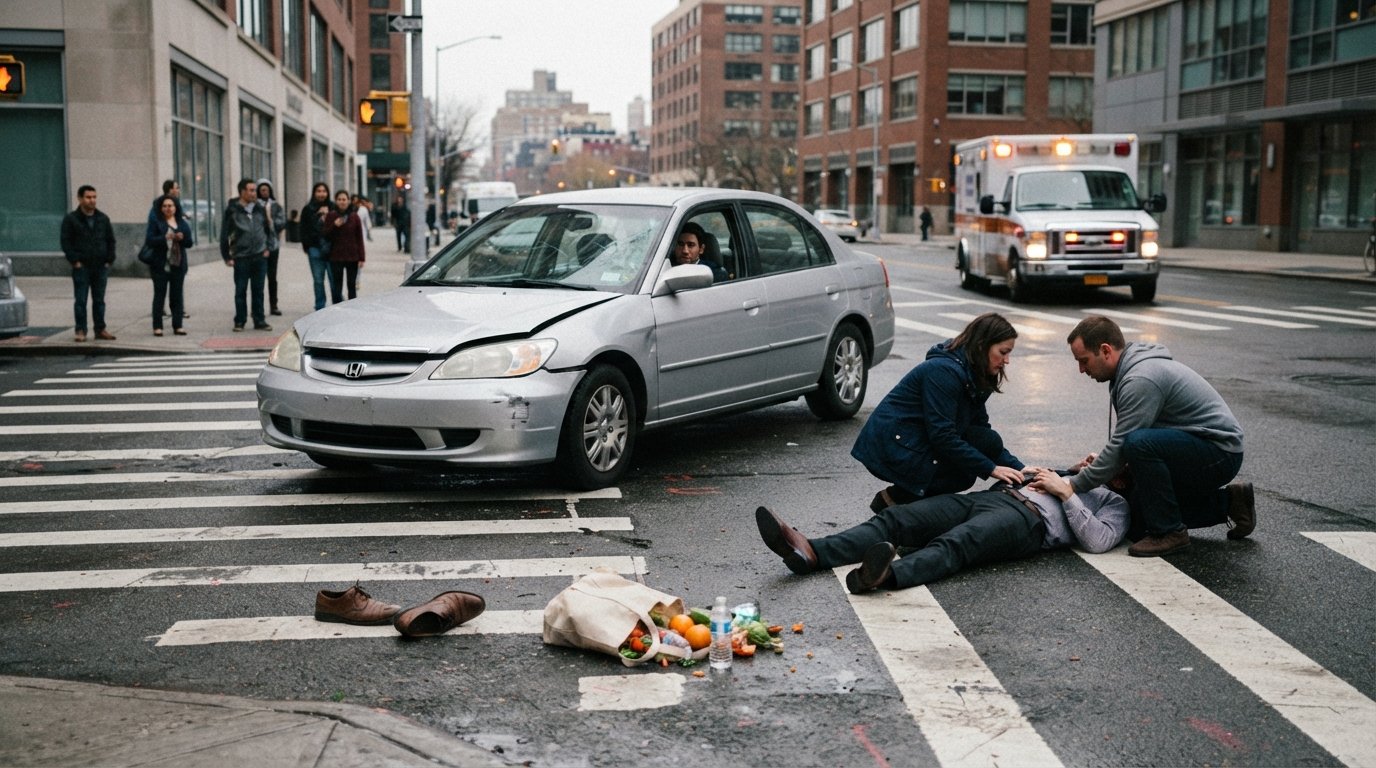
Pedestrian Accident Claim Compensation Rights: What You Can Recover
Know your pedestrian accident claim compensation rights and pursue full recovery. Call 8332484565 for a free case review today.
By Scott Thompson
A pedestrian struck by a vehicle often faces injuries far more severe than the driver involved in the same crash. Without two tons of metal and airbags for protection, a person on foot absorbs the full force of the impact. Medical bills arrive quickly, wages disappear during recovery, and insurance adjusters begin calling before the bruises even fade. Understanding your pedestrian accident claim compensation rights is the first step toward protecting yourself from a settlement that pays far less than your case is worth.
This guide explains what compensation covers, how fault is determined, what deadlines apply, and how to build a claim that insurers take seriously. If you have already been hurt, you can also check whether you can claim injury from a pedestrian accident through a free, confidential case review before deciding on next steps.
What Compensation Can a Pedestrian Accident Claim Cover?
Compensation in a pedestrian injury case is not a single lump category. It is built from several distinct types of losses, often called damages. Economic damages represent money you have already lost or will lose, and they are documented with receipts, pay stubs, and medical records. Non-economic damages represent the human cost of the injury, such as pain, emotional distress, and a reduced quality of life. In the most serious cases, courts may also award punitive damages to punish a driver whose conduct was especially reckless, such as driving while intoxicated.
Most pedestrian victims are surprised by how many categories of loss they can pursue. A strong claim typically includes:
- Emergency transport, hospital care, surgeries, and follow-up treatment
- Physical therapy, rehabilitation, and mobility equipment such as wheelchairs or prosthetics
- Lost wages and diminished future earning capacity if the injury limits your work
- Pain, suffering, emotional trauma, and loss of enjoyment of daily activities
- Property damage, such as a destroyed phone, glasses, or clothing worn during the crash
Each category requires evidence. A hospital bill proves the cost of treatment; a doctor's note linking your knee injury to the crash proves causation; a pay stub and tax return prove lost income. When a victim keeps a daily journal describing pain levels, sleep problems, and missed family events, that record can support non-economic damages that would otherwise be difficult to quantify. Building this file early, while memories are fresh and records are easy to collect, gives any eventual settlement demand far more weight.
Who Is Liable When a Pedestrian Is Hit?
Fault in a pedestrian accident is not automatic. Drivers are usually required to yield to pedestrians in crosswalks and to exercise reasonable care everywhere else, but pedestrians also have duties, such as obeying signals and not darting into traffic. An insurer will look for any reason to shift part or all of the blame onto the injured person, because shared fault can reduce or eliminate the payout.
Liability can rest with more than one party. A driver who ran a red light is an obvious defendant, but a city that failed to maintain a crosswalk signal, a rideshare company whose driver was distracted by an app, or a bar that overserved an intoxicated driver may also share responsibility. Identifying every potentially liable party matters because each one may carry a separate insurance policy, and stacking those policies can substantially increase the total compensation available.
Many states follow a comparative negligence rule, meaning your recovery is reduced by your percentage of fault. If a jury finds you 20 percent responsible and your total damages are $100,000, you would recover $80,000. A handful of states use pure comparative negligence, where you can still recover even if you were mostly at fault, while others bar recovery entirely once your fault crosses a certain threshold. Because these rules vary so widely, the specific law of the state where the crash happened controls the outcome.
How Insurance Companies Handle Pedestrian Claims
Insurance adjusters are trained to settle claims for as little as possible, as quickly as possible. A common tactic is the early lowball offer: a check for a few thousand dollars arrives while you are still in a hospital bed, framed as a helpful gesture. Accepting it usually means signing a release that permanently ends your right to seek more money, even if surgery or long-term complications appear later.
Other pressure points include recorded statements, requests for blanket medical authorizations, and demands for immediate documentation. You are generally not required to give a recorded statement to the other driver's insurer, and a broad medical release lets an adjuster comb through your entire health history looking for pre-existing conditions to blame for your symptoms. It is wise to consult an attorney before signing anything or speaking on the record.
There is also a practical wrinkle: pedestrians often must pursue a claim through the at-fault driver's policy, but if that driver is uninsured or fled the scene, your own uninsured or underinsured motorist coverage may step in. Many people do not realize their auto policy can protect them as a pedestrian. Reviewing every available policy, including those held by household members, is a step a qualified attorney can handle quickly. Services such as LawyerCaseReview help injury victims connect with experienced legal professionals who can evaluate these coverage questions and negotiate from a position of strength.
Steps That Strengthen a Pedestrian Injury Claim
What you do in the days after a crash can shape the value of your claim for years. Evidence disappears, witnesses move, and memories fade, so acting promptly protects the facts that prove your case. The following sequence gives a pedestrian claim its best chance:
- Call 911 and request a police report, which creates an official record of the scene and statements.
- Seek medical attention immediately, even if you feel fine, because adrenaline can mask serious injuries.
- Photograph the intersection, the vehicle, your visible injuries, and any skid marks or signal positions.
- Collect names and contact information from witnesses and the driver, and note the plate number.
- Notify your own auto insurer if you carry uninsured motorist coverage, and preserve the clothing you wore.
After those initial steps, keep every document in one place: medical bills, discharge instructions, repair estimates, and a log of missed work and daily pain. Avoid posting about the accident on social media, since defense attorneys routinely mine public profiles for statements that contradict a claim. If the insurer asks for a statement, decline politely and route the request to your lawyer.
Deadlines, Evidence, and the Role of an Attorney
Every state sets a statute of limitations for personal injury claims, and pedestrian cases are no exception. The window is often two or three years from the date of the crash, but shorter deadlines can apply when a government entity is involved, sometimes as little as six months. Missing the deadline usually destroys the right to sue, no matter how strong the evidence. That is why contacting a lawyer early is not about rushing to court; it is about preserving options.
Evidence in a pedestrian case goes beyond the police report. Accident reconstruction experts can calculate vehicle speed and sight lines. Surveillance video from nearby businesses may capture the impact. Cell phone records can show whether the driver was texting. Medical experts can explain how the force of the collision produced your specific injuries. An attorney knows which experts to retain and how to present their findings in a way that resonates with an adjuster or a jury.
An attorney also levels the bargaining field. Insurers track which claimants have legal representation and adjust their offers accordingly. Most personal injury lawyers work on contingency, meaning you pay nothing upfront and owe a fee only if they recover money for you. A free case evaluation costs nothing and carries no obligation to hire anyone.
Maximizing Your Recovery After a Pedestrian Crash
The difference between an average settlement and a full recovery often comes down to preparation. Claimants who document their losses thoroughly, follow medical advice without gaps, and refuse to sign early releases consistently fare better than those who accept the first offer. Gaps in treatment are especially damaging, because insurers argue they prove the injury was not serious.
It also helps to think beyond today. If your doctor says you may need a future surgery or will never return to your previous job, those future costs belong in the claim. A life care planner or economist can translate ongoing limitations into a dollar figure. Waiting until treatment is complete, or until doctors can give a firm prognosis, usually produces a more accurate and larger settlement than settling while the outcome is still unknown.
Finally, do not face the process alone. A free, no-obligation case review can clarify your pedestrian accident claim compensation rights, identify every responsible party, and connect you with an attorney who handles cases like yours. Whether you were hit in a crosswalk, a parking lot, or along a rural road, the law gives you a path to hold the at-fault driver accountable and to recover the money your recovery requires.