
Do Uninsured Motorist Claims Raise Your Insurance Rates?
Do uninsured motorist claims raise your own insurance rates? Find out when they can and how to protect your premium. Call (833)-248-4565 for a free case review.
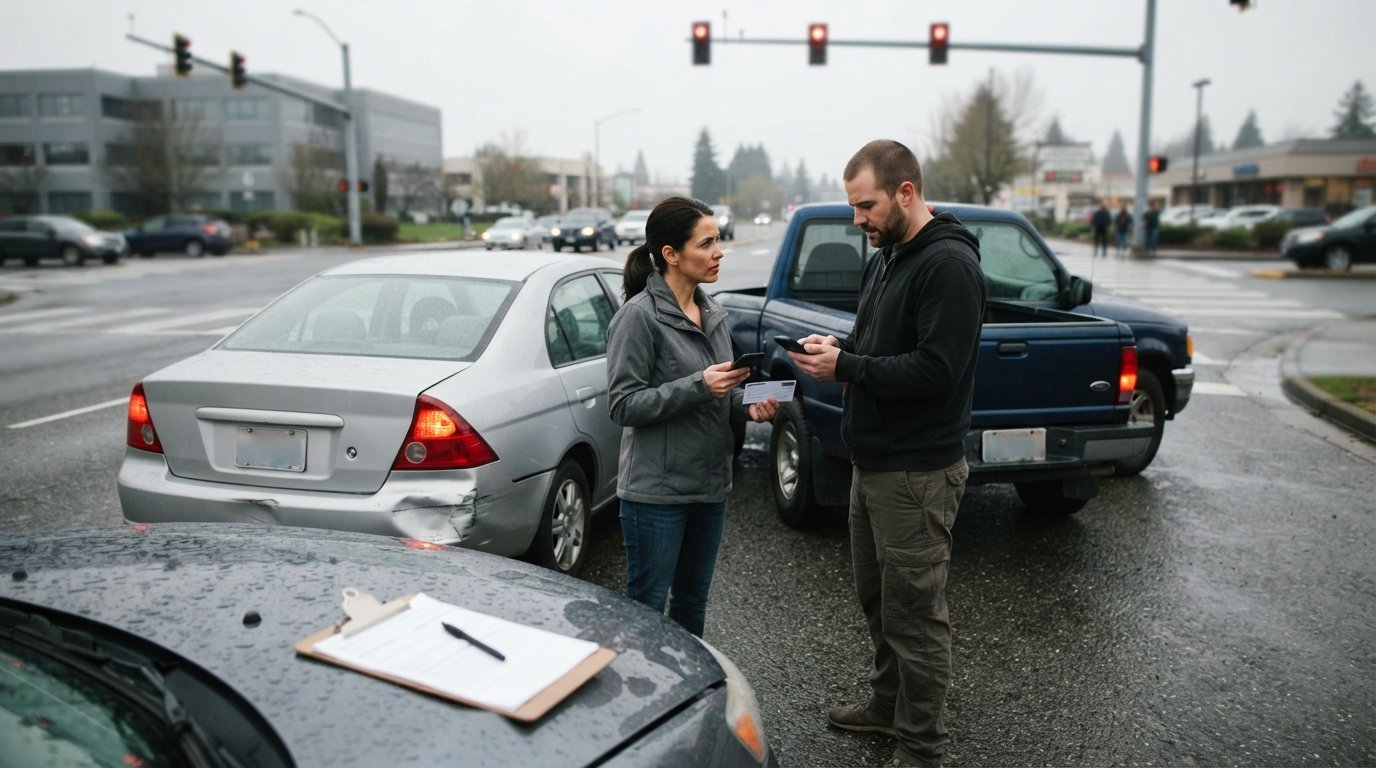
You are sitting at a red light when a driver slams into your rear bumper. You exchange information, only to discover the other driver has no insurance card, no active policy, and no way to pay for the damage. You file a claim under your own uninsured motorist (UM) coverage, and your insurer pays for your medical bills and repairs. A few weeks later, your renewal notice arrives with a higher premium. Did your UM claim cause the increase? The answer is not a simple yes or no: it depends on your insurer, your state, and how the claim is coded. This article explains exactly when uninsured motorist claims can affect your rates, when they cannot, and what you can do to protect your premium while still recovering the compensation you deserve.
What Is an Uninsured Motorist Claim and Why It Feels Different
Uninsured motorist coverage (UM) and underinsured motorist coverage (UIM) are optional or required add-ons in many states. They step in when the at-fault driver has no insurance or carries limits too low to cover your losses. Unlike a liability claim, where your insurer defends you against someone else's demand, a UM claim is a first-party claim. You are filing with your own insurance company, under your own policy, for your own injuries or property damage.
That first-party structure is the key to understanding rate impact. Many drivers assume any claim against their policy is treated the same way, but insurers distinguish sharply between claims that reflect your driving behavior and claims that reflect someone else's. A UM claim is, by definition, someone else's fault. That does not automatically shield your premium, but it changes the math insurers use.
To understand whether you can recover for injuries when the at-fault driver is uninsured, see our guide on claiming injury from an uninsured motorist accident. It walks through the steps of building a UM injury claim, including documentation and deadlines.
Do Uninsured Motorist Claims Raise Your Own Insurance Rates?
The short answer: sometimes, but less often than you might fear, and usually not in the way a speeding ticket or at-fault accident would. Most major insurers treat a not-at-fault UM claim as a neutral event for rating purposes. They may still record it, and in some states they may surcharge it, but the surcharge is typically smaller and shorter-lived than an at-fault accident surcharge.
Several factors determine the outcome:
- State insurance regulations: Some states prohibit rate increases for not-at-fault claims, including UM claims. Others allow insurers to consider all claims, at-fault or not, when setting rates.
- Insurer rating rules: Each company files its own rating plan with the state. One insurer may ignore UM claims entirely; another may apply a small surcharge after a certain number of claims.
- Claim coding: If your claim is coded as a not-at-fault collision or UM claim, it is less likely to affect rates than if it is miscoded as an at-fault accident.
- Your overall claims history: A single UM claim may be forgiven under a first-accident waiver, while multiple claims in a short period can trigger a surcharge regardless of fault.
In practice, many drivers see no increase at all after a clean UM claim. Others see a modest increase that disappears after a few years. The only way to know for sure is to read your policy's rating disclosure or ask your agent directly how the claim will be treated.
Why UM Coverage Is a First-Party Claim and How Insurers View It
In insurance terms, first-party means you are claiming against your own policy. Third-party means you are claiming against someone else's. UM coverage is first-party, but the fault lies with a third party. That hybrid nature confuses many drivers, and it also complicates how insurers rate the claim.
Insurers care about risk. They want to know whether you are likely to cost them money again. A UM claim signals that you were involved in an accident with an uninsured driver, which is largely outside your control. However, some insurers use predictive models that treat any claim as a slight uptick in risk, even when fault is clear. That is why a small number of companies do surcharge UM claims, especially in states that permit it.
The good news is that UM claims are not treated like at-fault accidents in most rating systems. An at-fault accident can raise your premium by 20 to 50 percent or more for three to five years. A UM surcharge, when it applies, is usually in the single digits or low double digits and may last only a year or two. And in many states, the surcharge is prohibited altogether for not-at-fault claims.
Documenting the Uninsured Driver and Hit-and-Run Scenarios
Whether your UM claim affects your rates can depend on how well you document that the other driver was uninsured and at fault. Insurers need proof before they will code the claim as not-at-fault. Without that proof, they may treat it as a collision claim or an at-fault claim, which can hurt your premium.
Here is what to gather at the scene and afterward:
- Call the police and get a report. The officer will note whether the other driver produced insurance and may cite them for driving uninsured.
- Photograph the other vehicle, license plate, and any visible damage. If the driver flees, get the plate number if you can do so safely.
- Collect witness names and phone numbers. A witness can confirm the other driver ran a light or rear-ended you.
- Keep all medical records and repair estimates. These support the value of your claim and show you were not exaggerating.
- Notify your insurer promptly and state clearly that the other driver was uninsured or fled the scene. Ask how the claim will be coded.
Hit-and-run claims are a special case. If the driver cannot be identified, your UM coverage may still apply, but some insurers require a police report and proof that you were not at fault. Some states also have stricter rules for hit-and-run UM claims, such as requiring physical contact between the vehicles. Document everything and follow your insurer's instructions carefully.
Filing UM Claims When the At-Fault Driver Has Minimal Limits
Underinsured motorist coverage (UIM) applies when the at-fault driver has insurance but not enough to cover your losses. For example, the other driver may carry the state minimum of 25,000 dollars per person, while your medical bills and lost wages total 60,000 dollars. Your UIM coverage can make up the difference, up to your policy limits.
UIM claims are also first-party claims, and they are usually treated like UM claims for rating purposes. The same factors apply: state rules, insurer rating plans, and claim coding. The key difference is that you must first exhaust the at-fault driver's liability limits before your UIM coverage kicks in. That means you may need to settle with the other insurer first, then present the remaining claim to your own insurer.
This process can be complex, and insurers sometimes dispute the value of the remaining claim. An experienced attorney can help you document your losses and negotiate with both insurers. If you are considering legal help, you can request a free confidential case review from participating attorneys who handle uninsured and underinsured motorist claims. There is no obligation, and it can help you understand your options before you accept a settlement.
How to Protect Your Premium After a UM Claim
Even if a UM claim is not supposed to raise your rates, mistakes can happen. Here are practical steps to keep your premium stable:
- Ask about accident forgiveness: Many insurers offer a first-accident waiver. Confirm whether it applies to UM claims.
- Review your renewal notice: Compare the premium before and after the claim. If you see an unexplained increase, call your agent and ask for the reason.
- Request a claims history report: Insurers use reports like CLUE to rate policies. Check that the UM claim is coded correctly as not-at-fault.
- Shop around at renewal: If your current insurer surcharges the claim, another insurer may not. Rates vary widely for the same driver.
- Raise your deductible carefully: A higher deductible lowers your premium, but make sure you can afford it if you need to file another claim.
Also keep in mind that your premium can be affected by factors unrelated to the UM claim, such as a general rate increase in your state, a change in your credit-based insurance score, or a new driver on your policy. Always ask for a breakdown before assuming the claim is the cause.
The Bottom Line on UM Claims and Your Rates
Uninsured motorist claims can raise your rates, but in most cases they do not, or they do so only modestly. Because UM coverage is a first-party claim that arises from someone else's fault, many insurers and states treat it as neutral. The outcome depends on your state's regulations, your insurer's rating plan, and how the claim is documented and coded.
If you have been hit by an uninsured or underinsured driver, do not let fear of a rate increase stop you from using the coverage you paid for. Document the accident thoroughly, notify your insurer promptly, and ask how the claim will be treated. If your premium does rise and you believe it is unfair, challenge it with your agent and consider shopping for a new policy. And if your injuries are serious, consider a free case evaluation to make sure you recover everything you are entitled to under your UM and UIM coverage.