
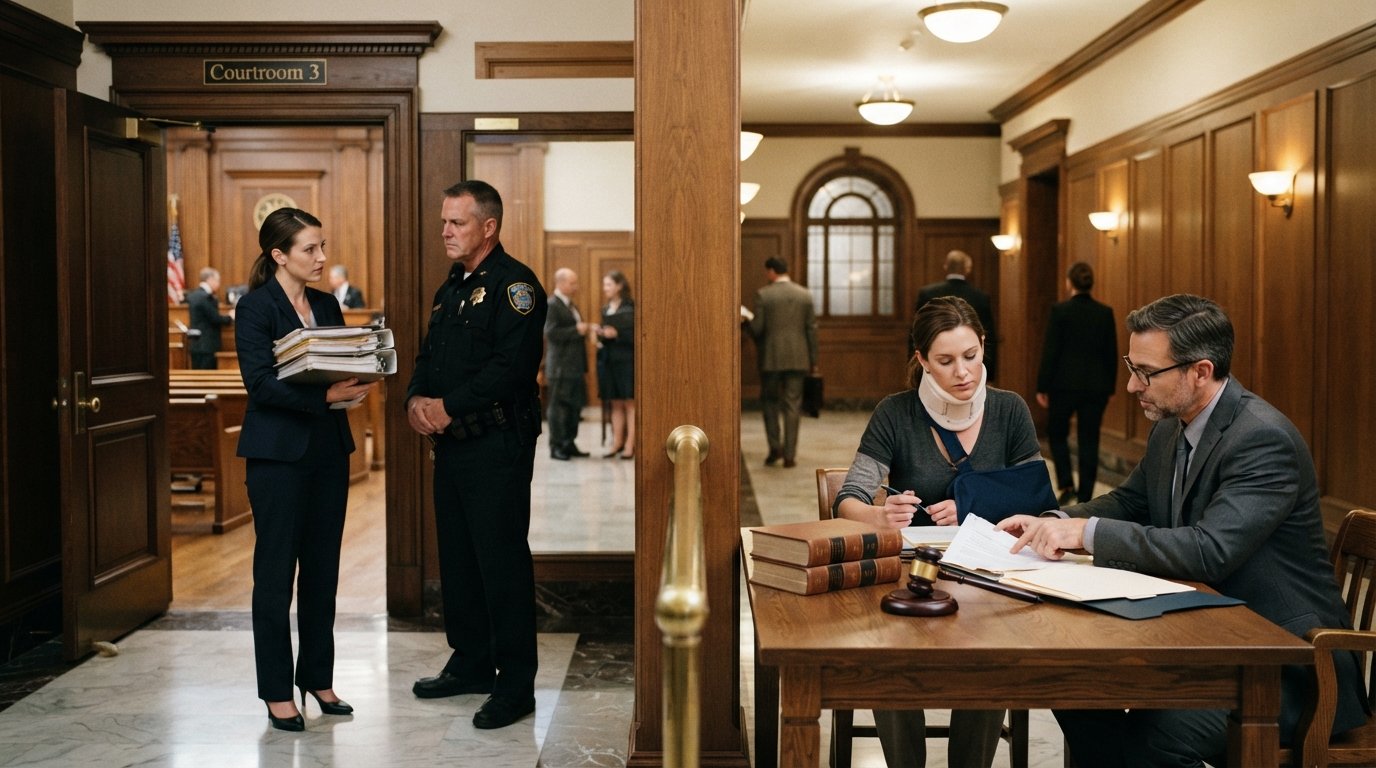
Civil vs Criminal Case: Key Differences in Injury Claims
Understand civil vs criminal case differences in injury claims and why a civil suit can proceed regardless of criminal outcome. Call (833)-248-4565 for a free case review.

By Aurelia Finch
When a single event causes harm, such as a drunk driving crash or a physical assault, two separate legal tracks can open at once. One track is criminal, brought by the government to punish the wrongdoer. The other is civil, brought by the injured person to recover money for medical bills, lost wages, and pain. The two tracks share facts but follow different rules, different standards of proof, and different outcomes. Understanding the civil vs criminal case differences in an injury claim is essential for anyone deciding whether and when to pursue compensation, because the criminal process alone rarely puts money in a victim's pocket. This article breaks down the core distinctions, explains how the cases overlap, and shows why a criminal conviction (or acquittal) does not settle the civil question.
Who Brings Each Case and What Each One Aims to Achieve
The most fundamental difference between a civil injury claim and a criminal prosecution is the party in control. A criminal case is brought by the government: a local prosecutor, a district attorney, or a state attorney general. The government acts on behalf of the public, not the individual victim, and it decides whether to file charges, what charges to file, and whether to negotiate a plea. The victim is a witness and sometimes a participant, but not the decision-maker.
A civil injury claim is brought by the injured person (the plaintiff) against the person or company that caused the harm (the defendant). The plaintiff, usually through a personal injury attorney, decides whether to file a lawsuit, what damages to seek, and whether to settle. The purpose is not punishment but compensation: making the injured party whole for economic losses (medical expenses, lost income, property damage) and non-economic losses (pain, suffering, emotional distress).
This difference in who brings the case leads directly to a difference in remedies. Criminal courts impose fines payable to the government, probation, imprisonment, or other penalties. They generally do not order the defendant to pay the victim's medical bills, although restitution may be ordered in some cases as a condition of sentencing. Civil courts, by contrast, award money damages directly to the plaintiff. If you are injured, the civil track is the one designed to reimburse your losses, which is why victims often pursue a civil claim even after a criminal case ends.
The Standard of Proof: Beyond a Reasonable Doubt vs Preponderance of the Evidence
Perhaps the most consequential civil vs criminal case difference in an injury claim is the standard of proof. In a criminal case, the prosecution must prove every element of the offense beyond a reasonable doubt. This is the highest standard in the legal system, reflecting the stakes: loss of liberty. Jurors must be nearly certain of guilt before convicting.
In a civil injury claim, the plaintiff must prove liability by a preponderance of the evidence. This means more likely than not, a threshold often described as 51 percent certainty. The lower standard makes civil cases easier to win. A defendant can be acquitted in criminal court, where the jury harbors a reasonable doubt, yet still be found liable in civil court, where the jury concludes it is more likely than not that the defendant caused the injury.
This gap explains many high-profile outcomes. A driver may be acquitted of criminal charges because of a procedural error or a doubt about intent, but the injured passenger can still win a civil suit by showing negligence. The civil case does not require proof of intent or willfulness; it requires proof of duty, breach, causation, and damages. That is a lower bar, and it is why civil claims often succeed where criminal prosecutions do not.
How a DUI or Assault Prosecution Overlaps with a Civil Injury Claim
Many injury claims arise from conduct that is also a crime. A drunk driving crash can lead to criminal charges of DUI and civil claims for negligence. An assault can lead to criminal charges of battery and civil claims for intentional torts. The same incident generates both cases, and they proceed on parallel tracks.
The overlap creates practical questions. Can the victim use evidence from the criminal case in the civil case? Generally yes. A criminal conviction can be admissible in a subsequent civil trial as evidence of the underlying facts, depending on the jurisdiction and the nature of the conviction. Even without a conviction, police reports, witness statements, and breath test results gathered during the criminal investigation can be used in civil discovery.
However, the two cases are not identical. The criminal case focuses on the defendant's guilt and punishment. The civil case focuses on the plaintiff's harm and compensation. The victim's attorney may need to prove damages that the prosecutor never addresses, such as future medical needs or lost earning capacity. And the civil case may name additional defendants, such as a bar that served the drunk driver or an employer whose vehicle was involved, who are not part of the criminal prosecution.
Does a Criminal Conviction Help Prove Liability in Civil Court?
A criminal conviction can be powerful evidence in a civil injury claim, but it is not automatic. In many jurisdictions, a felony conviction is admissible in a civil trial as evidence that the defendant committed the acts underlying the conviction. The plaintiff may still need to prove causation and damages, but the conviction can establish the fact of the wrongful act, reducing the issues in dispute.
If the criminal case ends in acquittal, the civil case is not doomed. Because the standard of proof is lower, the plaintiff can still prevail. The acquittal may be used by the defense to argue that the plaintiff's case is weak, but it does not have preclusive effect. Similarly, a plea bargain in criminal court does not bind the civil court, though the plea may be admissible as an admission.
It is important to note that the civil case can proceed even if the criminal case is still pending. The plaintiff does not need to wait for a criminal resolution, and in fact, waiting can cause evidence to go stale and delay needed compensation. An experienced personal injury attorney can coordinate with the criminal process while moving the civil claim forward.
Why Victims Pursue Civil Compensation Regardless of Criminal Outcomes
The criminal justice system is not designed to compensate victims. Fines go to the government, and incarceration does not pay medical bills. Restitution, when ordered, is often limited and may not cover the full extent of the harm. The civil system exists precisely to fill that gap.
Victims pursue civil claims for several reasons. They need money to pay for medical treatment, rehabilitation, and lost wages. They may need compensation for long-term care or for a diminished ability to work. They may also seek a sense of accountability that the criminal process did not provide. A civil lawsuit can uncover evidence through discovery, hold additional parties responsible, and result in a settlement or judgment that helps the victim rebuild.
Even if the criminal case is dropped or the defendant is acquitted, the civil claim can succeed. The lower standard of proof and the different focus (compensation vs punishment) make the civil track a viable option in many situations. For those unsure whether their situation supports a claim, a structured review can help. Our guide on how to know if injury case is valid explains the key checks, from liability and causation to damages and deadlines.
Practical Steps for Pursuing a Civil Injury Claim Alongside a Criminal Case
If you are the victim of an incident that has both criminal and civil dimensions, the process can feel overwhelming. The following steps outline a practical path forward, keeping in mind that every case is different and that this is educational information, not legal advice.
- Secure evidence early. Police reports, medical records, witness contact information, and photographs can disappear over time. Preserve them and share them with your attorney.
- Consult a personal injury attorney promptly. Deadlines (statutes of limitations) apply to civil claims, and they can be shorter than you expect. An attorney can also coordinate with the criminal prosecutor without interfering.
- Document your losses. Keep receipts, pay stubs, and a journal of your recovery. These records support your damages claim and help your attorney calculate a fair settlement.
- Understand the defendant's resources. A criminal defendant may have insurance or assets that can satisfy a civil judgment. Your attorney can investigate coverage and collectability.
- Be patient but proactive. Civil cases can take time, but early investigation often improves outcomes. Do not wait for the criminal case to conclude before exploring your civil options.
For many victims, the most efficient first step is a free case evaluation. A confidential review can clarify whether you have a viable claim, what evidence you need, and how the civil process might interact with any criminal proceedings. If you are looking for a low-cost way to connect with a personal injury attorney, services like CheapInjuryLawyer offer free case reviews and attorney matching for accident and injury victims across the United States, with many participating attorneys working on contingency. This means you pay nothing upfront, and legal fees are typically deducted from a settlement or judgment only if you win.
Key Distinctions at a Glance
The following list summarizes the core civil vs criminal case differences in an injury claim. Keep these points in mind as you evaluate your options.
- Party bringing the case: Government (criminal) vs injured person (civil).
- Standard of proof: Beyond a reasonable doubt (criminal) vs preponderance of the evidence (civil).
- Purpose: Punishment and public safety (criminal) vs compensation for harm (civil).
- Remedies: Fines, probation, incarceration (criminal) vs money damages (civil).
- Effect of a conviction: Can support a civil claim but is not required; an acquittal does not bar a civil suit.
These distinctions mean that a criminal case and a civil injury claim can proceed independently, and the outcome of one does not necessarily control the other. A victim can pursue compensation even if the criminal case is unresolved or ends without a conviction.
Common Misconceptions About Civil vs Criminal Cases
Many people assume that if the police file charges, the victim will automatically receive compensation. That is not how the system works. The criminal process may result in a fine or restitution order, but those amounts are often limited and may not cover the full extent of the injury. The civil process is the primary route to full compensation.
Another misconception is that a criminal acquittal means the victim has no case. As explained, the civil standard is lower, and the civil case can succeed even after an acquittal. A third misconception is that the victim must choose one track or the other. In reality, both can proceed simultaneously, and evidence from one can be used in the other.
Finally, some victims worry that pursuing a civil claim will interfere with the criminal case. In most situations, the two cases can coexist. A civil attorney can coordinate with prosecutors and avoid conflicts. The civil case may even strengthen the criminal case by preserving evidence and identifying additional witnesses.
Conclusion: Knowing Your Rights on Both Tracks
The civil vs criminal case differences in an injury claim come down to who brings the case, the standard of proof, and the goal. Criminal cases punish; civil cases compensate. A criminal conviction can help a civil claim, but it is not required, and an acquittal does not end the civil option. If you have been injured by someone else's conduct, understanding both tracks helps you make informed decisions about your recovery. A free, confidential case evaluation is a low-risk way to learn whether you have a civil claim and what steps to take next. Call (833)-248-4565 to speak with a team that can connect you with a qualified personal injury attorney and help you explore your options without upfront cost.